What was supposed to look like a breakthrough moment in diplomacy suddenly began unraveling before dawn.
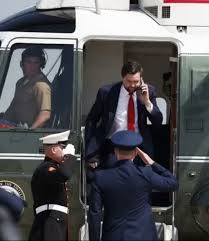
Vice President JD Vance had been expected to board a plane and travel to Islamabad, Pakistan’s capital, where another high-stakes round of negotiations involving the United States, Pakistan, and potentially Iran was set to begin. Officials on both sides had spent days quietly preparing for the talks, framing them as a fragile but critical opportunity to prevent the rapidly escalating regional crisis from tipping into something far more dangerous.
Then, without warning, the plans changed.
Instead of heading overseas, Vance was abruptly called back to the White House for emergency policy meetings, throwing the future of the negotiations into immediate uncertainty and fueling speculation that deeper problems were unfolding behind the scenes.
CNN correspondent Alayna Treene reported that while the trip had not officially been canceled, it had clearly been disrupted in a significant way. Sources familiar with internal discussions indicated there was growing uncertainty over whether Iranian representatives would even agree to participate in the Islamabad talks at all.
“We don’t know if this trip is definitely off,” Treene explained during a live appearance on The Situation Room. “All we do know is that it is definitely delayed and that we should expect to see now the vice president at the White House for meetings today, not leaving this morning on that plane as we had previously reported.”
The sudden reversal immediately intensified concerns that diplomatic efforts between Washington and Tehran were deteriorating faster than publicly acknowledged.
Only weeks earlier, Vance had traveled to Pakistan alongside special envoy Steve Witkoff and presidential adviser Jared Kushner in an attempt to broker a framework that could halt further escalation between the United States, Israel, and Iran. Those talks were already viewed as tense and deeply fragile. According to American officials, the central demand from Washington had been straightforward but uncompromising: Iran needed to make what Vance called an “affirmative commitment” that it would not pursue nuclear weapons.
That commitment never came.
When the previous round of negotiations ended without an agreement, Vance’s tone shifted noticeably sharper.
“The bad news is that we have not reached an agreement,” he said afterward. “And I think that’s bad news for Iran, much more than it’s bad news for the United States of America.”
Since then, events in the region have continued moving toward confrontation rather than resolution.
The United States has dramatically intensified pressure on Iran by enforcing a maritime blockade around Iranian ports, a move many analysts say carries enormous geopolitical risk. U.S. Central Command confirmed Tuesday that American naval forces had already ordered at least 28 ships to turn around or return to port rather than approach Iranian-controlled waters.
Officials stopped short of fully detailing enforcement procedures, but one U.S. official acknowledged that any vessel entering Iranian ports would likely face major difficulty leaving due to the expanding blockade around the Gulf of Oman.
That detail alone sent shockwaves through diplomatic and commercial circles.
The Gulf of Oman represents one of the most strategically critical maritime corridors in the world. Any disruption there immediately raises fears about oil markets, shipping security, military escalation, and potential retaliation from Iranian-aligned forces throughout the region.
Meanwhile, the temporary two-week ceasefire involving the United States, Israel, and Iran is rapidly approaching its expiration date, with uncertainty growing by the hour over whether diplomacy can survive long enough to prevent renewed hostilities.
As of Tuesday evening in Pakistan, officials were still waiting for confirmation from Tehran regarding whether Iranian delegates would even appear at the negotiations.
Pakistani Information Minister Attaullah Tarar publicly acknowledged the uncertainty, stating that a “formal response from the Iranian side about confirmation of delegation to attend Islamabad Peace Talks is still awaited.”
Even so, Pakistani mediators continued attempting to salvage the process.
Tarar emphasized that officials remained in “constant touch” with Iranian representatives and described the planned negotiations as “critical,” underscoring how much diplomatic pressure now rests on Islamabad’s mediation efforts.
Pakistan has spent weeks positioning itself as one of the few governments still capable of maintaining active communication channels with both Washington and Tehran simultaneously. Officials there fear that if negotiations collapse entirely, the region could slide toward a military confrontation with consequences extending far beyond the Middle East.
Those fears deepened further after Iranian President Masoud Pezeshkian appeared to publicly mock the negotiations and the American approach in a sharply worded social media post.
“The level of understanding and comprehension of the requesters from Iran regarding their presence in Islamabad is even lower than Trump’s level of understanding and comprehension,” Pezeshkian wrote on X.
The statement was widely interpreted as a sign that Tehran may already be pulling away from the talks or preparing domestic audiences for a harder negotiating position.
At the same time, behind closed diplomatic doors, efforts to prevent total collapse intensified.
U.S. Chargé d’Affaires Natalie Baker, currently leading the American embassy operations in Islamabad, met Tuesday with Pakistani Deputy Prime Minister Ishaq Dar to discuss ongoing diplomatic efforts surrounding the Iran crisis.
According to Pakistan’s Foreign Ministry, Dar urged all parties to prioritize dialogue and avoid further escalation.
“He stressed the need for engagement between the United States and Iran, urged both sides to consider extending the ceasefire, and to give dialogue and diplomacy a chance,” the ministry said in an official statement posted online.
But even that possibility now appears uncertain.
President Trump has publicly signaled resistance to extending the ceasefire beyond its scheduled expiration, arguing that prolonged temporary agreements merely delay a larger resolution.
“I don’t want to do that. We don’t have that much time,” Trump said during an interview with CNBC when asked about extending the truce. “Iran can get themselves on a very good footing if they make a deal. They can make themselves into a strong nation again, a wonderful nation again.”
That language reflects the increasingly compressed timeline shaping the crisis.
Diplomats fear the window for de-escalation may now be closing rapidly.
Military forces remain on heightened alert throughout the region. Intelligence agencies continue monitoring for signs of possible retaliation, cyberattacks, proxy militia activity, or renewed strikes if negotiations fail completely. Meanwhile, uncertainty itself has become destabilizing.
Markets are watching nervously.
Allied governments are scrambling behind the scenes.
And across multiple capitals, officials are beginning to confront the possibility that events may already be moving faster than diplomacy can contain.
What makes the situation especially dangerous is that no side appears fully willing to step backward publicly. Washington insists pressure must continue. Iran refuses demands it views as humiliating or coercive. Israel remains deeply skeptical that negotiations alone can permanently eliminate the nuclear threat it believes Tehran represents.
That leaves Pakistan attempting to mediate one of the world’s most volatile geopolitical confrontations while the clock quietly runs down on the ceasefire.
For now, the future of the Islamabad talks remains unclear.
The vice president’s plane never left.
Iran still has not formally committed to attending.
Warships remain positioned in strategic waterways.
And as tensions harden into public threats and military pressure intensifies, one uncomfortable reality is becoming increasingly difficult to ignore:
the crisis may already be drifting beyond the point where any single meeting, agreement, or diplomatic gesture can fully pull it back.