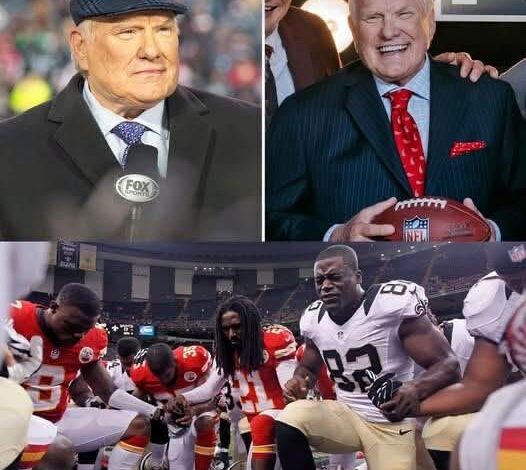
Before Terry Bradshaw became the smiling, quick-witted television personality millions of people recognize today, he was something very different.
He was a young quarterback being booed by his own fans.
He was mocked in newspapers.
His intelligence was questioned publicly.
And there were moments when it seemed the enormous expectations surrounding him might crush his career before it truly began.
Yet Bradshaw didn’t disappear.
He endured long enough to become a four-time Super Bowl champion—and eventually reinvented himself so completely that generations who never watched him play would come to know and love him anyway.
His story began far from the glamour of championship football.
Growing up in Shreveport, Louisiana, Bradshaw became obsessed with the game at an early age. Football wasn’t simply something he played after school. It became part of how he imagined his future.
He practiced constantly, developing the powerful throwing arm that would eventually make professional scouts pay attention.
At Louisiana Tech, Bradshaw established himself as one of college football’s most intriguing quarterback prospects.
Then came the opportunity that was supposed to change everything.
The Pittsburgh Steelers selected him with the first overall pick of the 1970 NFL Draft.
For most young players, being chosen first would seem like the ultimate validation.
For Bradshaw, it also became an enormous burden.
Pittsburgh expected a savior.
Instead, fans initially saw a young quarterback struggling to adjust to professional football.
Bradshaw threw interceptions.
He made mistakes.
He lost playing time.
He heard boos.
And because quarterbacks are often treated as either heroes or villains, his struggles quickly became personal.
Critics didn’t merely question his decisions on the field.
Some questioned his intelligence.
The jokes followed him.
The stereotype of Bradshaw as a simple country boy became an easy target for commentators who underestimated the person behind the helmet.
That ridicule hurt.
But Bradshaw kept returning to the field.
Season after season, something began changing.
The Steelers were building a formidable team around him. Their defense became legendary. Their roster filled with future Hall of Famers.
And Bradshaw matured into the quarterback capable of leading them.
The player once criticized for mistakes began making throws when they mattered most.
Then, in the 1972 playoffs, came a moment that would become permanently embedded in NFL history.
With Pittsburgh trailing Oakland late in the game, Bradshaw scrambled under pressure and threw the football downfield.
What happened next became known as the Immaculate Reception.
The ball ricocheted amid contact and somehow reached Franco Harris, who raced toward the end zone for one of the most famous touchdowns football has ever produced.
Bradshaw had released the throw that started it all.
But that unforgettable play was only the beginning.
During the 1970s, Pittsburgh became a dynasty.
Bradshaw led the Steelers to four Super Bowl championships in six seasons.
The quarterback who had once been booed became a champion.
Then he became one again.
And again.
And again.
He was named Super Bowl MVP twice, delivering some of his finest performances on football’s biggest stage.
The transformation was extraordinary.
Bradshaw hadn’t suddenly become someone else.
The powerful arm had always been there.
So had the competitiveness.
What changed was his ability to survive pressure without allowing it to define him.
That’s what makes his career more interesting than the trophies.
Winning after everyone expects you to win is one thing.
Winning after people have publicly decided you’re not smart enough, polished enough, or good enough is something different.
Bradshaw had been humiliated.
He remembered the insults.
He knew what it felt like to become a punchline.
But eventually, the scoreboard gave him an answer no critic could erase.
Four championship rings.
When injuries finally ended his playing career in the 1980s, Bradshaw faced another difficult question.
Who was Terry Bradshaw without football?
For athletes whose entire identities have been built around competition, retirement can be brutal.
Bradshaw found another stage.
Television.
And once again, the characteristics people had underestimated became his strengths.
He was funny.
Unpredictable.
Self-deprecating.
Warm.
Instead of pretending to be the stern former quarterback dispensing football wisdom from behind a desk, Bradshaw allowed viewers to see his personality.
He laughed at himself.
He teased his colleagues.
He admitted when he was wrong.
And beneath all the comedy remained decades of football knowledge earned the difficult way.
The transformation made him one of sports television’s most recognizable personalities.
It also revealed something important about his earlier career.
Bradshaw’s personality had never been evidence that he wasn’t intelligent.
Being humorous didn’t make him foolish.
Being Southern didn’t make him unsophisticated.
And struggling early in his career didn’t mean he was destined to fail.
The qualities critics once used against him eventually helped make him beloved.
That may be the most powerful part of his story.
Terry Bradshaw’s legacy isn’t simply about four Super Bowls.
It’s about refusing to accept somebody else’s definition of you.
The kid from Shreveport became the first overall draft pick.
The struggling quarterback became a champion.
The man mocked for his intelligence became a successful broadcaster who remained relevant long after his final pass.
And the athlete who spent years under extraordinary pressure eventually learned how valuable it was to laugh.
Behind that famous grin is a man who experienced failure before glory, ridicule before respect, and uncertainty before finding his place.
Maybe that’s why Bradshaw’s story continues to resonate.
Resilience doesn’t always look heroic while you’re living through it.
Sometimes it looks like throwing another interception and returning to practice.
Sometimes it means walking back onto a field where people have already booed you.
Sometimes it means starting an entirely different career after the first one ends.
Bradshaw did all three.
He didn’t erase the difficult years.
He built on them.
And somewhere between the boos in Pittsburgh, four Super Bowl victories, and decades of laughter on television, Terry Bradshaw proved something his harshest critics never anticipated:
The man they underestimated would have the last laugh.