My Husband Kept a Heartbreaking Secret About Our Adopted Daughter for Years — Then Everything Changed at Her Birthday Party

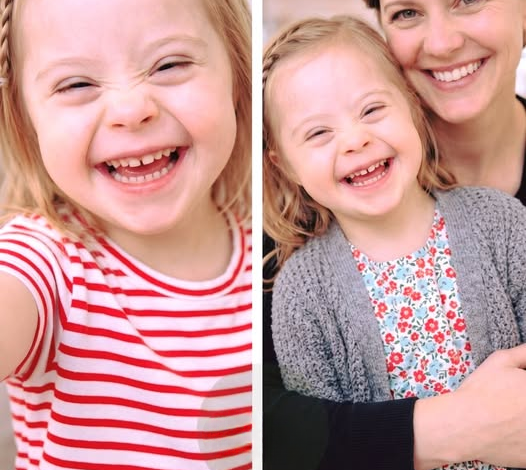
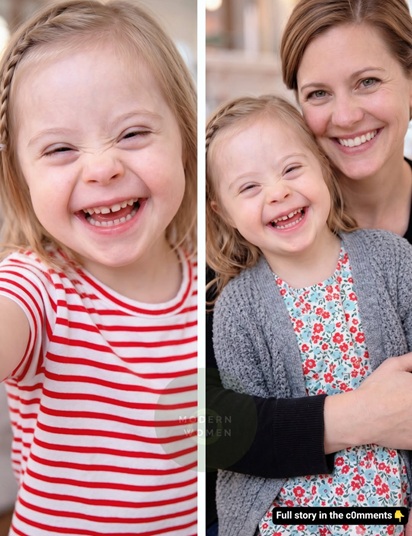
The first time I saw Evelyn, she was sleeping quietly beneath the soft yellow glow of a nursery lamp inside a foster care center that smelled faintly of baby powder and disinfectant.
The room itself was small and simple.
White walls.
A rocking chair near the window.
A row of cribs lined carefully beside shelves filled with donated stuffed animals and folded blankets.
Yet the moment I stepped inside, everything else disappeared.
Because there she was.
Tiny fingers curled beneath her cheek.
Dark lashes resting softly against round skin.
Gentle curls spilling across the edge of a pale blanket while she slept with the complete trust only children possess.
A social worker stood beside me holding a thin folder containing the summary of Evelyn’s short life.
Even now, years later, I still remember how carefully she spoke.
As though each sentence needed to be carried gently.
Evelyn had been left in temporary care shortly after birth. Her biological parents, overwhelmed emotionally and financially, believed another family could provide the stability and long-term support they feared they could not manage themselves.
Inside the folder sat a handwritten note.
That note changed me instantly.
It explained that Evelyn had Down syndrome and that her parents wanted her to have opportunities, patience, love, and safety even if they could not provide those things personally.
By the time I finished reading, tears blurred every word.
Because by then, Norton and I already knew what it meant to ache for a child.
For years, infertility had quietly hollowed our lives.
Doctors’ offices became familiar terrain.
Sterile waiting rooms.
Blood tests.
Hormone treatments.
Phone calls filled with cautious optimism that almost always ended in disappointment.
Every failed attempt chipped away at us differently.
At first, we carried hope together.
Then gradually, grief moved into our marriage like an uninvited guest neither of us knew how to remove.
Silence grew where laughter once lived.
Conversations became shorter.
Some nights we sat across from each other at dinner too emotionally exhausted to speak honestly about how devastated we both felt.
But through all of it, one thing remained certain:
we wanted to become parents more than we cared about biology.
Eventually, we promised each other that if adoption became our path, we would welcome whatever child entered our lives fully and without hesitation.
And standing beside Evelyn’s crib that morning, I realized our searching was over before either of us even spoke it aloud.
The social worker explained gently that children with disabilities often waited longer for permanent placement. Many prospective parents worried about therapy schedules, medical appointments, developmental uncertainty, and long-term caregiving responsibilities.
I listened politely.
But then Evelyn opened her eyes.
And smiled directly at me.
Everything inside me shifted instantly.
Not uncertainty.
Not fear.
Recognition.
Beside me, Norton knelt quietly near the crib and offered Evelyn his finger carefully. She wrapped her tiny hand around it immediately and giggled softly.
I looked at my husband then.
Tears already filled his eyes.
That was the moment I knew.
Not hoped.
Knew.
We were no longer searching for our daughter.
We had found her.
The adoption process stretched across months of paperwork, evaluations, interviews, background checks, and emotional waiting periods that felt endless at times. Yet every completed document felt meaningful because each step carried us closer to bringing Evelyn home permanently.
And when we finally did, our entire house transformed.
Rooms that once felt painfully quiet suddenly overflowed with life.
Toys scattered across carpets.
Children’s music drifting through hallways.
Tiny socks disappearing mysteriously into impossible places.
The silence infertility left behind disappeared beneath bedtime stories, laughter, spilled juice, and the beautiful unpredictability parenthood brings into ordinary days.
Of course, life was not easy.
Parenting never is.
And raising a child with additional developmental needs required even more patience, learning, and emotional flexibility than we initially understood.
There were speech therapy appointments.
Occupational therapy sessions.
Developmental evaluations.
Medical consultations.
Some evenings, Norton and I collapsed onto the couch after putting Evelyn to bed too exhausted to hold full conversations.
But for the first time in years, exhaustion carried meaning instead of emptiness.
We were building something together.
A family.
And Norton loved Evelyn with a steadiness that touched everyone who witnessed it.
No matter how long his workday lasted, he still came home eager to help her practice words, gestures, routines, and learning exercises. He celebrated every tiny milestone with the enthusiasm of someone watching miracles happen in real time.
I often stood quietly in the doorway watching them together on the living room floor surrounded by flashcards and colorful toys.
“Again!” Norton would cheer whenever Evelyn completed something successfully.
And Evelyn would beam with pride beneath his encouragement.
She grew into a joyful child who brought warmth into every room she entered.
Delivery drivers remembered her.
Neighbors waved specifically for her.
Teachers described her as affectionate, determined, and emotionally radiant.
She hugged people without hesitation.
Laughed loudly during cartoons.
Danced barefoot through the kitchen whenever music played.
Our friends adored her almost immediately.
Even when developmental milestones arrived slower than expected, Evelyn approached life with a resilience and joy that made other people feel lighter simply being near her.
But not everyone embraced her so easily.
Especially Norton’s mother, Eliza.
Eliza mastered the art of appearing polite while withholding warmth completely.
From the beginning, her reactions unsettled me.
When we first announced our adoption plans, she did not ask about Evelyn herself. Instead, she questioned whether we truly understood the “burden” we were accepting.
Her criticism rarely sounded openly cruel.
That almost made it worse.
She disguised judgment as concern:
“Are you prepared for the lifelong responsibility?”
“Children with special needs can be very limiting.”
“You’re sacrificing a lot.”
During her first visit after the adoption, Evelyn toddled toward her excitedly with open arms.
Eliza stepped backward.
Not dramatically.
Just enough.
Enough for Evelyn to notice.
Enough for me to feel my stomach tighten immediately.
Children recognize emotional distance instinctively.
Evelyn looked confused by the rejection, and in that moment I understood something painful:
protecting her emotionally would eventually require boundaries.
Over time, Eliza’s behavior worsened subtly but consistently.
She criticized therapy costs.
Questioned our parenting choices.
Implied Evelyn would prevent Norton from achieving the successful life she imagined for him.
At first, Norton tried maintaining peace.
He hoped patience might soften his mother eventually.
But after repeatedly watching Evelyn absorb coldness she did not deserve, he finally accepted the truth:
our daughter’s emotional safety mattered more than preserving family appearances.
Together, we limited contact.
It hurt.
Family separation always hurts.
But peace slowly returned afterward.
And meanwhile, Evelyn continued blooming.
By age five, she adored yellow dresses, birthday decorations, and anything she described as looking “like sunshine.” She insisted bright colors made her feel happy inside.
For her fifth birthday, we transformed the living room into exactly that:
paper daisies,
gold ribbons,
yellow balloons,
handmade banners taped slightly crooked across walls.
Norton arranged snacks while singing along badly to Evelyn’s favorite songs. She twirled barefoot through the room laughing while sunlight spilled through the windows behind her.
For a few beautiful hours, life felt entirely whole.
Then the doorbell rang.
Assuming a guest arrived early, I opened the door casually.
And froze.
Eliza stood outside wearing an expression so cold it immediately erased every trace of celebration from the room.
She did not acknowledge the decorations.
Did not greet Evelyn.
Did not smile.
Instead, her eyes settled directly on Norton.
Then she asked quietly:
“Have you finally told her the truth yet?”
The atmosphere changed instantly.
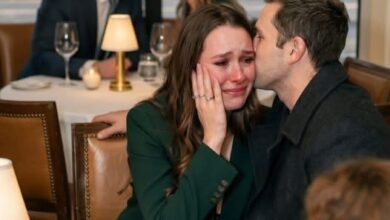
I turned toward my husband.
His face lost all color.
And in that moment, before anyone explained anything, I knew our lives were about to shift permanently.
Eliza stepped inside without waiting for permission.
Meanwhile, Evelyn sat happily on the floor playing with ribbons completely unaware that adulthood was about to fracture the world around her.
Norton picked her up gently and carried her to the couch before sitting opposite me with trembling hands.
I had never seen fear look so visible on his face before.
Finally, after several unbearable moments of silence, he began speaking.
Years before meeting me, he explained, he briefly dated a woman named Marissa. The relationship ended quietly, and eventually they lost contact entirely.
Then came the adoption.
When we first received Evelyn’s paperwork, Norton noticed her biological mother’s name:
Marissa.
At first he dismissed it as coincidence.
Until he noticed the birthmark.
A small crescent-shaped mark behind Evelyn’s ear identical to one carried by generations of men in Norton’s family:
his grandfather,
his father,
himself.
The suspicion consumed him quietly.
Without telling me, he arranged a private DNA test shortly after the adoption finalized.
And the results confirmed it.
Evelyn was biologically his daughter.
The room seemed to tilt sideways around me.
Not because biology itself mattered most.
But because he had carried this truth alone for years while allowing me to build our marriage and motherhood around incomplete reality.
For five years, he kept this secret buried inside our family.
I looked toward Evelyn sitting beside birthday decorations humming softly to herself.
Still innocent.
Still unchanged.
And somehow that made the pain even sharper.
Norton’s voice cracked repeatedly while explaining himself.
He insisted he never knew Marissa was pregnant.
Never knowingly abandoned them.
Never intended deception maliciously.
But after discovering the truth, fear consumed him.
He worried I would think the adoption had been manipulated intentionally.
That I would leave.
That Evelyn’s life would fracture.
So he postponed the conversation.
Again and again.
Until silence became impossible to escape.
Then came another devastating realization.
Eliza had known too.
For years.
Suddenly, her treatment of Evelyn transformed from prejudice into something even uglier.
She saw Evelyn not simply as inconvenient, but as evidence of scandal.
Embarrassment.
Complication.
My anger toward her became almost unbearable.
But Evelyn sat only feet away.
And no child deserves witnessing adults debate whether her existence damaged anyone’s life.
So instead, I focused on her.
I looked directly at Eliza and said calmly:
“She is my daughter. Nothing changes that.”
Then I turned toward Norton.
And despite the hurt tearing through me, I admitted another truth too:
I still loved him.
But rebuilding trust would require honesty strong enough to survive discomfort from now on.
Eliza attempted defending herself by claiming she only wanted to “protect the family.”
The phrase sounded hollow instantly.
Protecting family does not involve rejecting children.
It does not involve withholding love.
And for the first time since knowing her, I refused to soften myself to preserve her comfort.
I told her plainly:
if she continued speaking about Evelyn with cruelty or disrespect, she would lose access to our lives permanently.
She stared silently at me for several long seconds before gathering her purse and leaving without another word.
After the door closed, silence flooded the house.
But Evelyn still deserved a birthday.
So we continued.
We lit candles.
Sang softly.
Placed a tiny plastic tiara carefully onto her curls.
And while she closed her eyes to make a birthday wish, I realized something profound:
our family suddenly felt fractured,
yet the child before us remained exactly the same beautiful soul she had always been.
Later that night, after guests left and Evelyn fell asleep, Norton and I talked for hours.
There were tears.
Anger.
Questions.
Silences too heavy for language.
But slowly, honesty replaced fear.
He admitted the guilt had consumed him for years.
I admitted the betrayal felt enormous.
Yet underneath everything else remained another undeniable truth:
he had loved Evelyn completely long before biology confirmed anything.
And that mattered deeply.
Because fatherhood is not built solely through genetics.
It is built through presence.
Patience.
Sacrifice.
Consistency.
Love repeated daily over years.
In the months afterward, healing came slowly.
Some days resentment resurfaced sharply.
Other days reminded us why we fought so hard to preserve what we built together.
Counseling helped.
Honesty helped more.
And through all of it, Evelyn remained the emotional center of our home.
Painting flowers.
Dancing through kitchens.
Hugging people whenever they looked sad.
Eventually, as she grew older, we explained her adoption story and biological history gently in age-appropriate ways.
One evening she asked quietly:
“Are you still my real mom?”
I pulled her into my arms immediately.
“Always,” I whispered.
Because motherhood is not defined by blood alone.
It is defined by staying.
By loving.
By showing up every day even when life becomes painful or complicated.
Evelyn smiled and hugged me tightly without hesitation.
And in that moment, I understood something clearly:
our story was never truly about scandal.
It was about forgiveness.
Disability acceptance.
Truth.
Fear.
Healing.
And above all, love strong enough to survive imperfect human mistakes.
Years ago, we thought we were rescuing a vulnerable little girl sleeping quietly inside a foster care crib.
Now I understand something different entirely.
Evelyn rescued us too.
She brought laughter back into empty rooms.
Purpose back into grief.
Compassion back into wounded places we thought might remain broken forever.
And even after every painful revelation, one truth never changed:
she was the greatest thing that ever happened to our family.
:::