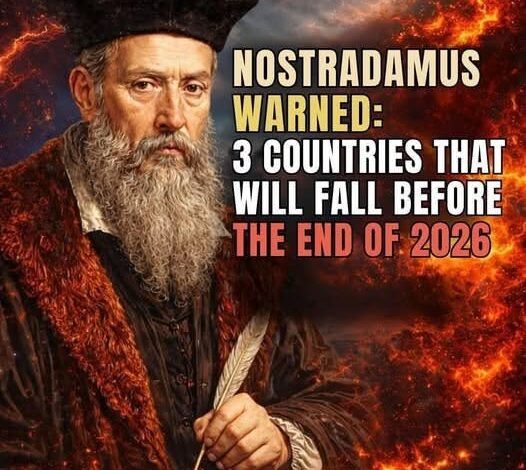
Nostradamus has never endured because he was clear.
He has endured because he was unclear enough to feel possible.
His power does not come from precision, dates, or direct predictions. It comes from atmosphere. From shadowed images. From symbols that seem to shift depending on the fears of the age reading them.
A weakened eagle.
A cornered bear.
A fading lion.
To modern readers, such images can feel unsettling because they appear to echo the anxieties already shaping the world. The eagle can be read as America, wrestling with doubts about leadership, division, and global authority. The bear can suggest Russia, strained by isolation, conflict, and the cost of ambition. The lion can evoke Britain, uncertain about identity, influence, and its place in a changing world.
But that is exactly why Nostradamus remains so powerful.
His verses do not need to predict the future perfectly.
They only need to resemble the present closely enough to make people wonder.
That resemblance can feel haunting.
Not because the quatrains reveal an unavoidable destiny, but because they reflect patterns humanity has seen before. Nations rise. Power hardens. Confidence turns to overreach. Alliances shift. Old empires lose certainty. New pressures expose weaknesses that were always there.
History has a way of making prophecy look smarter than it is.
When the world feels unstable, people search for signs. They look backward for warnings and forward for confirmation. A vague line written centuries ago can suddenly seem urgent when it appears to match the fear already living in the public imagination.
That is the real force behind Nostradamus.
Not prophecy.
Recognition.
His words work like a mirror.
They reveal less about fixed events and more about the worries people carry into them. When readers see collapsing powers, broken alliances, or wounded nations in his verses, they are often seeing their own anxieties reflected back in symbolic form.
The supposed predictions become powerful because they give shape to uncertainty.
They turn confusion into narrative.
They make chaos feel patterned.
And for many people, a frightening pattern can still feel more comforting than no pattern at all.
Yet the danger of reading too much into such visions is that it can make decline feel inevitable.
It can tempt people to believe nations are trapped inside a script already written centuries ago.
But history is never that simple.
Power changes.
Crisis passes.
Societies fracture, adapt, and rebuild.
Leaders fail, but new movements emerge.
Alliances weaken, then reform around new realities.
The future is not handed down fully formed from a prophet’s pen.
It is shaped by choices.
By policy.
By courage.
By fear.
By ordinary people deciding what they will tolerate, protect, rebuild, or abandon.
That is where the real lesson lies.
Not in trying to decode whether an eagle, bear, or lion matches a specific headline.
Not in surrendering to visions of collapse.
Not in treating poetic fragments as destiny.
The lesson is awareness.
Nostradamus continues to fascinate because his language reminds us that no nation is permanent in the form it currently holds. Strength can fade. Certainty can crack. Influence can shift. Even the most powerful countries can become vulnerable when they ignore the forces weakening them from within.
But crisis is not the same as doom.
Decline is not always final.
And uncertainty does not mean the future has already been lost.
Between fear and renewal, societies still have room to act.
They can confront their failures.
Repair broken trust.
Strengthen institutions.
Choose cooperation over division.
Learn from the past without becoming imprisoned by it.
Perhaps that is why Nostradamus remains so compelling after centuries.
Not because he tells us exactly what will happen.
But because his verses invite every generation to confront what it already suspects about itself.
The trembling of power.
The fragility of order.
The uneasy knowledge that even great nations must keep proving they can endure.
His quatrains may never provide clear answers.
But they do ask a lasting question:
When signs of weakness appear, will people treat them as fate—or as a warning?
That choice, not prophecy, is what determines what comes next.