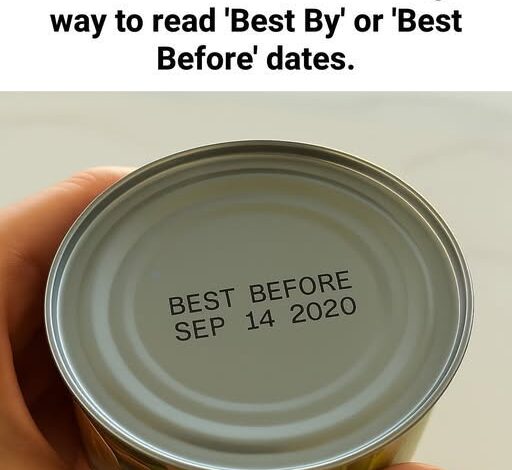
Most of us have found one before: a forgotten can pushed to the back of the pantry, covered in dust, with a date printed on the lid that passed months ago.
The first instinct is usually to throw it away.
After all, expired means unsafe, right?
Not always.
When it comes to canned foods, the date on the label is often more about quality than danger. Phrases like “Best By” or “Best Before” usually indicate the period when the manufacturer believes the food will taste freshest and have the best texture. They are not automatic deadlines for when the food becomes unsafe to eat.
Even “Use By” dates can be misunderstood. While they may sound like strict safety warnings, they often still refer to peak quality, especially for shelf-stable products. With canned goods, the condition of the can and how it has been stored matter far more than the printed date.
If canned foods are kept in a cool, dry place away from heat, sunlight, and moisture, they can often remain safe well beyond the date on the label.
High-acid canned foods, such as tomatoes, pineapple, citrus fruits, and some sauces, usually keep their best flavor for about 12 to 18 months. After that, the taste, color, or texture may begin to decline, but the food does not instantly become dangerous the day the date passes.
Low-acid canned foods tend to last even longer. Items such as beans, vegetables, soups, tuna, chicken, and canned meats can often maintain good quality for three to five years or more when stored properly.
The real warning signs are not usually found in the date.
They are found in the can itself.
A can should be thrown away immediately if it is bulging, leaking, badly rusted, deeply dented, cracked, or spraying liquid when opened. A foul smell, unusual color, mold, or strange texture after opening is also a clear sign that the food should not be eaten.
When in doubt, it is always safer to discard questionable food.
But throwing away every can simply because the printed date has passed can lead to unnecessary waste and extra spending. Understanding the difference between quality dates and safety concerns can help you make smarter choices in the kitchen.
Before tossing that old can from the back of the pantry, inspect it carefully.
If the can is intact, stored properly, and the food looks and smells normal when opened, it may still be perfectly usable.
A little knowledge can help stretch your grocery budget, reduce food waste, and make your pantry work harder for you.