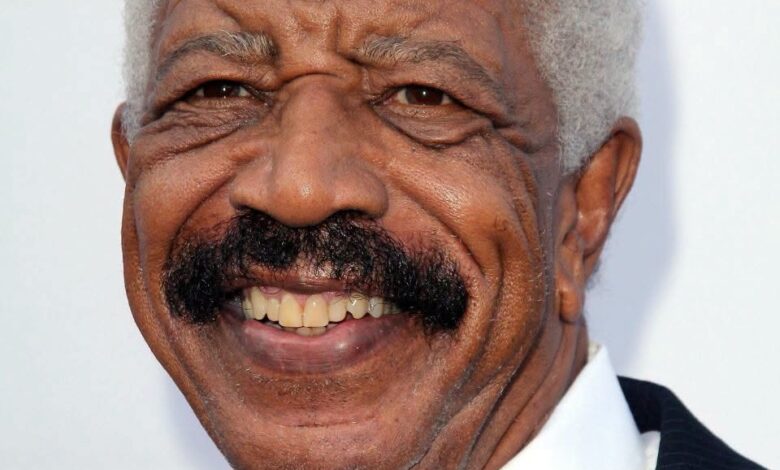
Some dreams arrive early in life.
Others wait patiently until the moment you’re finally ready to chase them.
For Hal Williams, the path to becoming one of television’s most recognizable character actors didn’t begin with fame, Hollywood connections, or a carefully planned career. It began with a deeply personal question—one that changed the course of his life forever.
“What do I really want to try to do before my maker comes and gets me?”
It wasn’t a question asked during a moment of triumph.
It came during a period of uncertainty.
After the end of his marriage, Williams found himself standing at a crossroads, forced to consider what he truly wanted from the years still ahead of him. He could continue living a life that felt familiar, or he could risk everything pursuing a dream that had long remained just beyond reach.
He chose the harder road.
Packing up his belongings, he climbed into his car and headed west for Los Angeles, carrying little more than determination and a promise he made to himself.
He would give acting three years.
If he succeeded, he would know he had found his calling.
If he didn’t, he would move on without spending the rest of his life wondering what might have been.
It was an extraordinary gamble.
There were no guarantees waiting in California.
No contracts.
No influential contacts.
No financial safety net.
Only hope, relentless persistence, and the willingness to hear “no” far more often than “yes.”
Fortunately, the gamble paid off.
As opportunities slowly began to appear, Williams developed a reputation that would define his entire career. He wasn’t the loudest performer in the room or the one demanding the spotlight. Instead, he became the actor directors trusted to bring authenticity, warmth, and quiet confidence to every role he accepted.
Audiences across America first came to know him through one of television’s most beloved sitcoms.
On Sanford and Son, Williams portrayed Officer “Smitty” Smith, the patient and dependable police officer whose calm presence balanced the show’s fast-paced humor. Surrounded by larger-than-life personalities, he never needed exaggerated performances to leave an impression. His understated style made the character feel genuine, earning the affection of viewers week after week.
Years later, another memorable role cemented his place in television history.
As Lester Jenkins on 227, Williams portrayed the supportive husband of Mary Jenkins, played by Marla Gibbs. In a series celebrated for its humor and neighborhood charm, Lester became a steady, reassuring presence—a loving husband, caring father, and voice of reason amid the lively personalities around him.
The role reflected one of Williams’ greatest strengths.
He made ordinary goodness compelling.
Without dramatic speeches or flashy performances, he created characters audiences trusted.
That quiet authenticity became his signature.
His talents extended well beyond television sitcoms.
Williams appeared in numerous films throughout his career, including Private Benjamin, where he shared the screen with Goldie Hawn, demonstrating the same natural presence that made him so successful on television. His film work showcased an actor equally comfortable moving between comedy and drama, always bringing humanity to every character, regardless of screen time.
As the entertainment industry evolved through the decades, so did Williams.
While many performers became closely tied to a single era, he continued finding meaningful work across generations of television.
Viewers encountered him in a remarkable variety of popular series, including guest appearances on productions such as Modern Family, introducing his work to audiences who may never have watched the classic sitcoms that first made him famous.
That longevity is no accident.
Careers lasting decades rarely depend on luck alone.
They are built on professionalism, adaptability, and the ability to make every role matter, whether appearing in a leading part or a single memorable scene.
Williams mastered that craft.
Behind the camera, however, his legacy reaches even further.
He is the father of three children, including actor Van Williams, continuing a family connection to the performing arts. While audiences admired the characters he portrayed, those closest to him knew another side of his story—one defined by resilience, perseverance, and the courage to begin again when many people might have believed their opportunities had already passed.
Perhaps that’s the most inspiring part of his journey.
Hollywood often celebrates overnight success, but Williams’ career tells a different story.
It reminds us that meaningful accomplishments don’t always begin in youth.
Sometimes they begin after disappointment.
After loss.
After life has forced difficult questions.
Instead of allowing those moments to define his future, Williams used them as motivation to build a new one.
His story speaks to anyone who has ever wondered whether they missed their chance.
Whether changing careers later in life is unrealistic.
Whether pursuing a long-held dream is worth the risk.
Williams answered those doubts not with speeches, but with action.
He got in the car.
He drove toward uncertainty.
And he gave himself permission to try.
The decades that followed rewarded that courage with a body of work spanning generations of American entertainment.
From Sanford and Son to 227, from Private Benjamin to Modern Family, his performances became familiar companions in millions of homes. He rarely needed to dominate a scene. Instead, he grounded it, bringing warmth, humor, dignity, and sincerity to every character he portrayed.
That is the quiet power of a truly gifted character actor.
They don’t simply entertain.
They make fictional worlds feel real.
Looking back on Hal Williams’ remarkable career, it’s clear that his greatest achievement wasn’t just the number of roles he played or the decades he spent on screen.
It was proving that one honest question can change an entire life.
“What do I really want to try before my time is over?”
His answer carried him across the country, into an uncertain future, and ultimately into the hearts of generations of viewers.
For anyone standing at their own crossroads, wondering if it’s too late to start over, his life offers a reassuring reminder.
The right moment to begin isn’t always the earliest one.
Sometimes it’s simply the moment you finally decide to believe that your story is still being written.