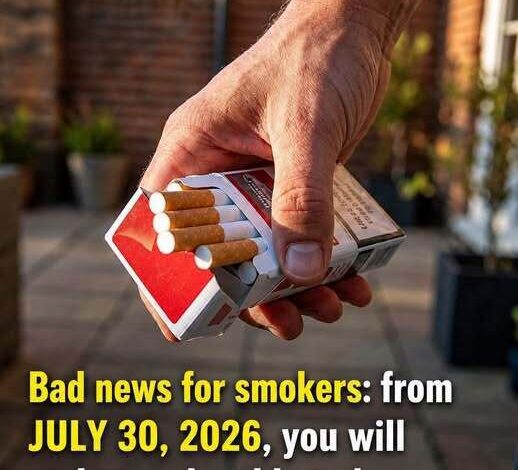
The price printed on a pack of cigarettes in France is no accident.
It is the product of a tightly regulated system designed to do far more than determine what smokers pay at the checkout. Every increase reflects a public policy choice, balancing taxation, public health objectives, and market regulation in an effort to reduce tobacco consumption across the country.
The process begins with the tobacco manufacturers.
They propose a retail price for each brand after considering production costs, packaging, transportation, distribution, and their expected profit margins. That proposed price does not automatically reach store shelves. It must first pass through the French regulatory system before becoming the official retail price.
Once approved, that price applies nationwide.
Whether someone buys a pack in central Paris, a coastal town, or a small rural village, the official selling price for the same brand is essentially identical. This nationwide pricing system helps create consistency across the market, limiting regional price differences and ensuring that consumers pay the same amount regardless of where they make their purchase.
To many buyers, the system appears straightforward.
The price is displayed, the purchase is made, and every retailer charges virtually the same amount.
Behind that simplicity, however, lies a carefully structured financial model.
Only a portion of what consumers pay ultimately goes to the tobacco companies or the retailers selling the product.
The largest share is collected by the French government through a combination of excise duties and value-added tax (VAT). These taxes account for the majority of the retail price of a packet of cigarettes, making tobacco one of the most heavily taxed consumer products in the country.
This approach is intentional.
France has pursued a long-term strategy of gradually increasing tobacco taxes, causing cigarette prices to rise steadily over the years. By 2026, the average cost of many popular cigarette packs has climbed to roughly €13, although prices vary slightly depending on the brand.
The objective extends well beyond raising government revenue.
Public health authorities have long argued that higher prices are one of the most effective ways to reduce smoking, particularly among teenagers and young adults, who are generally more sensitive to price increases. Numerous studies have found that when tobacco becomes less affordable, fewer people start smoking, and some existing smokers reduce their consumption or decide to quit altogether.
Tax revenue also plays an important role.
Billions of euros collected from tobacco taxes contribute to public finances, including healthcare spending and programs aimed at preventing smoking and supporting smoking cessation. While these funds do not necessarily flow into a single dedicated account, tobacco taxation helps finance services that address the health consequences associated with smoking.
Of course, the strategy is not without debate.
Critics argue that continually raising prices places a disproportionate financial burden on people with lower incomes, many of whom struggle to quit despite increasing costs. Others point to concerns about cross-border shopping and the illegal tobacco trade, suggesting that significant price differences between neighboring countries can encourage consumers to seek cheaper alternatives outside the regulated market.
Supporters, however, maintain that the overall public health benefits outweigh those challenges.
They point to declining smoking rates over time and argue that making cigarettes less affordable remains one of the most effective policy tools available to governments seeking to reduce tobacco-related disease.
For smokers, each price increase is immediately noticeable.
A purchase that once seemed routine becomes progressively more expensive, encouraging many to reconsider a habit that carries both financial and health costs. For some, the rising expense serves as motivation to cut back or seek help quitting. For others, it is simply another reminder that tobacco has become an increasingly costly part of daily life.
Ultimately, the price of a cigarette pack in France represents far more than the cost of tobacco and paper.
It reflects a deliberate national strategy—one that uses taxation not only to generate revenue but also to influence behavior, discourage smoking, and reduce the long-term burden of tobacco-related illness.
Every increase sends the same message.
The true cost of smoking is measured not only in euros at the cash register, but also in its impact on individual health and society as a whole.