Red carpets are rarely just about fashion anymore.
They have become emotional battlegrounds where celebrities are expected to balance glamour, individuality, nostalgia, aging, relevance, and internet approval all at once — under thousands of flashing cameras and millions of instant opinions online.
The 2026 ACM Awards in Las Vegas proved that perfectly.
What should have been a celebration of country music quickly turned into a night of intense public commentary, not only about songs or awards, but about bodies, faces, hair, weight loss, aging, and whether certain stars still looked enough like the versions audiences remembered years ago.
That tension hovered over nearly every viral moment of the evening.
The MGM Grand Garden Arena glowed with metallic fabrics, flowing trains, sequins, fringe, and dramatic silhouettes as country music’s biggest names arrived one after another.
Some stars leaned heavily into old Hollywood glamour.
Others embraced modern Western styling.
A few deliberately pushed fashion boundaries knowing controversy itself now fuels visibility online.
And almost immediately, social media began sorting women into categories:
too different,
too revealing,
too thin,
too glamorous,
too plain,
too old to change,
too recognizable to evolve.
The internet no longer watches red carpets quietly.
It judges them in real time.
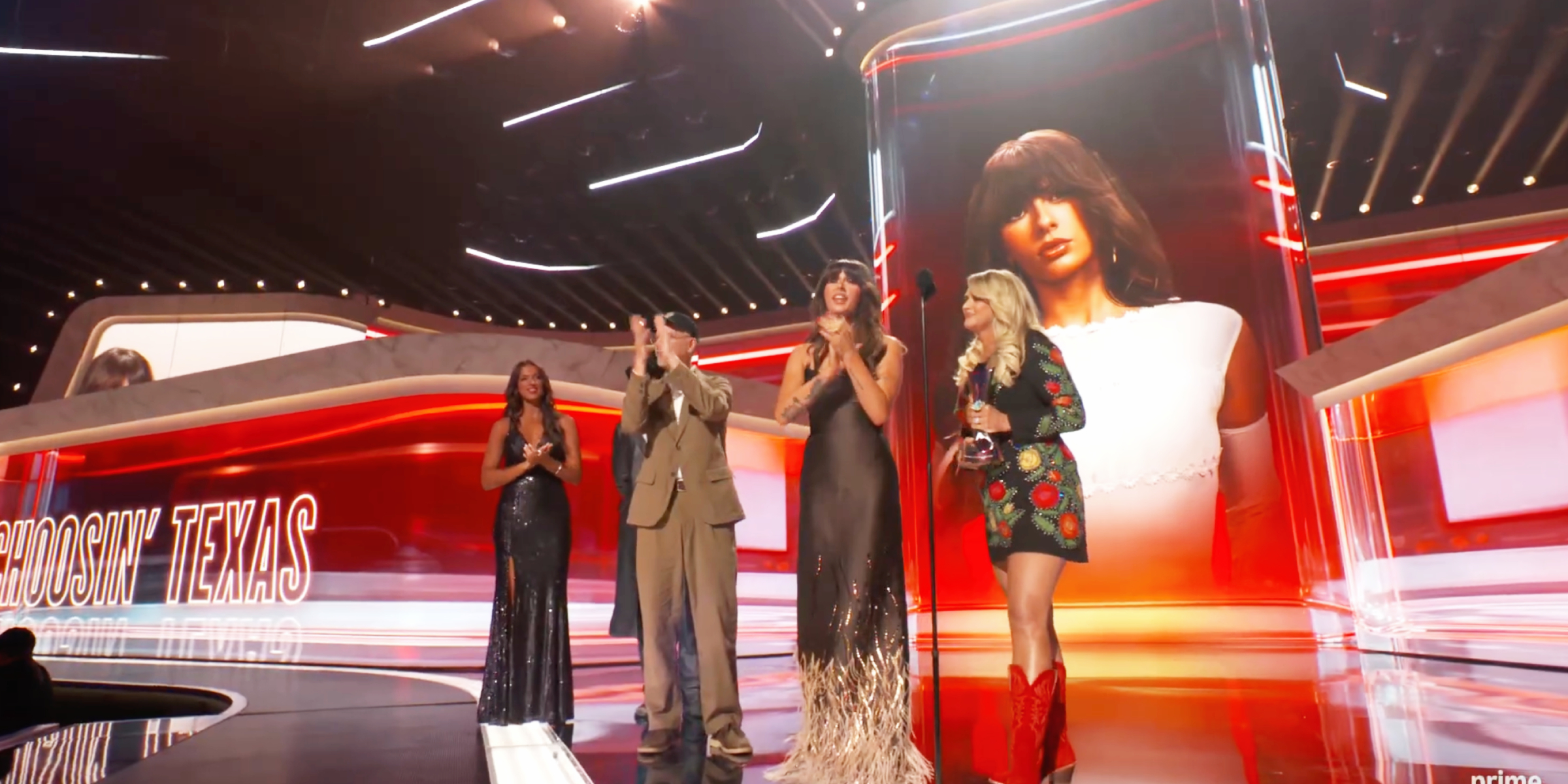
2026 Academy of Country Music Awards | Source: Youtube/ACMcountry
Ella Langley arrived first among the evening’s most talked-about looks, wearing a structured white gown with a corset-style bodice and dramatic flowing train.
The dress carried classic Hollywood energy:
sharp structure softened by movement,
dark layered hair against bright fabric,
a statement necklace completing the image.

A netizen’s comment about one of the female stars attending the 61st Academy of Country Music Awards on May 17, 2026 | Source: Instagram/enews
Photographs captured her standing beneath the arrivals lights looking almost cinematic, and for many viewers, the look represented exactly what modern award-show fashion tries to achieve:
elegance dramatic enough to photograph well without appearing costume-like.
That balance matters more than people realize.
Celebrities now dress not only for photographers in the room, but for endless still images circulating online afterward. Every angle becomes permanent content.
Kacey Musgraves approached the carpet differently.
Her fitted black gown with white detailing leaned into vintage sophistication rather than spectacle.
The styling felt controlled:
red lipstick,
soft dark waves,
minimal excess.
Kacey has always understood something important about fashion identity:
consistency creates recognizability.
While other celebrities chase shock value repeatedly, she tends to refine the same emotional aesthetic —
quiet glamour with just enough edge to feel modern.
Kelsea Ballerini moved toward shimmer instead, arriving in gold-and-cream metallic embellishments resembling scattered leaves under the lights.
The look drew attention precisely because it avoided overwhelming drama.
In a room full of exaggerated silhouettes and attention-grabbing textures, restraint itself became visually distinctive.
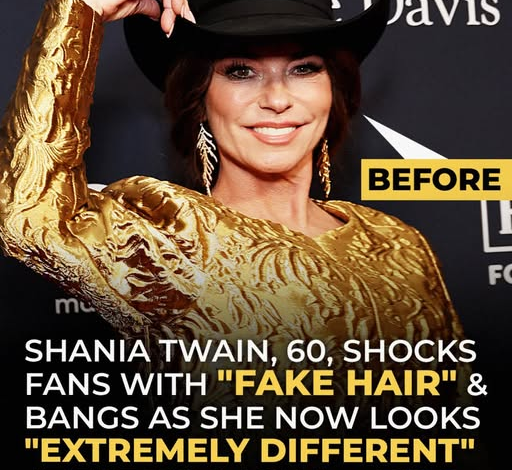
But no appearance generated stronger online reaction than Shania Twain’s.
And perhaps that says something uncomfortable about celebrity culture’s relationship with aging women.
Shania stepped onto the carpet in a silver metallic strapless gown paired with long black gloves and dark flowing accents.
The outfit itself felt theatrical,
confident,
almost futuristic.
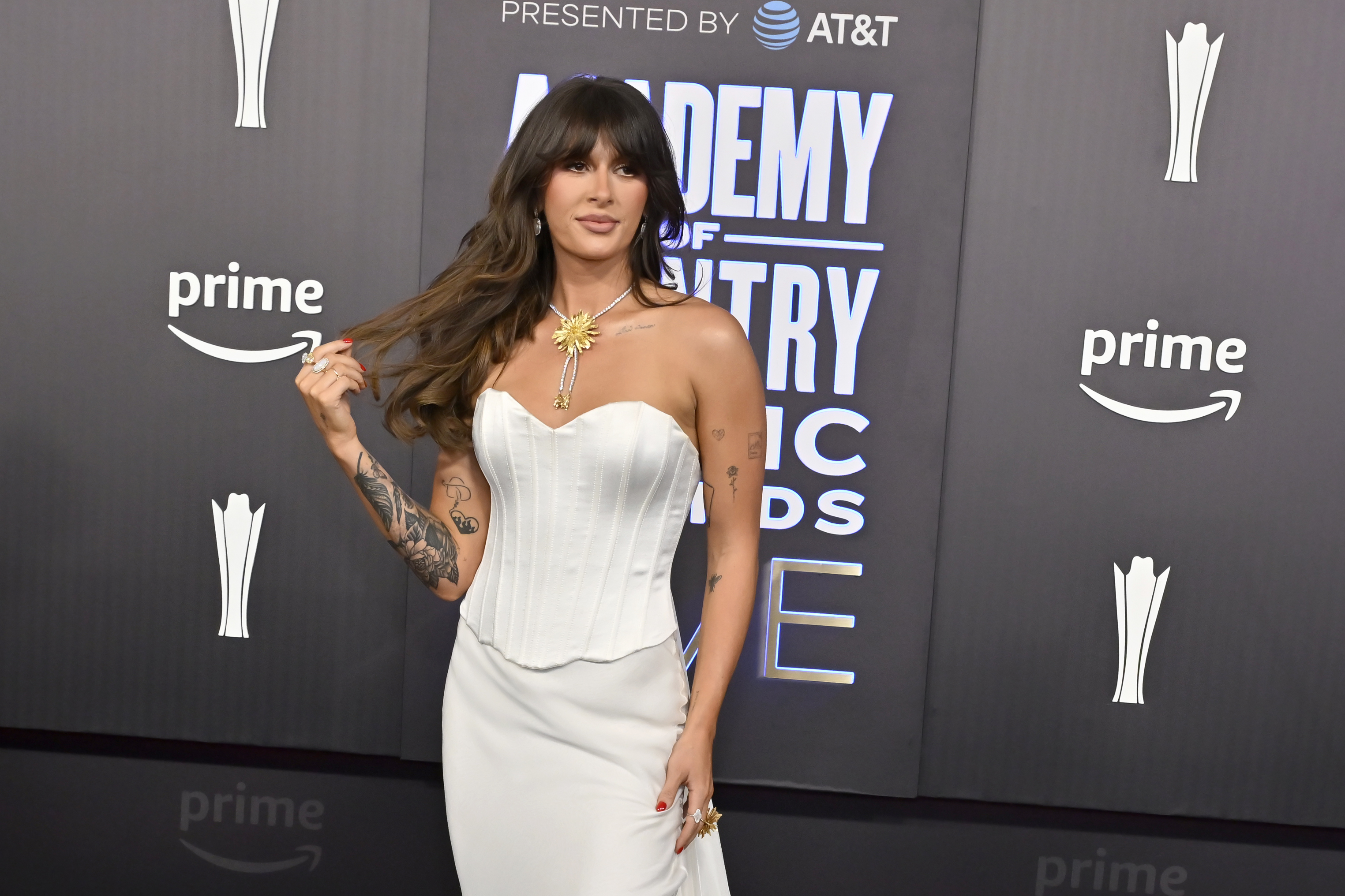
Ella Langley completed her red carpet look with soft glam makeup and a bold statement necklace | Source: Getty Images
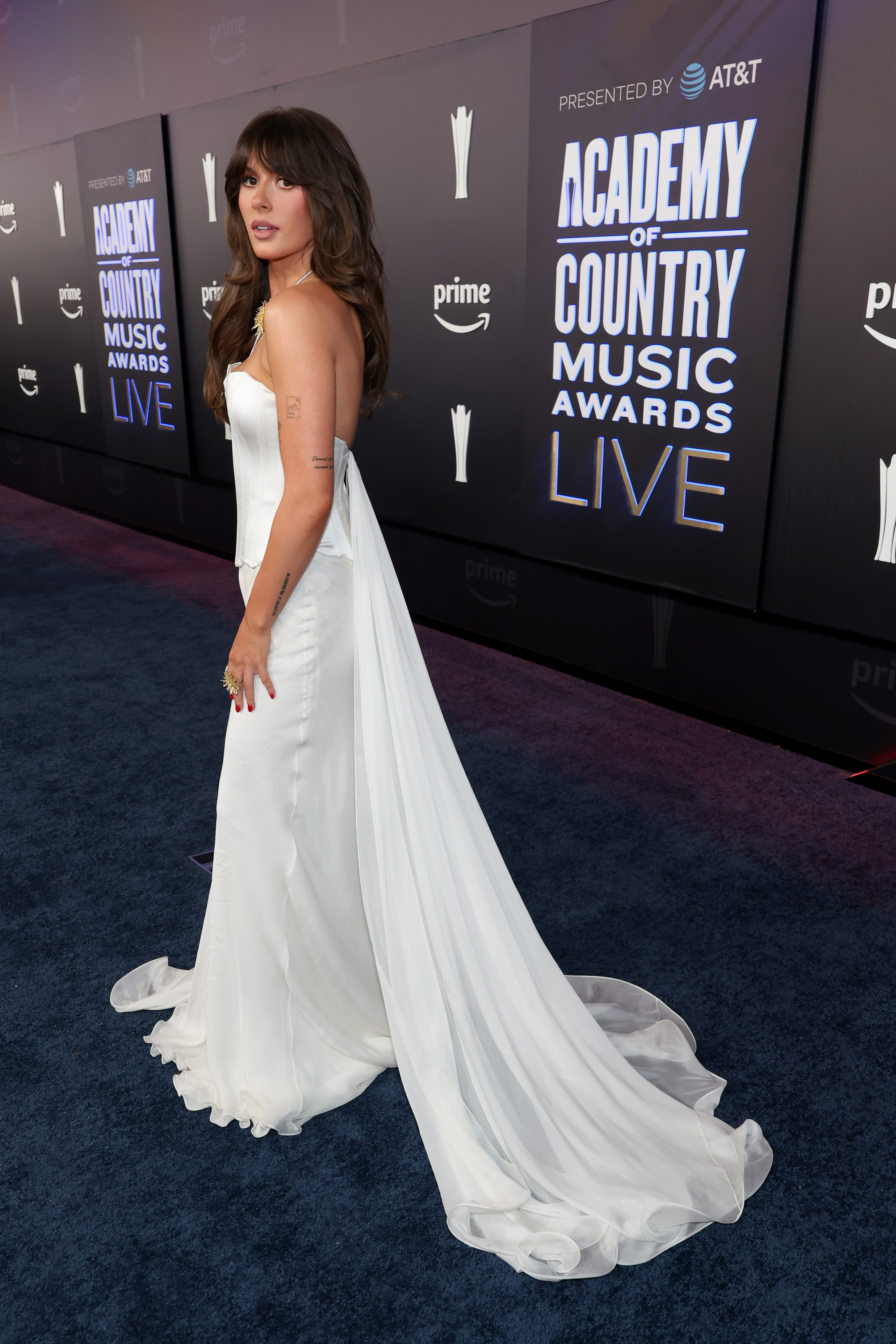
Ella Langley’s flowing train added extra drama as she posed along the arrivals carpet in Las Vegas | Source: Getty Images
But much of the online conversation shifted immediately away from fashion and toward her face, hair, and appearance changes.
That happens constantly to female celebrities over fifty.
Audiences claim to celebrate icons enduring through decades, yet often react harshly the moment those same women visibly age, experiment with styling, or stop resembling nostalgic memory exactly.
Comments flooded social media:
“She looks extremely different.”
“This wig is not it.”
“What did she do to herself?”
Yet alongside criticism came admiration too:
“She looks incredible.”
“Still the One.”
“Classy and still shows off her curves.”
The split reaction reveals something psychologically fascinating about fame.
People do not simply remember celebrities.
They emotionally preserve versions of them tied to earlier periods of their own lives.
For many fans, Shania Twain is inseparable from youth:
road trips,
country radio,
music videos,
the confidence and beauty she represented in the late 1990s and early 2000s.
So when her appearance changes naturally — or stylistically — some viewers experience discomfort almost like disorientation.
Not because she looks bad.
Because she looks different from memory.
And memory is powerful.
Lainey Wilson generated conversation for entirely different reasons.
Her red textured gown marked a visual departure from the signature image audiences associate with her:
bell bottoms,
cowboy hats,
Western silhouettes.
Fans immediately noticed.
“I almost didn’t recognize her without her cowboy hat,” one commenter admitted.
That reaction highlights another modern celebrity pressure:
branding.
Artists become trapped inside visual identities audiences expect repeatedly. The moment they deviate, people interpret change almost personally.
But others praised the softer look enthusiastically:
“Like this dress style better for a change.”
Meanwhile, much of the internet focused less on the dress itself and more on her relationship with former NFL player Devlin “Duck” Hodges.
Their kiss on the red carpet triggered the kind of romantic fascination celebrity couples now generate constantly online:
“They gonna have pretty babies.”
“My absolute favorite couple.”
Celebrity culture increasingly blends romance and branding together. Couples themselves become emotional narratives audiences invest in publicly.
Miranda Lambert leaned directly into country identity instead of abandoning it.
Her embroidered black mini dress paired with bright red cowboy boots felt playful,
recognizable,
unapologetically rooted in the genre’s visual traditions.
That choice mattered because country music fashion often operates differently from mainstream Hollywood glamour.
There’s still space for boots,
embroidery,
Western influence,
personality.
Miranda has always understood that authenticity inside country culture matters as much as sophistication.
Then came Morgane Stapleton.
And once again, online attention drifted toward body scrutiny almost immediately.
Standing beside Chris Stapleton in a sleek black gown, Morgane looked elegant and understated.
But social media fixation quickly centered on perceived weight loss:
“She has lost so much weight.”
“Ozempic does wonders.”
That response reveals another troubling aspect of internet celebrity culture:
women’s bodies become public discussion forums the second visible changes occur.
Sometimes the commentary sounds complimentary.
Sometimes invasive.
Often both simultaneously.
Either way, female celebrities are expected to tolerate mass speculation about health, medication, aging, and appearance as though visibility itself erases personal boundaries.
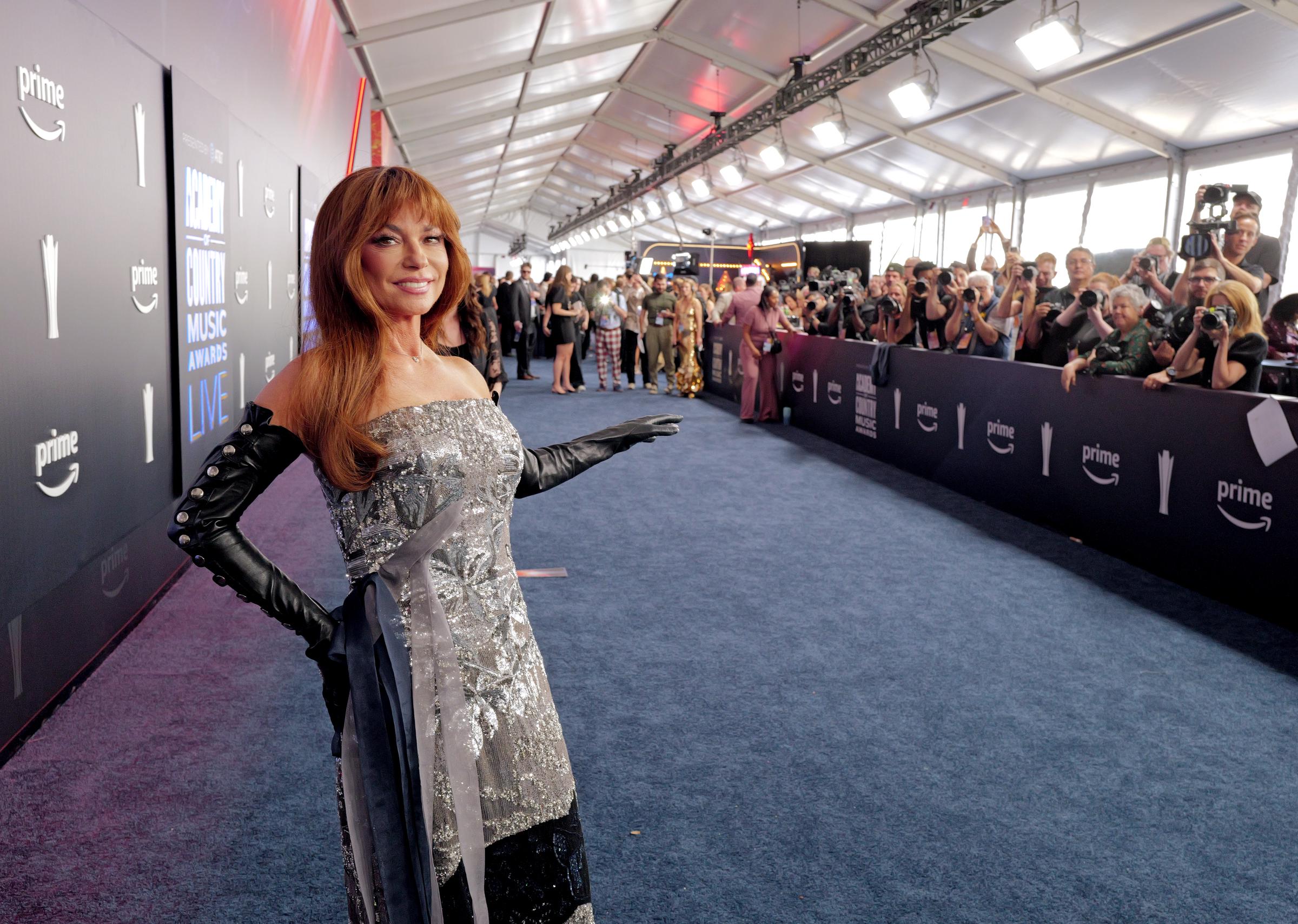
Long black gloves and shimmering textures added dramatic flair to Shania Twain’s red carpet ensemble | Source: Getty Images
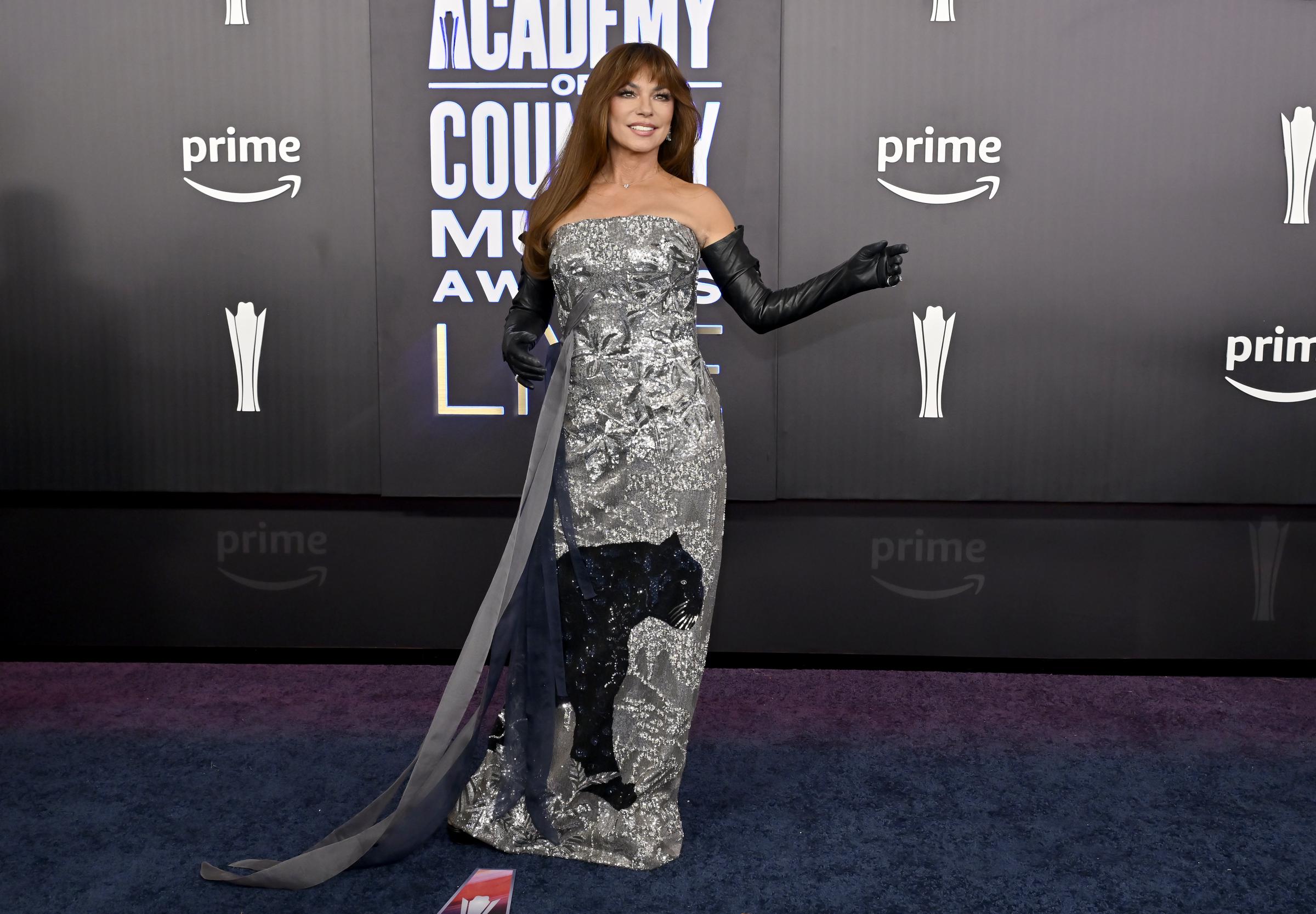
Long black gloves and shimmering textures added dramatic flair to Shania Twain’s red carpet ensemble | Source: Getty Images
And yet admiration threaded through the conversation too:
“She could be a supermodel.”
That contradiction defines modern online fandom:
adoration mixed constantly with entitlement.
Other attendees brought quieter glamour to the evening.
Emily Ann Roberts wore shimmering gold with cape-style sleeves that reflected the arrivals lighting dramatically.
Mackenzie Carpenter embraced sparkling champagne tones paired with a scarf-like draped accessory.
Dasha kept things minimal in sleek black simplicity while Hannah Palmer leaned fully into theatrical volume and gold-bronze patterns.
Lee Ann Womack arrived in glossy black elegance that felt timeless rather than trendy.
And throughout the night, one thing became increasingly obvious:
country music fashion itself is evolving rapidly.
The genre once associated visually with denim, boots, rhinestones, and hats now comfortably merges:
high fashion,
old Hollywood,
avant-garde silhouettes,
Western nostalgia,
social-media-ready glamour.
The ACM carpet reflected all of it simultaneously.
But perhaps the most revealing section of the entire conversation arrived when discussion drifted backward toward Megan Moroney’s controversial yellow gown from the 2025 ACM Awards.
The canary-yellow dress — complete with dramatic side slit and cascading fringe — immediately reminded audiences of Kate Hudson’s iconic gown in “How to Lose a Guy in 10 Days.”
Fans loved the reference:
“How to Lose a Guy in 10 Days vibes.”
Others admired the confidence and femininity:
“So feminine!”
Yet criticism appeared just as quickly:
“Girls need modesty.”
“She went classy to trashy.”
That language matters because female celebrities still navigate deeply contradictory expectations publicly.
Be glamorous —
but not too revealing.
Be sexy —
but remain “classy.”
Stand out —
but not enough to make people uncomfortable.
And the boundaries shift constantly depending on audience, age, genre, and internet mood.
What one viewer calls empowering,
another calls attention-seeking.
What one fan praises as confidence,
another labels inappropriate.
Women on red carpets are often evaluated less as artists and more as negotiations between fantasy and acceptability.
Megan Moroney’s dress became symbolic of that exact tension:
sweet but daring,
elegant but provocative,
playful yet polarizing.
And perhaps that is why conversations around award-show fashion have grown so emotionally charged in the social media era.
These looks are no longer just clothes.
They become cultural tests projecting broader anxieties about:
aging,
beauty,
femininity,
body image,
authenticity,
reinvention,
and visibility itself.
The ACM Awards may technically celebrate music.
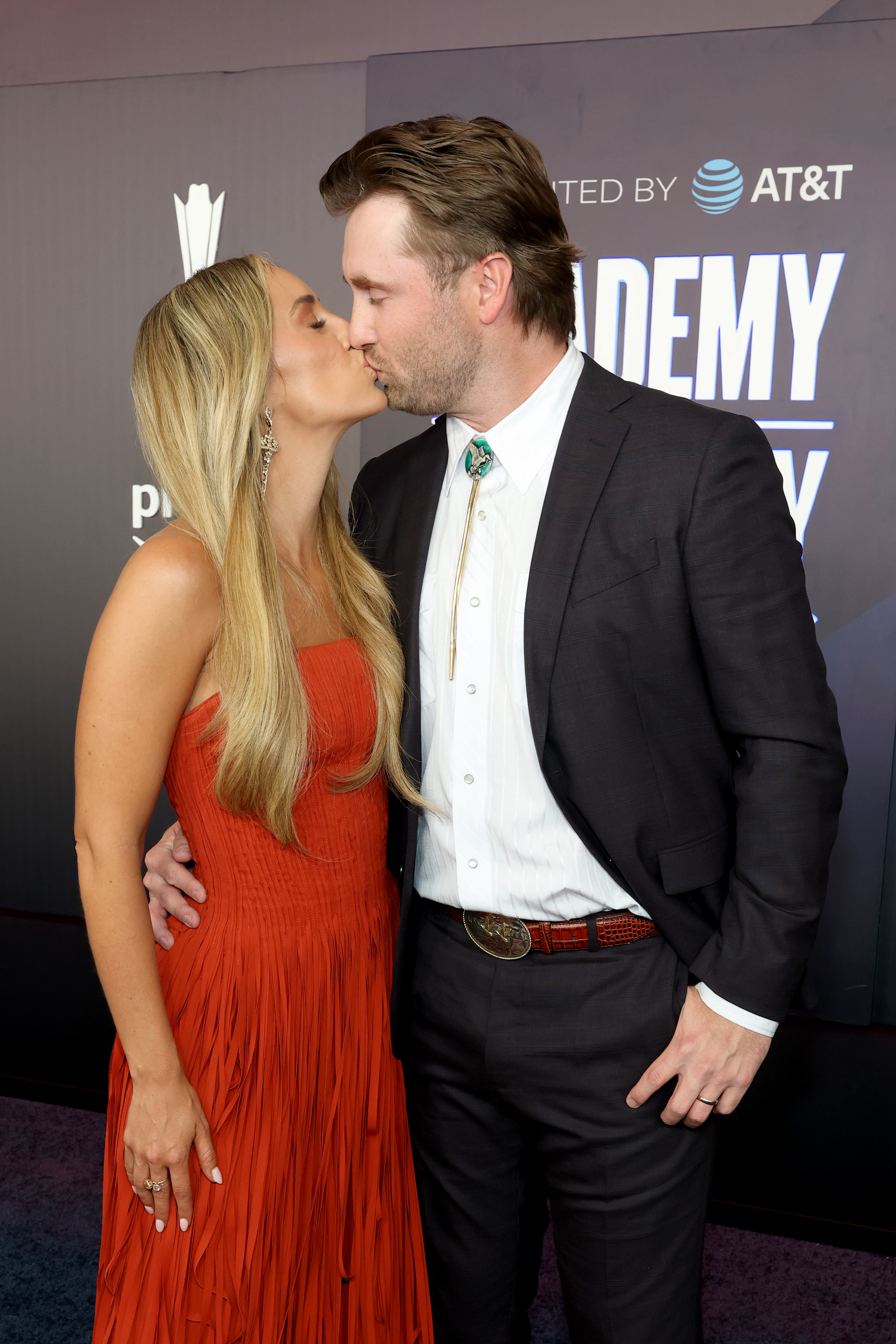
Lainey Wilson and Devlin “Duck” Hodges shared a kiss while posing on the ACM Awards red carpet | Source: Getty Images
But every year, the red carpet reveals something else entirely:
how audiences see women,
how celebrities manage identity under public pressure,
and how impossible it has become to exist visibly online without becoming a canvas for millions of strangers’ opinions.
Still, amid all the judgment and debate, one truth remains impossible to deny.
Country music’s biggest stars know exactly how to create moments people cannot stop talking about.
And in today’s celebrity culture, that may be its own kind of award.