My Daughter Disappeared at 17 – 16 Years Later, I Saw the Bag I Knitted for Her on a Stranger’s Shoulder

For sixteen years, I thought the worst part of losing my daughter was not knowing whether she was alive.
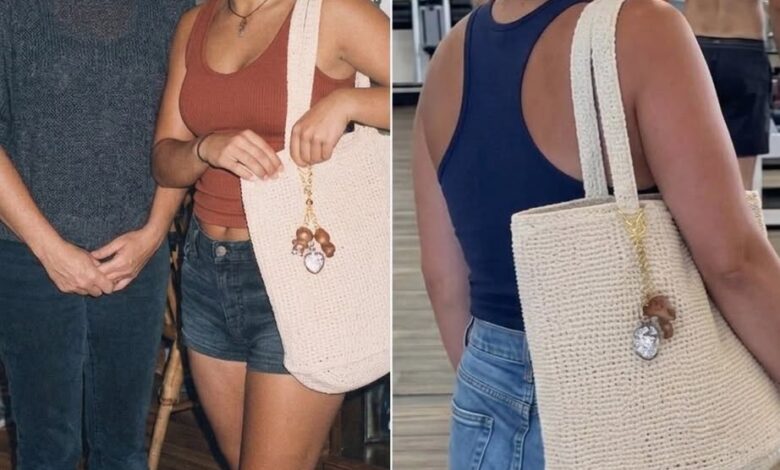
Then I saw a cream-colored beach bag hanging from a stranger’s shoulder on the Ocean City boardwalk.
Before I noticed the scratched brass keychain swinging from the strap, I already knew the bag.
I had made it.
And in one unbearable second, the past I had spent sixteen years trying to survive came rushing back.
Gia was seventeen when she left home.
The last words I ever said to her were:
“Then go. See how far you get.”
I have hated that sentence ever since.
The argument had started over something stupid.
A green tank top.
I told her it was too small.
She told me it was her shirt.
I said that wasn’t the point.
She demanded to know what the point was.
The truth is, by then we had been arguing all summer.
Clothes.
Friends.
Curfew.
Her attitude.
My rules.
At seventeen, Gia could turn anything into a battle.
At forty-one, apparently, so could I.
She grabbed the beach bag from the back of a chair.
I thought she was bluffing.
“Then go,” I snapped. “See how far you get.”
Gia looked at me for a long second.
“Fine.”
She didn’t slam the door.
That detail still haunts me.
If she had slammed it, maybe I could remember her as furious.
Instead, she simply walked away.
By sunset, I was still angry.
By midnight, I was frightened.
By morning, fear had become something physical inside my chest.
I called friends.
Then their parents.
I drove every street I could think of.
When the police arrived, I repeated the same description until it stopped sounding like my child.
Seventeen.
Dark hair.
Green tank top.
Cream-colored knitted bag.
Brass keychain.
The bag had been my gift to her that spring.
I had made it badly.
One handle leaned slightly.
A row of stitches near the bottom was crooked because I had made a mistake and failed to fix it.
When I gave it to her, Gia laughed.
“It looks homemade.”
“It is homemade.”
“No, Mom. I mean really homemade.”
She grinned.
I threw a dish towel at her.
After that, she carried it everywhere.
On one strap hung a tiny brass keychain she had owned since she was six.
It was scratched and practically worthless.
But she kept transferring it from backpack to purse to bag.
For sixteen years, that was one of the details I gave investigators.
The case produced everything except Gia.
Sightings.
Rumors.
Scams.
A man in Nevada once demanded money for photographs he claimed showed my daughter.
Someone said she was in Tennessee.
Someone else said Arizona.
Nothing held.
Eventually, people stopped saying her name around me.
I refused to.
When people asked if I had children, I said yes.
When I spoke about the past, I said:
Gia.
I would not allow my daughter to become a silence.
Then came the boardwalk.
It was July, brutally hot, crowded with tourists and children carrying melting ice cream.
I was walking with a bottle of water when I saw the bag.
Cream yarn.
Crooked stitching.
Brass keychain.
I stopped so fast a man nearly walked into me.
The woman carrying it was around forty.
Dark hair.
Sunburned shoulders.
A complete stranger.
I followed her.
Every step felt insane.
I wanted to catch her.
I was terrified to.
Finally, I reached out and touched her arm.
“Where did you get that bag?”
She jerked away.
“Excuse me?”
“I’m sorry. That bag. I made it for my daughter.”
She stared at me.
“I made that exact mistake near the bottom.”
The woman turned the bag.
There it was.
The crooked row.
Her expression changed.
“What was your daughter’s name?”
My throat tightened.
“Gia.”
Something flickered across her face.
“You know that name.”
She swallowed.
“I’ve heard it.”
The boardwalk seemed to disappear around us.
“Where?”
“My name is Dana,” she said quietly. “I think we should sit down.”
“No. Tell me where you got it.”
She hesitated.
“A thrift store.”
“When?”
“Maybe fourteen years ago.”
My knees nearly gave out.
Fourteen years meant the bag had left Gia’s possession about two years after she disappeared.
“Where?”
“Virginia. Near Richmond, I think.”
“Was anything inside?”
Dana looked uncomfortable.
“Nothing important.”
“Please don’t decide that for me.”
She closed her eyes briefly.
“A receipt. A hair tie. Sand.”
“The keychain?”
“It was already attached.”
I reached toward it but stopped before touching it.
“That belonged to Gia.”
Dana nodded slowly.
Then she said something that made my blood turn cold.
“There was also a note.”
“What did it say?”
“I don’t remember all of it.”
“Yes, you do.”
She looked at me.
“I remember the line, ‘I can’t go back yet.’”
Gia stood in our doorway again in my mind.
Seventeen.
Green tank top.
Beach bag.
Fine.
Then Dana opened the bag.
“There’s something else.”
From a narrow inner pocket, she removed a clear plastic sleeve.
Inside was a photograph.
I knew the girl before Dana handed it to me.
Gia.
Older.
Maybe eighteen or nineteen.
Shorter hair.
Thinner face.
Sitting on porch steps with her knees pulled toward her chest.
And smiling.
Really smiling.
For sixteen years, I had imagined hospitals.
Graves.
Roadsides.
Locked rooms.
But there she was.
Alive after she disappeared.
On the back, in blue ink, were two words.
Still here.
I knew the handwriting.
My daughter’s.
Then I noticed a date beneath it.
August 3, 2009.
More than a year after she left home.
I began crying so hard I could barely breathe.
Dana whispered, “I should have turned it in.”
“You didn’t know.”
She placed the bag beside me.
“You should have this.”
I ran my fingers over the handle I had made.
“No.”
“It belonged to her.”
“It was hers.”
That distinction suddenly mattered.
For sixteen years, I had frozen Gia at seventeen.
Her toothbrush stayed in our bathroom for nine years.
I renewed her library card twice.
I repeated the same height, the same clothes, the same description.
But the photograph proved something I had never allowed myself to imagine.
Gia had become someone beyond the girl who left my house.
That evening, I called police.
The case reopened.
The photograph became evidence.
Dana helped investigators identify the thrift store.
Eventually, they traced the bag to a donation from an old church shelter near Richmond.
The shelter had closed years earlier.
Most records were gone.
But one former volunteer remembered a girl named Gia.
When the detective called me, his voice was careful.
“There’s something else.”
“What?”
“The volunteer remembers her because she was pregnant.”
I stopped breathing.
Pregnant.
Suddenly, that last summer rearranged itself in my memory.
The oversized sweatshirt despite the heat.
Her moods.
Skipping breakfast.
The panic whenever I mentioned doctors.
Had she tried to tell me?
Had I been too busy winning arguments to notice?
My seventeen-year-old daughter had walked out carrying a beach bag and a secret.
And now there was another possibility.
A grandchild.
Somewhere, maybe, a young person existed who had Gia’s eyes.
Her laugh.
Her stubbornness.
Maybe they didn’t even know my name.
That discovery changed the search completely.
For years, I had been looking for the girl who left.
But she was no longer seventeen.
If she was alive, she was thirty-three.
She had lived years I knew nothing about.
Maybe she had raised a child.
Maybe she had changed her name.
Maybe she had built a life.
Maybe she still believed home was the last place she was allowed to return.
The cream-colored bag now sits in my closet.
Not as proof that Gia is gone.
As proof that her story continued after our last argument.
That matters.
Because for sixteen years, I believed my cruel sentence might have been one of the final things she ever heard from me.
Now I know it wasn’t the final chapter.
There was at least another year.
Another porch.
Another photograph.
Another version of Gia who smiled.
And if there is even the smallest chance I can find that woman—or the child she may have had—I will keep looking.
But I’m no longer searching to demand answers.
I don’t want to ask why she left.
I don’t want to ask why she didn’t call.
I don’t want my first words to carry accusation.
If I ever see her again, I already know exactly what I will say.
The words I should have given her when she was seventeen.
The words I wish had replaced pride.
The words I have rehearsed for sixteen years.
“Gia, you can come home whenever you’re ready.”