World Health Organization Issues Urgent Warning After Deadly New Virus Outbreak Sparking Fears Of Next Covid At Sea

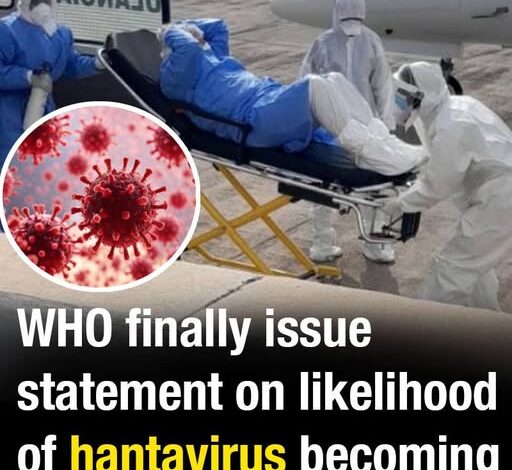
A terrifying wave of panic has erupted aboard a luxury cruise ship stranded far from shore, transforming what was meant to be a dream vacation into a floating medical crisis that now has the attention of global health authorities. What began as reports of several passengers falling mysteriously ill has rapidly escalated into a full-scale quarantine emergency after multiple deaths were confirmed and nearly one hundred and fifty frightened travelers were placed into strict isolation inside the vessel. Corridors that once echoed with music, laughter, and champagne-fueled celebrations have fallen silent beneath the weight of fear, uncertainty, and the growing realization that nobody on board fully understands what is happening. :contentReference[oaicite:0]{index=0}
Passengers describe an atmosphere that feels less like a cruise and more like containment. Cabin doors remain shut for hours at a time while masked medical personnel move through hallways under strict protective protocols. Meals are delivered with minimal contact. Loudspeaker announcements interrupt the silence with updates that often raise more questions than they answer. Families who boarded expecting tropical escapes and luxury dining now spend their days anxiously checking for symptoms, monitoring loved ones for fevers, and waiting desperately for test results that could determine whether they are allowed to leave isolation at all. :contentReference[oaicite:1]{index=1}
The outbreak has triggered intense international concern largely because of the virus now believed to be responsible: hantavirus, a rare but notoriously dangerous family of viruses associated with severe respiratory and organ complications. Historically, hantavirus infections carry frighteningly high mortality rates, which immediately amplified public fear once reports from the ship began spreading online. Social media reacted almost instantly, with comparisons to the earliest days of the COVID-19 pandemic flooding comment sections, news broadcasts, and online forums. Images of passengers confined to cabins and emergency responders boarding the vessel only deepened the sense of global unease. :contentReference[oaicite:2]{index=2}
Yet infectious disease experts have repeatedly emphasized a critical distinction that separates this outbreak from the type of fast-moving airborne pandemic many people immediately fear. Unlike highly contagious respiratory viruses, hantavirus traditionally spreads through direct exposure to infected rodents, their droppings, urine, or contaminated environments. Casual person-to-person transmission is considered extremely uncommon under normal circumstances. That biological limitation is precisely why epidemiologists continue stressing that the broader public risk remains exceptionally low despite the terrifying headlines dominating global media coverage. :contentReference[oaicite:3]{index=3}
What has deeply unsettled investigators, however, is the fact that the outbreak appears to defy the normal pattern experts expect to see.
Medical inspection teams searching the cruise vessel reportedly have not discovered evidence of a rodent infestation significant enough to explain the scale of infections emerging onboard. No obvious wildlife contamination source has been identified in passenger areas, kitchens, storage facilities, or maintenance systems examined so far. That absence of a clear origin has forced scientists into increasingly complex investigations exploring possibilities they rarely confront in standard hantavirus cases. :contentReference[oaicite:4]{index=4}
Some specialists are examining whether an extraordinarily rare environmental transmission factor may be involved. Others are reportedly studying the ship’s closed ventilation systems, sanitation networks, food supply chains, and water filtration systems searching for any unique condition that could have accelerated exposure inside such an enclosed environment. While no evidence currently confirms mutation or large-scale airborne spread, the lack of immediate answers has created a dangerous vacuum where speculation spreads far faster than verified science. :contentReference[oaicite:5]{index=5}
And on a cruise ship, fear itself becomes highly contagious.
The architecture of modern cruise liners unintentionally magnifies psychological panic during medical emergencies. Thousands of people from different countries live temporarily inside a tightly packed floating city where shared dining halls, entertainment venues, elevators, ventilation systems, pools, casinos, and narrow corridors create constant human proximity. Under ordinary circumstances, those features feel luxurious and social. During an outbreak, they suddenly feel claustrophobic.
Passengers trapped aboard describe watching ordinary interactions transform into moments of suspicion.
A cough inside an elevator becomes terrifying.
Someone looking pale at dinner sparks whispers.
Every delayed medical update fuels new rumors.
Without reliable information, imagination quickly overtakes reality.
Inside isolated cabins, many passengers now spend hours scrolling through alarming online reports while simultaneously trying to contact worried family members back home. Some have reportedly begun documenting symptoms obsessively, checking temperatures repeatedly throughout the day, or avoiding even brief contact with neighbors despite reassurances from medical teams. In enclosed spaces cut off from normal routines, uncertainty alone can become psychologically overwhelming. :contentReference[oaicite:6]{index=6}
The World Health Organization has attempted to calm growing fears by publicly emphasizing that the broader global threat remains limited based on current evidence. Officials continue stressing that hantavirus biology differs significantly from viruses capable of sustained widespread airborne transmission through general populations. Global monitoring systems are already active, containment procedures are underway, and specialized response teams have been deployed to support the ship and local authorities managing the situation. :contentReference[oaicite:7]{index=7}
Still, the crisis has exposed how vulnerable large-scale travel systems remain to both disease and public panic.
Cruise ships occupy a uniquely fragile position during health emergencies because they exist somewhere between tourism infrastructure and isolated ecosystems. Once an outbreak emerges onboard, containment becomes enormously complicated. Disembarkation decisions involve multiple governments. Nearby ports fear accepting potentially infected passengers. Medical evacuations require coordination between international agencies. Every delay increases both anxiety and media attention.
And modern media ecosystems amplify those emotions instantly.
Within hours of the first reports, sensational headlines describing a “deadly mystery virus” aboard a trapped luxury liner spread across global platforms. Dramatic language, partial information, and emotional eyewitness accounts quickly merged into narratives far more frightening than confirmed medical evidence alone justified. Experts warn this pattern has become increasingly common in modern crises: fear replicates online at extraordinary speed while science moves carefully and methodically behind it. :contentReference[oaicite:8]{index=8}
That gap between emotional reaction and verified information creates fertile ground for misinformation.
Some online users have already begun falsely claiming the outbreak proves a new pandemic has started. Others speculate about laboratory mutations, government coverups, or hidden casualty numbers despite no evidence supporting such claims. Public health officials now face two simultaneous challenges: containing the actual medical situation aboard the vessel while also containing the explosion of panic spreading digitally around the world. :contentReference[oaicite:9]{index=9}
Meanwhile, onboard conditions remain emotionally exhausting for passengers caught inside the quarantine itself.
For them, the crisis is no longer abstract.
It is waking each morning wondering whether a mild headache means infection.
It is hearing ambulances or helicopters approach the ship and fearing another emergency evacuation.
It is watching crew members in protective equipment move silently through once-busy hallways.
It is trying to reassure children while privately feeling terrified yourself.
And it is the unbearable uncertainty of not knowing when normal life will resume — or whether more deaths are still coming.
At this stage, investigators remain focused on three urgent priorities: identifying the exact epidemiological origin of the outbreak, preventing additional spread aboard the vessel, and ensuring accurate medical data guides public response rather than fear-driven speculation. Scientists continue analyzing environmental samples, patient histories, supply records, and possible contamination pathways while health officials coordinate internationally to manage the unfolding situation responsibly. :contentReference[oaicite:10]{index=10}
For now, experts continue cautioning against assuming this isolated maritime outbreak signals the beginning of a larger global catastrophe.
But they also acknowledge something equally important:
modern society remains psychologically vulnerable to uncertainty in ways few systems are fully prepared to handle.
Because in the age of instant communication, fear often travels across the planet much faster than evidence ever can.
And aboard that stranded cruise ship tonight, surrounded by dark ocean and unanswered questions, hundreds of frightened passengers are living inside the space between those two forces — waiting for science to catch up with panic before the world decides what this crisis truly means.