The terrifying backyard discovery that completely shattered a town seven month search for answers

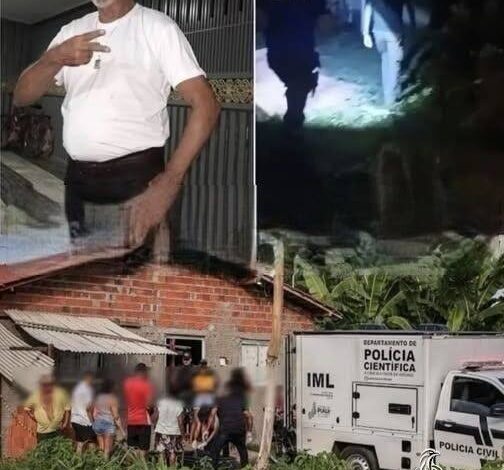
For seven unbearable months, the family existed inside a kind of emotional limbo that slowly consumed everything around them.
Hope became exhausting.
Every phone call carried the possibility of devastation. Every unknown number sent adrenaline crashing through exhausted bodies already stretched beyond their limits. Birthdays passed awkwardly. Holidays became impossible performances where people pretended to eat, smile, and continue normal conversations while privately imagining terrible scenarios they could barely say aloud. Missing-person cases do not simply remove someone from a family — they trap everyone left behind inside uncertainty, where grief never fully settles because hope refuses to die completely. :contentReference[oaicite:0]{index=0}
That uncertainty finally shattered the moment investigators drove a metal shovel into the hard earth behind the abandoned property.
Witnesses later said the sound itself felt unforgettable.
Cold.
Sharp.
Final.
One scrape of metal against dirt suddenly transformed seven months of desperate searching into something horrifyingly irreversible. Until that instant, there had always remained the possibility — however fragile — that the missing person was still alive somewhere. Lost. Injured. Hiding. Confused. Waiting to be found.
But as forensic teams carefully peeled back layers of wet soil, hope collapsed in real time.
A missing person became a body.
And an absence became a crime scene. :contentReference[oaicite:1]{index=1}
The burial site itself disturbed investigators almost immediately.
Not because it was elaborate.
Because it was controlled.
Experienced detectives can often tell the emotional difference between panic and calculation by studying what offenders leave behind. Crimes committed in sudden rage usually carry traces of chaos — hurried concealment, disorganized movement, impulsive mistakes, signs of emotional collapse. But this grave whispered something colder. The body had been positioned deliberately. Soil had been layered carefully. Vegetation around the site showed subtle signs of intentional disturbance designed to disguise recent digging activity. There were no obvious indications of frantic improvisation.
Everything suggested patience. :contentReference[oaicite:2]{index=2}
That realization changed the emotional atmosphere surrounding the investigation instantly.
Because now authorities were no longer searching for someone who snapped in a moment of uncontrollable fury.
They were likely hunting someone methodical.
Someone capable of planning.
Someone emotionally detached enough to bury another human being carefully and walk away afterward.
And perhaps most terrifying of all:
someone who probably returned home afterward appearing completely normal. :contentReference[oaicite:3]{index=3}
In small towns, crimes like this do not stay contained behind police tape.
They spread psychologically through entire communities.
Almost overnight, ordinary interactions became poisoned by suspicion. People started replaying old conversations obsessively in their minds searching for details they once ignored. A strange comment at the grocery store months earlier. A neighbor acting unusually nervous. Someone volunteering too aggressively during the original search parties. Someone disappearing briefly during the timeline investigators now revisited.
Paranoia moved quietly through the town because everyone suddenly understood the same horrifying possibility:
the killer may not be a stranger at all.
It could be someone woven directly into ordinary life. :contentReference[oaicite:4]{index=4}
A coach.
A coworker.
A friend.
A neighbor.
Someone who waved politely every morning while carrying secrets capable of destroying entire families.
That realization alters communities permanently. Trust begins collapsing in subtle ways people rarely notice immediately. Doors stay locked more often. Parents become more protective. Familiar faces feel harder to read. Ordinary friendliness begins carrying undertones of caution.
Because once violence emerges from inside a close-knit community, innocence disappears with it.
Meanwhile, for the victim’s family, reality became almost physically surreal.
People often assume closure arrives once a missing person is finally found. But closure is not the word families usually use afterward. The discovery ends uncertainty, yes — but it also destroys the final fragile space where hope survived. The family was not only mourning the violent death itself. They were mourning seven months spent emotionally reaching toward an ending that never truly existed. :contentReference[oaicite:5]{index=5}
Every search flyer.
Every volunteer effort.
Every sleepless night staring toward the road imagining headlights pulling into the driveway.
Every whispered prayer.
All of it now carried unbearable new meaning.
Because while they searched forests, highways, and neighboring counties desperately believing their loved one might still come home…
the body had been lying silently beneath the earth the entire time.
That realization alone shattered some relatives completely.
Investigators intensified the case immediately after the recovery.
Forensic specialists combed through the burial site inch by inch examining soil composition, trace fibers, insect activity, footwear impressions, decomposition patterns, and tool marks left behind during excavation. Detectives revisited digital records searching for movement patterns, deleted communications, suspicious searches, financial anomalies, and overlooked inconsistencies buried inside seven months of evidence. :contentReference[oaicite:6]{index=6}
The pressure mounted fast.
Media trucks flooded nearby roads.
National true-crime forums exploded with speculation.
Amateur internet investigators began dissecting timelines, social media posts, old interviews, and police statements searching for clues officials might have missed.
But behind all the public fascination sat a much quieter and uglier reality:
a family preparing for a funeral they spent seven months praying they would never have to arrange. :contentReference[oaicite:7]{index=7}
The victim’s relatives released only a brief public statement afterward, thanking volunteers and community members who never stopped searching despite the emotional exhaustion of such a prolonged disappearance. Their message remained heartbreakingly restrained considering the scale of grief surrounding them. They asked simply for privacy while trying to process the impossible transition from searching to burying.
Yet the town itself refused to stay quiet.
As news spread, makeshift memorials appeared rapidly near the property where the body was discovered. Flowers accumulated first. Then candles. Stuffed animals. Handwritten notes. Photographs sealed carefully against the rain. Strangers arrived silently throughout the night leaving small offerings beside the police barriers in memory of someone many never even knew personally. :contentReference[oaicite:8]{index=8}
That collective mourning reflected something larger than sympathy.
It reflected fear.
Because everyone recognized how thin the line truly is between ordinary life and irreversible tragedy. One moment someone exists naturally inside daily routines. Then suddenly their face appears on missing posters while entire communities beg for information and replay surveillance footage hoping for miracles.
And sometimes, beneath all that hope, the truth has already been buried quietly underground.
Behavioral analysts assisting investigators reportedly focused intensely on the burial itself while constructing psychological profiles of the likely offender. The location choice suggested familiarity with the surrounding property. The concealment techniques implied patience and confidence. The lack of visible panic indicated someone emotionally controlled enough to suppress outward chaos during and after the crime. :contentReference[oaicite:9]{index=9}
That profile frightened residents even further.
Because methodical offenders often blend seamlessly into ordinary environments.
They understand routines.
Appear calm.
Participate socially.
Sometimes they even involve themselves directly in search efforts or public concern because proximity grants them emotional control over the narrative unfolding around them.
Investigators quietly began reexamining everyone connected to the case from the beginning — especially individuals who appeared unusually eager during early volunteer searches or overly involved in public discussions surrounding the disappearance. Detectives know that offenders occasionally insert themselves into investigations psychologically, drawn toward the unfolding drama surrounding crimes they secretly orchestrated themselves. :contentReference[oaicite:10]{index=10}
Now the town waits uneasily for the next revelation.
An arrest.
A confession.
A forensic breakthrough.
Something capable of transforming grief into accountability.
But even if justice eventually arrives, some damage cannot be reversed.
The family will never recover the seven months stolen by false hope.
The community will never fully regain the trust that disappeared once the grave was uncovered.
And everyone connected to the case will forever remember the moment the earth opened quietly beneath investigators’ hands…
and revealed that the nightmare hiding beneath their small town had been real all along.