My Family Called Me the Disappointing Sister at My Brother’s SEAL Ceremony—Then His Commander Saluted Me..

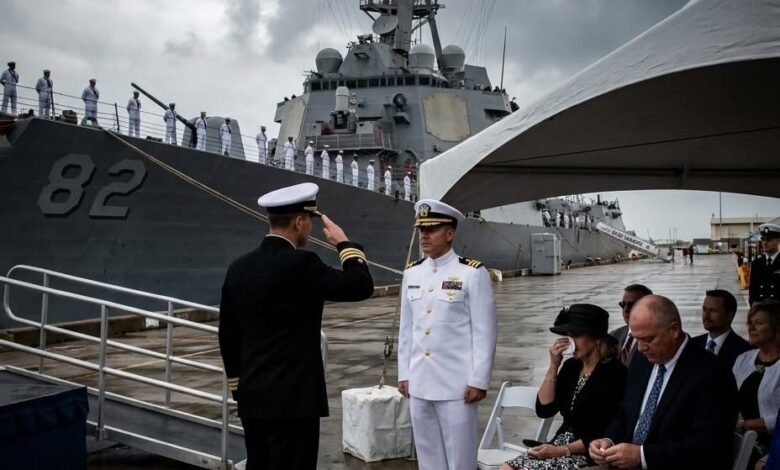
The security guard had barely finished checking my identification when my mother leaned toward him and laughed.
“She’s just the disappointing sister.”
She said it lightly, almost affectionately, as though eleven years of reducing my life to a family joke had made the words harmless.
My father chuckled.
Twenty feet away, my younger brother Ryan stood beneath the California sun in immaculate dress whites, shoulders squared, his newly earned Trident gleaming against his uniform.
Everyone had come to Naval Amphibious Base Coronado for him.
Including me.
I had driven six hours through the night to be there, wearing a plain black dress and carrying a history no one in my family had ever bothered to understand.
My cousin glanced at the reserved seating.
“Why is she sitting with immediate family?”
My mother shrugged.
“Because technically she is.”
Ryan heard enough of the exchange to turn toward me.
“Please,” he murmured when he came close, “don’t embarrass me today.”
I looked at him.
“I won’t.”
He walked away without asking what that meant.
That had always been the problem.
Nobody asked.
They assumed.
Years earlier, I had left college abruptly.
Then I began disappearing for months at a time.
I missed Christmases, birthdays, weddings, and family reunions. Sometimes I came home thinner. Sometimes exhausted. Once, I returned with scars I couldn’t explain.
Whenever anyone asked where I had been, my answers were vague.
Work.
Training.
Overseas.
Nothing I can discuss.
Eventually, my family stopped asking.
Then they filled the silence themselves.
Ryan became the success story.
I became the daughter who was “still figuring things out.”
What they didn’t know was that I had spent eleven years in military service.
Six deployments.
Years of specialized assignments.
And a career that had eventually brought me to the rank of lieutenant commander.
Much of my work couldn’t be discussed around a Thanksgiving table.
So when my father introduced Ryan proudly and described me with an uncomfortable pause, I let him.
When my mother bragged about her son serving his country and told people I had taken “a different path,” I said nothing.
Operational security mattered more than my pride.
But silence has consequences.
People eventually mistake what you refuse to explain for proof that there is nothing worth explaining.
That morning at Coronado, my father leaned toward me.
“You might want to skip the private reception.”
“Why?”
He grimaced.
“People will ask questions.”
“About?”
“What you’re doing with your life.”
I stared toward the stage.
“I think I’ll stay.”
He sighed.
Then Commander Nathaniel Hayes stepped away from the podium.
At first, I assumed he was heading toward another officer.
Instead, his eyes found mine.
He walked directly toward our row.
My mother stopped talking.
Commander Hayes halted in front of me.
I stood automatically.
His posture snapped to attention.
Then his hand rose sharply to his brow.
“Lieutenant Commander Carter,” he said, his voice carrying across the first several rows. “We’ve been expecting you.”
Silence.
I returned the salute.
“Commander.”
My father’s smile vanished.
My mother stared at me.
Ryan, still standing nearby, looked as though someone had removed the ground beneath him.
“Lieutenant Commander?” my mother whispered.
Commander Hayes glanced toward her, then back at me.
“I believe your reserved seat is closer to the platform, ma’am.”
“I’m fine here, Commander.”
His eyes moved briefly across my family.
Something in his expression told me he understood.
“Very well.”
He nodded and returned toward the stage.
My mother grabbed my arm.
“What was that?”
I looked at her hand until she released me.
“What?”
“He called you Lieutenant Commander.”
“Yes.”
My father’s face had gone strangely pale.
“You’re military?”
“Yes.”
“For how long?”
“Eleven years.”
He began counting backward almost unconsciously.
My mother stared at me.
“Eleven?”
“Six deployments.”
Ryan stepped closer.
“You’re serious?”
I met his eyes.
He looked down at my plain black dress as though a uniform might suddenly appear underneath it.
“You never told us.”
“I told you there were things about my work I couldn’t discuss.”
“You said you worked for the government.”
“I do.”
His expression tightened.
“Why wouldn’t you tell me your rank?”
“Would it have changed how you treated me?”
He opened his mouth.
Then closed it.
The ceremony began before anyone could answer.
Ryan eventually returned to his place.
Names were called.
Families applauded.
One by one, the candidates received their Tridents.
When Ryan’s turn came, I stood with everyone else.
Whatever existed between us, I was proud of him.
He had earned that moment.
I thought that would be the end of mine.
Then Commander Hayes returned to the microphone.
“There is one additional person I’d like to recognize today.”
My stomach tightened.
He looked toward me.
Three years earlier, he explained, a joint training operation had deteriorated rapidly when severe weather swept across hostile terrain.
Communications failed.
Visibility collapsed.
Several candidates became stranded.
The extraction window was narrowing.
A joint rescue team went in anyway.
My family had gone completely still.
“Two candidates were recovered under exceptionally dangerous conditions,” Hayes continued. “One of those men is standing on this stage today.”
Ryan’s smile disappeared.
I already knew what was coming.
He didn’t.
“Petty Officer Carter.”
Ryan slowly turned toward Hayes.
Then toward me.
I remembered the mission.
The storm.
The failed communications.
The mud beneath my boots.
A barely conscious candidate whose face I couldn’t clearly see.
Dragging him.
Then carrying him when his legs stopped cooperating.
I had not learned his identity until later.
Ryan stepped down from the stage after the ceremony.
His eyes were wet before he reached me.
“That was you?”
I nodded.
“You were there?”
“Yes.”
His voice cracked.
“You saved my life.”
“I helped get you out.”
He shook his head.
“Why didn’t you tell me?”
“Because I couldn’t.”
“You could’ve said something later.”
“Eventually, maybe.”
His face twisted with shame.
Then I said what eleven years of silence had stored inside me.
“But there’s something you could have done too.”
“What?”
“You could have asked.”
He stared at me.
“You spent years deciding I was a failure because you couldn’t see what I was doing. This morning you told me not to embarrass you.”
His eyes dropped.
“I know.”
“No, Ryan. You’re beginning to know.”
My mother started crying.
She apologized for calling me unimportant.
My father admitted something harder: he had built years of family pride around Ryan while using me as a contrast.
The successful son.
The disappointing daughter.
Ryan finally acknowledged that being the golden child had been easier because everyone needed someone else to occupy the opposite role.
That person had been me.
I accepted their apologies.
But I didn’t tell them everything was forgiven.
One ceremony could reveal the truth.
It couldn’t erase eleven years.
At the reception—the same reception my father had suggested I avoid—Ryan came to me himself.
“Stay,” he said.
“As what?”
He swallowed.
“My guest.”
That answer mattered.
Later, several senior officers stopped to speak with me.
My mother watched differently now.
Not because she suddenly understood my career.
Because she finally understood how much she didn’t know.
Eventually, Ryan asked about the rescue.
I told him what I was permitted to tell.
The storm had moved faster than forecast.
Communications became unreliable.
The extraction window narrowed.
We found multiple candidates in deteriorating condition.
One couldn’t continue under his own power.
“So you carried me?”
“Possibly.”
He almost laughed.
“You really won’t tell me?”
“Some details remain classified.”
He nodded.
For once, he didn’t treat the missing information as an invitation to invent his own answer.
My mother approached later.
“I don’t even know how to introduce you anymore.”
I looked at her.
“You don’t need a complicated story.”
“What should I say?”
“Say your daughter serves. Say much of her work can’t be discussed.”
She waited.
“And?”
I smiled slightly.
“And if it’s true, say you’re proud of her.”
Her eyes filled again.
“It is.”
The real change didn’t happen under those white tents.
It happened afterward.
Ryan started calling.
Not because he needed something.
Because he wanted to know me.
Sometimes his questions wandered into areas I couldn’t answer.
Instead of becoming offended, he’d say, “Fair enough,” and ask something else.
My mother started asking instead of assuming.
My father stopped telling friends I was still trying to find my way.
None of them became different people overnight.
And I didn’t forget what it felt like to sit in that front row while the people closest to me laughed at a life they knew almost nothing about.
But something fundamental had changed.
They finally understood that silence wasn’t emptiness.
Privacy wasn’t failure.
And a life hidden from their view was not automatically a life without meaning.
For years, I believed protecting classified work meant accepting whatever story other people chose to tell about me.
Coronado taught me otherwise.
Some truths must remain private.
Some explanations cannot be given.
But nobody is entitled to fill the space between those truths with contempt.
I didn’t need to reveal every mission.
I didn’t need to display my rank at family dinners.
I didn’t need medals, uniforms, or commanders saluting me before I deserved respect.
That morning, my family finally saw what had been standing beside them for eleven years.
But the more important realization belonged to me.
Being seen doesn’t always require revealing everything.
Sometimes it begins with something much simpler.
You stop apologizing for what must remain private.
You stop accepting other people’s assumptions as the price of your silence.
And when someone insists on calling you a disappointment because they cannot see the whole story, you finally understand that their ignorance was never yours to carry.