What a tragedy! The whole country is mourning the passing. When you find out who he is, you will cry

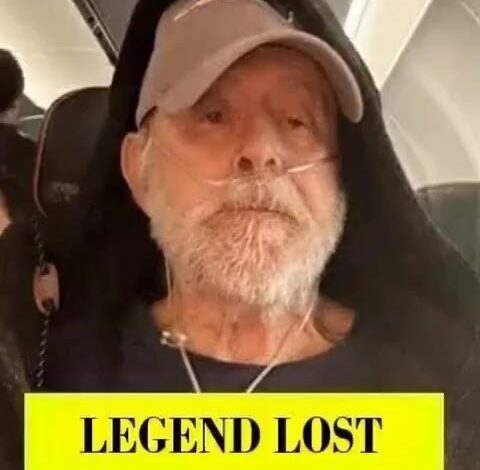
To millions of wrestling fans, Kevin Sullivan was a villain.
Not the kind of villain audiences casually booed before moving on to the next match.
He was something deeper.
Something stranger.
Something unforgettable.
He specialized in creating discomfort.
Fear.
Mystery.
The kind of atmosphere that lingered long after the arena lights dimmed and the crowd went home.
With his intense stare, cryptic speeches, and unsettling presence, Sullivan built a character that seemed to exist somewhere between professional wrestling and a nightmare. He wasn’t merely performing a role. He was constructing entire worlds around it.
Worlds where chaos felt possible.
Worlds where danger seemed real.
Worlds where audiences could never be entirely certain what might happen next.
For decades, wrestling fans watched him command attention in ways few performers ever could.
Yet behind the dark persona, behind the sinister promos and shocking storylines, existed a very different man.
A man many of his peers would later describe not as frightening, but as generous.
Not as ruthless, but as loyal.
Not as a manipulator, but as a mentor.
And in the days following the confirmation of his death, those who knew him best have begun telling a story far more complex than the character audiences saw on television.
Because Kevin Sullivan was never merely a performer.
He was an architect.
A creator.
A teacher.
A student of wrestling psychology whose influence stretched far beyond the spotlight.
Long before modern wrestling became dominated by social media clips and viral moments, Sullivan understood something fundamental about entertainment.
People remember emotion.
They remember how something made them feel.
They remember anticipation.
Shock.
Excitement.
Fear.
Surprise.
He built his career around that understanding.
While many wrestlers focused on athleticism alone, Sullivan obsessed over storytelling.
He understood that a crowd could forgive a missed move.
They could forgive imperfections.
But they would never forget a story that made them care.
That philosophy transformed him into one of wrestling’s most influential creative minds.
Inside locker rooms, fellow wrestlers often described him as someone constantly thinking about the bigger picture.
Every entrance.
Every promo.
Every feud.
Every reaction.
Every detail mattered.
Not because he wanted attention for himself.
Because he wanted the audience to feel something.
And few people understood crowd psychology better than he did.
When Kevin Sullivan walked through a curtain, fans reacted.
Sometimes with excitement.
Sometimes with hostility.
Sometimes with genuine unease.
But always with emotion.
That ability is rarer than many realize.
Professional wrestling has produced countless talented athletes.
Far fewer true storytellers.
Sullivan belonged firmly in the second category.
He knew how to create atmosphere.
How to build tension.
How to make arenas feel electric.
How to transform a wrestling match into something that felt larger than sport.
The darkness he projected became one of his signatures.
For many fans, especially those who watched during wrestling’s more theatrical eras, Sullivan represented something unique.
He wasn’t trying to be cool.
He wasn’t trying to be universally loved.
He embraced discomfort.
He embraced mystery.
He embraced the possibility that audiences might genuinely dislike him.
And because of that commitment, the character became unforgettable.
Yet the contrast between public image and private reality often surprised people.
Young wrestlers entering the business sometimes expected to meet the frightening figure they had watched on television.
Instead, they frequently encountered someone willing to share advice.
Someone eager to help.
Someone who understood how difficult the profession could be.
Stories have emerged repeatedly in recent days from wrestlers who recall road trips with Sullivan.
Long conversations between shows.
Lessons about pacing.
Lessons about storytelling.
Lessons about surviving in an industry that can be both exhilarating and unforgiving.
Many describe him as a teacher long before he officially became one.
A man who believed knowledge should be shared rather than guarded.
That generosity helped shape generations of performers.
The influence of a mentor rarely appears in record books.
It doesn’t show up in championship statistics.
It isn’t measured by ratings.
Yet it often becomes the most enduring legacy of all.
Because every wrestler who learns from a mentor eventually passes those lessons to someone else.
The impact multiplies.
Expands.
Travels forward through time.
And by all accounts, Sullivan’s influence traveled far.
His fingerprints remain visible across decades of wrestling history.
Not only in the characters he created.
Not only in the storylines he helped design.
But in the countless performers who absorbed his understanding of the craft.
Even as wrestling evolved, his ideas continued echoing through the industry.
That is why the events leading to his death feel particularly difficult for many who admired him.
The injury he suffered in May initially appeared to be something familiar.
Another setback.
Another physical challenge.
Another chapter in a life defined by resilience.
After all, professional wrestling leaves marks.
Every veteran carries them.
Scars.
Surgeries.
Pain.
Years of impact accumulated across thousands of matches.
For people inside the business, injuries become part of the landscape.
Not welcome.
But expected.
And Kevin Sullivan had spent a lifetime overcoming obstacles.
The assumption among many friends and fans was that he would overcome this one too.
Because that is what he always seemed to do.
Push forward.
Adapt.
Persevere.
Keep going.
Yet some battles refuse to follow familiar scripts.
Some challenges cannot be solved through determination alone.
And gradually, it became clear that this injury represented something different.
Something more serious.
Something that even a lifetime of toughness could not outwork.
When news of his death was officially confirmed, the reaction spread quickly throughout the wrestling world.
The response felt immediate.
Emotional.
Personal.
Not simply because a famous figure had passed away.
Because people were mourning someone they genuinely loved.
Across social media, tributes appeared from every corner of the industry.
Veterans.
Current stars.
Promoters.
Referees.
Announcers.
Fans.
People who had worked alongside him decades earlier.
People who had known him only briefly.
People whose careers had been influenced by his ideas without ever meeting him.
The stories poured in.
One after another.
Road trips remembered.
Conversations recalled.
Advice repeated.
Acts of kindness shared.
Moments of generosity revealed.
The public image of the villain slowly gave way to a portrait of the man.
A man who made time for others.
A man who cared about wrestling deeply.
A man who understood that success meant little if knowledge wasn’t shared.
A man whose influence reached further than most audiences ever realized.
What made many of these tributes especially moving was their consistency.
Different people.
Different generations.
Different experiences.
Yet similar descriptions.
Thoughtful.
Loyal.
Creative.
Generous.
Passionate.
The words appeared repeatedly.
As though hundreds of people were describing the same person from different angles.
Together, those memories formed something powerful.
A legacy.
Not the carefully manufactured kind.
The genuine kind.
Built from years of interactions.
Years of friendships.
Years of helping others.
Years of contributing to something larger than himself.
For wrestling fans, grief often arrives with nostalgia.
The death of a beloved figure inevitably sends people back through memories.
Old matches.
Old interviews.
Old storylines.
Old moments that once felt ordinary and suddenly become precious.
Kevin Sullivan’s passing has inspired exactly that response.
Fans have been revisiting the eras he helped define.
Watching classic footage.
Sharing favorite moments.
Remembering the emotions he created.
And perhaps most importantly, recognizing how much of wrestling’s modern landscape was influenced by his imagination.
Because creativity leaves traces.
The best storytellers never truly disappear.
Their ideas survive.
Their influence survives.
Their fingerprints remain visible long after they are gone.
Kevin Sullivan understood something that many performers spend entire careers chasing.
Professional wrestling is not merely about winning matches.
It is about creating feelings.
Making people care.
Making people react.
Making them believe, even briefly, in the reality unfolding before them.
Few people accomplished that more effectively than he did.
Looking back now, it becomes clear that his greatest achievement was never simply portraying darkness.
It was understanding how darkness could make light more meaningful.
How villains could elevate heroes.
How conflict could create emotion.
How stories could bring people together.
The sinister character audiences feared was ultimately just one piece of a much larger legacy.
Behind the character stood a creator.
Behind the creator stood a mentor.
Behind the mentor stood a man whose impact extended far beyond any single performance.
Today, arenas still fill with noise.
Crowds still cheer.
Storylines still unfold.
New generations continue building upon the foundation laid by those who came before.
And somewhere within that foundation exists Kevin Sullivan’s influence.
In the risks performers take.
In the stories they tell.
In the emotions they chase.
In the understanding that wrestling, at its best, is about making people feel something unforgettable.
The chants may eventually fade.
The matches may pass into history.
The storylines may become memories.
But the mark Kevin Sullivan left on professional wrestling remains.
A legacy built not merely on darkness, but on imagination.
Not merely on performance, but on passion.
Not merely on a character, but on a lifetime devoted to making an audience come alive.
And in the end, perhaps that is why so many people are mourning him today.
Because even the darkest characters sometimes leave behind the brightest light.
And Kevin Sullivan’s light continues shining through every person, every story, and every moment he helped shape along the way.