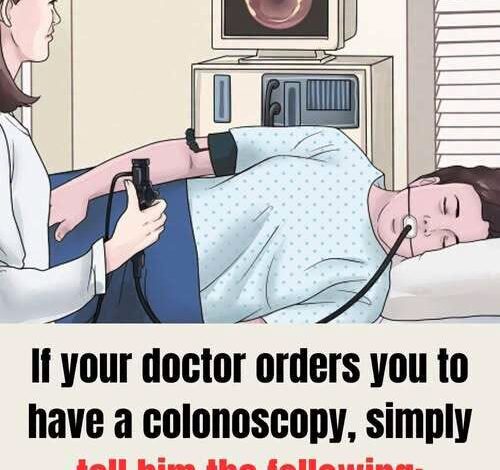
For many people, the word colonoscopy is enough to spark anxiety. Images of discomfort, embarrassment, and complicated medical procedures often come to mind long before the appointment is ever scheduled. That fear is understandable—but it can also be dangerously misleading. What many people view as an unpleasant ordeal is actually one of the most effective tools modern medicine has for preventing a potentially life-threatening disease before it ever begins.
Doctors don’t recommend colonoscopies to make life inconvenient. They recommend them because colorectal cancer has a frightening ability to develop silently. In its earliest stages, it often causes no pain, no obvious symptoms, and no warning that anything is wrong. A person may feel perfectly healthy while abnormal growths slowly develop inside the colon over the course of several years. By the time symptoms finally appear, the disease may already be much more difficult to treat.
That is exactly why routine screening matters.
Unlike many medical tests that simply detect disease, a colonoscopy has the unique ability to prevent it. During the examination, doctors carefully inspect the lining of the colon for abnormal growths known as polyps. While many polyps are harmless at first, some have the potential to become cancer over time. If one is discovered during the procedure, it can often be removed immediately—eliminating the problem before it ever has the chance to develop into something far more serious.
In many cases, what could have become a cancer diagnosis years later ends as a routine procedure lasting only a short time.
That preventive power is what makes colonoscopy so valuable.
Yet fear continues to keep many people away.
Some worry about embarrassment.
Others fear pain or complications.
Many imagine the procedure itself will be the hardest part.
In reality, those expectations often don’t match the experience.
Most colonoscopies are performed under sedation, allowing patients to remain asleep or deeply relaxed throughout the examination. Many people remember very little of the procedure itself. They wake up surprised that it is already over, often commenting that it was much easier than they had anticipated.
Ironically, the preparation beforehand is usually what patients describe as the most challenging aspect.
The bowel preparation requires drinking a prescribed cleansing solution and temporarily changing your diet so the colon can be thoroughly cleaned before the examination. While the process can be inconvenient, it is temporary and essential. A clean colon allows doctors to see small polyps and subtle abnormalities that might otherwise remain hidden.
By comparison, the procedure itself is typically brief.
For most people, it lasts less than an hour.
After a short recovery period from the sedation, patients usually return home the same day and resume normal activities soon afterward, following their healthcare provider’s instructions.
The greater danger often lies not in the examination—but in postponing it.
Every year of delay gives potentially abnormal cells more time to grow unnoticed. Polyps that might have been removed easily during a routine screening can slowly develop into cancers requiring surgery, chemotherapy, radiation, or other intensive treatments. What begins as fear of one medical appointment can unintentionally allow a preventable disease to progress.
Changing the way we think about colonoscopy can make an enormous difference.
Rather than viewing it as something to endure, it helps to see it for what it truly is: an investment in your future health. It is not a punishment or a sign that something is already wrong. It is a proactive decision designed to catch problems early—or prevent them altogether.
Education also helps replace fear with confidence.
Knowing what happens before, during, and after the procedure removes much of the uncertainty that fuels anxiety. Healthcare providers encourage patients to ask questions, discuss concerns openly, and understand exactly why screening is recommended based on their age, family history, and personal risk factors. A conversation with your doctor can often ease worries far more effectively than relying on frightening stories shared online or by acquaintances.
For individuals at average risk, many medical organizations recommend beginning routine colorectal cancer screening around age 45, although the appropriate timing may vary depending on personal and family medical history. People with certain inherited conditions, inflammatory bowel disease, or close relatives who have had colorectal cancer may need to begin screening earlier or undergo testing more frequently. Your healthcare provider can help determine the schedule that best fits your individual circumstances.
Ultimately, a colonoscopy is about far more than one appointment.
It is about protecting years that haven’t happened yet.
It is about catching silent disease before it has the opportunity to become life-changing.
It is about replacing uncertainty with reassurance and taking control of your health instead of waiting for symptoms that may arrive too late.
A single day of preparation and a short medical procedure may never be anyone’s idea of a pleasant experience. But when weighed against the possibility of preventing colorectal cancer—or detecting it at its earliest, most treatable stage—the temporary inconvenience becomes remarkably small.
The goal isn’t simply to complete another medical test.
The goal is to give yourself the greatest possible chance to enjoy many more healthy years ahead.
Sometimes the most powerful act of self-care isn’t the one that feels comfortable today—it’s the one that quietly protects your tomorrow.