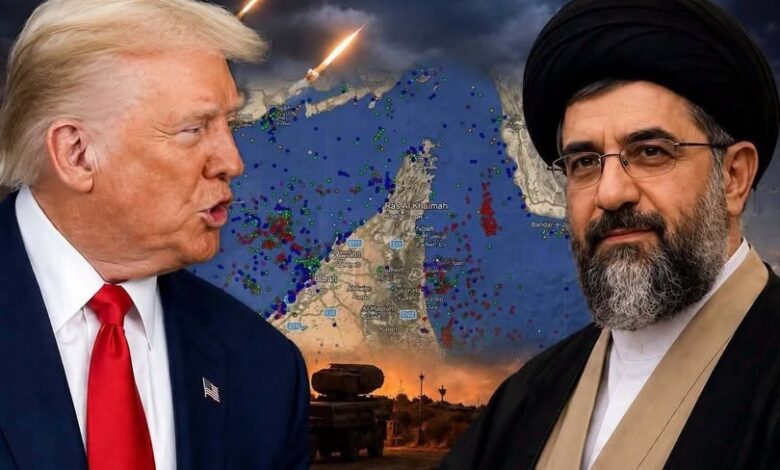
U.S. officials say Russia is now sharing intelligence with Iran about the location of American forces in the Middle East, a development that could raise the risk of a wider regional conflict and deepen concerns about Moscow’s role in the crisis.
According to those officials, the information reportedly includes the positions of U.S. warships, military aircraft, and radar systems operating across the region. If accurate, that intelligence could help Tehran monitor American movements more closely and assess potential targets if tensions escalate further.
Russia is not believed to be directly involved in attacks against U.S. forces. Still, officials warn that providing this kind of intelligence could make Moscow an indirect participant by giving Iran a clearer view of America’s military posture.
The timing is especially concerning.
The Middle East is already under intense pressure, with U.S. forces facing threats from missiles, drones, and Iran-backed groups. More precise information about American deployments could increase the danger of either a deliberate strike or a serious miscalculation.
Even if the intelligence is not used immediately, it may help Iran better understand how U.S. forces are positioned, how they might respond, and where vulnerabilities may exist.
Moscow has not publicly confirmed the allegations, and there is no indication that Russian personnel are directly taking part in operations against American assets. However, U.S. officials view the reported assistance as significant because it suggests Russia may be willing to challenge Washington beyond Ukraine by supporting one of America’s major adversaries in another unstable region.
That possibility expands the stakes.
The confrontation is no longer only about Iran and the United States. It is becoming part of a larger struggle among global powers, with Russia potentially using the crisis to strain U.S. resources, complicate American planning, and increase pressure on Washington.
Officials also said China does not appear to be providing Iran with similar intelligence support. That distinction suggests Beijing may be keeping more distance from direct military or intelligence involvement, even while maintaining diplomatic and economic ties with Tehran.
Russia, by contrast, appears more willing to assist Iran in ways that could directly complicate U.S. operations and increase the risks facing American personnel.
The allegations add another layer of danger to an already volatile situation. If Iran is receiving information about U.S. ships, aircraft, and radar systems, American commanders may have to assume their movements are being tracked and passed to a hostile power.
That could lead to tighter security measures, altered deployment patterns, and more cautious military planning throughout the region.
For Washington, the concern is not only tactical.
It is political.
If Russia’s involvement grows, the Middle East crisis could become more tightly connected to the broader confrontation between Washington and Moscow. Intelligence-sharing may seem less dramatic than direct military action, but in a region where one mistake can trigger a chain reaction, even indirect assistance can carry serious consequences.
The central fear is that the United States may now be facing more than Iran’s own capabilities.
It may be facing a widening network of outside support designed to make those capabilities more effective.
Whether Russia’s role remains limited or expands further, the reported intelligence-sharing marks a troubling shift. It suggests that America’s rivals may see the crisis as an opportunity to weaken U.S. influence in the Middle East without openly entering the fight themselves.