Men Prefer Short Women Because These Have… The Science Behind Attraction (With a Few Surprising Truths)

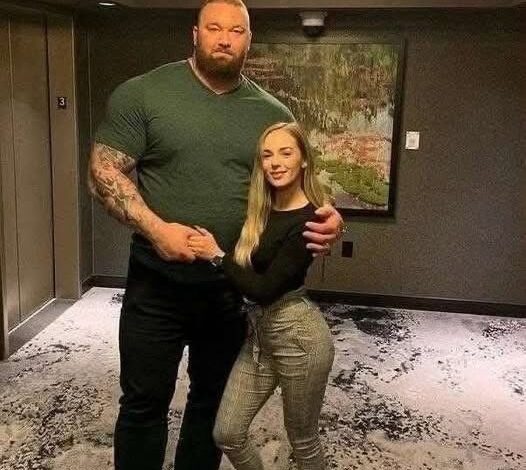
You’ve probably seen the headline before.
“Men prefer short women because…”
The sentence usually ends with some supposedly shocking revelation—a hidden biological instinct, an evolutionary secret, or a scientific explanation that claims to unlock the mysteries of attraction once and for all.
It’s the kind of claim that spreads quickly online because it sounds simple. One trait. One explanation. One answer.
But human attraction has never been that simple.
In reality, the science behind attraction is far more complicated—and far more interesting—than most viral headlines suggest. The truth isn’t that men are secretly programmed to prefer one specific height. Instead, attraction emerges from a complex blend of psychology, perception, culture, personal experience, and emotional connection.
In other words, what draws people together has much less to do with a measuring tape than many people assume.
One reason height receives so much attention is because the human brain notices it almost instantly.
Before we know someone’s personality, values, sense of humor, intelligence, or kindness, we notice visible characteristics. Height, posture, facial expressions, body language, and voice are among the first pieces of information our brains process.
Psychologists often describe this process as a form of cognitive shortcut.
The human brain is constantly handling enormous amounts of information. To avoid becoming overwhelmed, it makes rapid judgments based on easily observable traits. These quick assessments help us navigate social situations efficiently, but they are often incomplete and sometimes misleading.
Height happens to be one of the easiest characteristics to notice.
Unlike personality, which takes time to discover, height can be observed in a fraction of a second. Because it is immediately visible, it naturally becomes part of first impressions.
That doesn’t mean it determines attraction.
It simply means it gets noticed first.
Research examining dating preferences across different countries has revealed some interesting patterns. Many studies have found that men often report preferring women who are somewhat shorter than themselves. Likewise, many women report preferring men who are somewhat taller than themselves.
These preferences appear consistently enough to be statistically measurable.
However, this is where many discussions about attraction become misleading.
People often take these findings and assume they explain how relationships actually form.
They don’t.
What researchers frequently discover is that these height preferences are most noticeable during the earliest stages of attraction. They may influence who catches someone’s attention on a dating app, who stands out in a crowded room, or who receives an initial message online.
But attraction doesn’t stop there.
In fact, some of the most important relationship factors don’t even enter the picture until much later.
When researchers examine long-term couples, height becomes dramatically less important. Relationship satisfaction is far more strongly connected to factors such as emotional intimacy, trust, communication, shared goals, mutual respect, and compatibility.
The qualities that sustain a relationship over years and decades are rarely the same qualities that attract someone’s attention during a five-second glance.
That’s a crucial distinction.
Height may influence visibility.
Connection determines longevity.
Another explanation often mentioned involves evolutionary psychology.
According to some theories, certain height preferences may have roots in ancient survival instincts. Throughout human history, taller men may have been perceived as stronger or more capable of providing protection. Similarly, shorter women may have been associated with youthfulness and fertility.
These theories have generated significant discussion among researchers.
However, even scientists who study evolutionary behavior caution against oversimplifying the issue.
Humans are not robots following rigid biological instructions.
We are influenced by culture, family experiences, personal values, social environments, education, individual preferences, and countless other factors that interact in complex ways.
Evolution may contribute to attraction.
It does not dictate it.
If human relationships were governed entirely by instinct, dating would be remarkably predictable.
Yet real life tells a very different story.
Every day, people form relationships that seem to contradict supposed “rules” of attraction.
Tall women fall in love with shorter men.
Short women choose partners their own height.
People who insist they have a strict physical type suddenly discover feelings for someone who doesn’t match any of their stated preferences.
Someone who claims they only date athletes ends up marrying a musician.
Someone who swears height matters above all else meets a person who makes them laugh, challenges them intellectually, and understands them emotionally—and suddenly those old requirements seem much less important.
Attraction has a funny habit of rewriting its own rules.
This is one reason researchers increasingly focus on what happens after initial attraction.
While physical characteristics may influence first impressions, long-term relationship success depends on entirely different variables.
Study after study points toward a similar collection of factors.
Emotional safety.
Trust.
Communication.
Shared values.
Respect.
Humor.
Support during difficult times.
Physical and emotional intimacy.
These are the qualities that consistently predict relationship satisfaction.
Notice what’s missing from that list.
Height.
That doesn’t mean physical attraction is unimportant. It absolutely matters. Most successful relationships involve some degree of physical attraction. However, physical attraction itself is surprisingly flexible and often evolves over time.
Many people report becoming more attracted to their partners as emotional bonds deepen.
Someone who seemed average at first may become incredibly attractive after trust, affection, and connection develop.
Likewise, someone who initially appears physically ideal can lose much of that appeal if the relationship lacks compatibility, kindness, or emotional depth.
This phenomenon helps explain why chemistry remains one of the most difficult aspects of attraction to define scientifically.
Chemistry isn’t simply about appearance.
It’s about interaction.
It’s about how two people make each other feel.
It’s about conversation flowing effortlessly, shared laughter, mutual understanding, and the sense of comfort that develops when two personalities fit together.
Those experiences cannot be measured in inches or centimeters.
Yet despite all this, discussions about height continue to dominate social media, dating conversations, and viral articles.
Why?
Because height is easy.
It’s visible.
It’s measurable.
It’s simple to discuss.
A headline saying “Height influences first impressions” is far less exciting than one claiming to reveal a hidden secret about attraction.
Unfortunately, simplicity often comes at the cost of accuracy.
The reality is that height functions more like a preference than a predictor.
It may affect who initially catches someone’s eye.
It does not reliably predict who will build a lasting relationship.
It may influence a first glance.
It rarely determines a lasting connection.
The most successful relationships are not built on ideal measurements.
They are built on understanding.
On trust.
On shared experiences.
On the ability to support one another through life’s challenges.
Those qualities continue to matter long after first impressions fade.
So when someone claims that men prefer short women because of some universal rule of attraction, it’s worth remembering that human relationships are far more complicated than any viral headline suggests.
The science points toward a much simpler—and ultimately more meaningful—conclusion.
People may notice height.
They may even have preferences regarding it.
But what truly keeps people together is something far deeper.
People don’t fall in love with numbers.
They fall in love with conversations, laughter, trust, vulnerability, shared dreams, and emotional connection.
And despite decades of research, no study has ever discovered a specific number on a measuring tape that can replace any of those things.