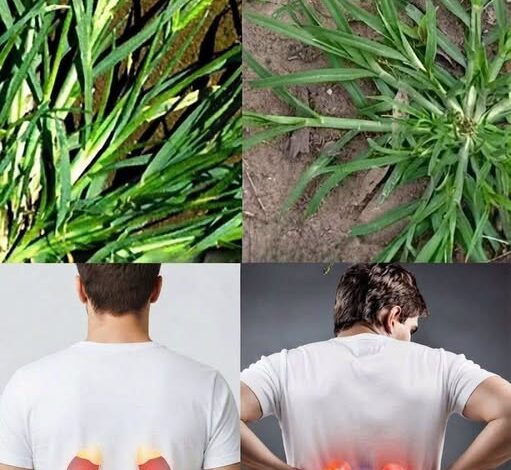
Goosegrass has never been the kind of plant that demands attention.
It grows quietly along roadsides, in gardens, beside fences, and across open fields, often dismissed as nothing more than another stubborn weed. Most people walk past it without a second glance, unaware that for generations it occupied a respected place in traditional herbal practices around the world.
Its significance was never built on flashy claims or rare beauty.
It was built on familiarity.
Long before pharmacies stood on every corner, families often turned to the plants growing nearby to help care for everyday ailments. Goosegrass was one of those dependable companions. People gathered it from meadows and pathways, dried its stems and leaves, brewed it into teas, or prepared simple herbal remedies using knowledge handed down from parents and grandparents.
Those traditions became part of everyday life.
Preparing goosegrass wasn’t simply about making a remedy—it was a ritual that connected generations. Children learned where the plant grew, elders explained when it should be harvested, and recipes were shared around kitchen tables as naturally as family stories.
For many communities, the plant represented more than its practical uses.
It symbolized resourcefulness.
When access to formal medical care was limited by distance, cost, or circumstance, people relied on the natural world around them. Plants like goosegrass became woven into local traditions, offering comfort, familiarity, and a sense of self-reliance during uncertain times.
Modern science has approached goosegrass from a different perspective.
Rather than relying solely on historical experience, researchers have begun studying the plant’s chemical composition to better understand the compounds it contains and whether any might have biological activity. Laboratory studies have identified various naturally occurring substances, prompting continued scientific interest in its potential properties.
However, it’s important to distinguish between promising laboratory findings and proven medical treatments.
While goosegrass has a long history of traditional use, there is currently insufficient high-quality clinical evidence to conclude that it can safely or effectively treat specific diseases or replace evidence-based medical care. Many traditional remedies deserve scientific investigation, but until rigorous human studies establish their benefits and safety, claims about their effectiveness should be viewed with appropriate caution.
That balance between curiosity and evidence is where goosegrass finds itself today.
Traditional knowledge offers valuable cultural insight.
Scientific research helps determine which historical uses are supported by reliable evidence.
Neither perspective needs to dismiss the other.
Instead, they can work together to deepen our understanding of both the plant itself and the communities that preserved knowledge about it.
In many ways, goosegrass tells a larger story about how people relate to nature.
We often overlook the ordinary plants growing beneath our feet, forgetting that many have accompanied human societies for centuries. Some eventually became the foundation for modern medicines. Others remain primarily important for their cultural heritage, ecological role, or historical significance.
Goosegrass reminds us that value isn’t always measured by headlines or commercial success.
Sometimes it’s found in the memories attached to a familiar cup of herbal tea, the lessons passed from one generation to the next, or the simple act of paying attention to the landscape around us.
Whether future research ultimately confirms new medical applications or not, the plant has already earned an enduring place in history.
Its story encourages us to appreciate both tradition and scientific inquiry—not as opposing forces, but as complementary ways of understanding the natural world. By respecting inherited knowledge while demanding careful evidence for health claims, we honor the past without losing sight of the standards that protect us today.
In the end, goosegrass may never become a miracle cure, and it doesn’t need to be. Its greatest legacy lies in reminding us that even the most unassuming plants can carry generations of history, resilience, and human experience. Sometimes the most remarkable discoveries begin with something we once dismissed as ordinary, growing quietly at the edge of the path, waiting for someone curious enough to stop and look a little closer.