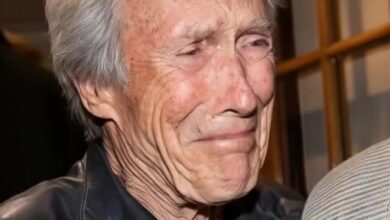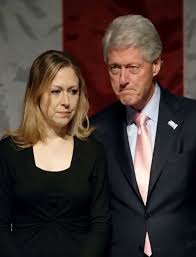
He looks older now in a way cameras cannot soften.
Not simply aged, but altered — like someone who has suddenly seen how fragile the distance is between ordinary life and irreversible loss. The face people once associated with confidence and certainty now carries something quieter beneath it: exhaustion, humility, and the unmistakable awareness that survival is never guaranteed, no matter how powerful or protected someone appears from the outside.
When he speaks, there is no dramatic performance in his voice. No attempt to sound heroic. If anything, he sounds almost startled to still be here at all. The bravado people often expect from public figures has been replaced by careful sentences and long pauses, as though he now understands the weight ordinary words can carry after a body betrays you unexpectedly.
That may be what unsettles people most.
Not the illness itself.
The vulnerability.
For years, the public watched him move through politics and public life with the practiced confidence of someone accustomed to control — controlling headlines, conversations, rooms, expectations. But sickness ignores status completely. Disease strips people down to the same frightened human truths regardless of title, wealth, or influence. Under hospital lights, everyone eventually becomes just a body hoping to keep functioning one more day.
And now, listening to him describe those days, you can hear that realization settling inside him permanently.
He speaks carefully about symptoms that initially seemed easy to dismiss: exhaustion, lingering fever, unusual pain, fatigue that felt explainable at first. The kind of warning signs countless people wave away every day because modern life teaches us to normalize suffering until collapse becomes unavoidable. We tell ourselves we are simply tired. Overworked. Aging. Stressed. Busy. We postpone appointments. Ignore discomfort. Promise ourselves we will deal with it later.
Until later suddenly becomes dangerous.
That is the warning buried beneath his words now.
He does not speak like someone chasing sympathy.
He speaks like someone trying desperately to make sure other people do not repeat the same mistake.
Again and again, he redirects attention away from politics and toward the body itself — toward how quietly serious illness can arrive. He urges people not to dismiss persistent symptoms simply because they seem survivable in the moment. Pain matters. Fatigue matters. Sudden weakness matters. Bodies rarely collapse without warning entirely; more often, they whisper long before they scream.
But human beings are remarkably skilled at ignoring whispers.
Especially when life feels busy enough to justify neglect.
Especially when fear makes diagnosis feel more frightening than uncertainty.
Especially when admitting something might truly be wrong would force us to confront how little control we actually possess over our own mortality.
That confrontation changes people.
You can hear it in the way he talks now about “unfinished work.” The phrase sounds political on the surface, but beneath it lives something far more universal and painfully human. Because almost everyone secretly believes there will be more time. More time to repair relationships. More time to rest. More time to travel, apologize, change careers, call old friends, take care of health, become better versions of ourselves.
We organize life emotionally around the assumption that tomorrow still belongs to us.
Then illness arrives and exposes how fragile that assumption always was.
Suddenly the future no longer feels infinite.
It feels negotiated.
Conditional.
Borrowed.
And once someone truly understands that, they rarely sound the same again afterward.
People watching him now may focus on appearances first — the slower movements, the thinner frame, the visible strain around the eyes. But what lingers emotionally is not physical weakness. It is awareness. He carries himself like someone who has glimpsed the terrifying possibility of becoming a memory instead of a person and has not fully recovered psychologically from standing that close to the edge.
That awareness often creates a strange emotional clarity.
Small things lose importance.
Petty conflicts feel exhausting.
Public image matters less than private survival.
The body becomes impossible to ignore because it has already proven how quickly normal life can disappear.
In moments like this, public figures stop feeling distant for a while. Politics fades into the background, replaced by something universally recognizable: fear of running out of time before life feels complete.
And perhaps that is why his message resonates beyond headlines or ideology.
Because everyone understands, at least privately, the temptation to postpone care.
Everyone recognizes the habit of minimizing symptoms.
Everyone has ignored exhaustion at some point hoping it would pass on its own.
But survival stories often contain uncomfortable lessons. The people who get second chances are frequently the same people warning others not to gamble on receiving one themselves.
His warning is not complicated.
It is frightening precisely because it is so simple:
Pay attention early.
Listen when the body changes.
Do not dismiss persistent pain simply because denial feels emotionally easier.
Because there may come a moment when the body stops asking politely.
And by then, the distance between “recovering patient” and “public memorial” may be far thinner than anyone ever imagined.
That realization stays with you after the cameras turn off.
Not because he is famous.
Because he sounds like someone who finally understands something most people spend their entire lives trying not to think about:
time only feels endless… until suddenly it doesn’t.