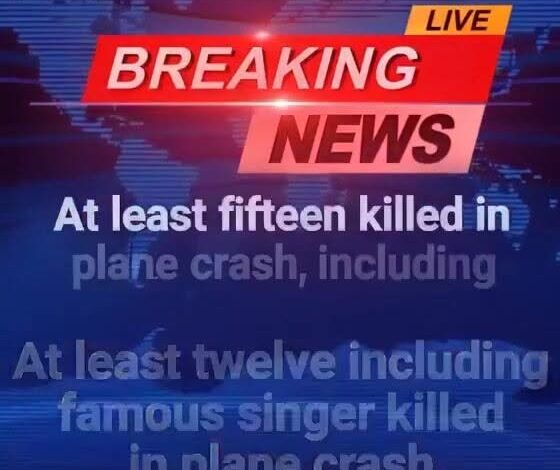
Officials would later summarize the tragedy in a few stark words: the aircraft made a sudden right turn and crashed into the water.
But those words barely hint at the fear, confusion, and heartbreak that unfolded off the coast of Roatán that day.
For those who witnessed the disaster, it was not a line in an investigation report. It was a scene of chaos unfolding in real time, marked by desperate rescue attempts and the painful realization that lives were slipping away with every passing second.
When the aircraft hit the water, nearby fishermen became some of the first responders.
Without hesitation, they turned their boats toward the crash site, abandoning their work to help strangers in need. As they approached, they found the sea scattered with wreckage, floating debris, and twisted fragments of the aircraft. The conditions were dangerous, and every maneuver carried risk. Large pieces of debris drifted unpredictably through the waves, threatening both survivors and rescuers alike.
Still, they pressed forward.
Soon, emergency crews joined the effort. Firefighters, divers, and rescue teams rushed to the scene, confronting conditions that made an already difficult mission even more challenging. Beneath the surface, visibility was extremely limited. Jagged underwater rocks created additional hazards, while strong currents complicated every search and rescue attempt.
Time became the enemy.
Every minute that passed reduced the chances of finding survivors, turning the operation into a race against circumstances that seemed determined to hinder every effort.
As rescue teams searched the wreckage, news of the victims began to emerge.
Among those lost was Aurelio Martínez, one of Honduras’s most respected musicians and cultural ambassadors. For many across Central America and the Caribbean, Martínez represented far more than entertainment. Through his music, he celebrated and preserved Garífuna culture, sharing its history, traditions, and identity with audiences around the world.
His songs carried the stories of his people.
His performances reflected pride, resilience, and heritage.
His influence extended well beyond the stage.
The news of his death sent shockwaves throughout the region. Tributes quickly poured in from fellow artists, public officials, cultural organizations, and admirers who viewed him as a guardian of Garífuna traditions and an important voice for his community.
In the wake of the tragedy, his music took on a different meaning.
Songs once associated with celebration and cultural pride became powerful reminders of loss and remembrance.
The impact of the disaster extended beyond Honduras. Authorities later confirmed that an American citizen was also among those who died, adding an international dimension to a tragedy that had already affected countless families and communities.
As rescue efforts continued, Honduran officials activated emergency protocols and launched a formal investigation into the crash. Investigators began examining the aircraft, reviewing evidence, and gathering information in an effort to determine what caused the sudden loss of control.
Early reports suggested that a mechanical issue may have contributed to the accident, though officials stressed that no final conclusions had been reached.
In time, investigators may uncover answers.
They may determine why the aircraft turned.
They may identify technical failures.
They may reconstruct the final moments of the flight.
But even the most thorough investigation cannot measure the human cost of what was lost.
No report can fully capture the grief of families waiting for answers.
No technical explanation can explain the pain of loved ones left behind.
And no finding, however detailed, can fill the void created when lives, dreams, and futures disappear in an instant.
For the families affected, the tragedy is not defined by aviation terminology or investigative reports.
It is defined by empty seats at family gatherings.
Unfinished conversations.
Missed milestones.
And memories that now carry a deeper sense of loss.
Today, the waters surrounding Roatán appear calm once again. Fishing boats continue their routes, waves roll toward the shoreline, and daily life moves forward.
Yet for many, those waters will forever hold the memory of a day when disaster arrived without warning.
What remains is more than the story of an aircraft accident.
It is the story of fishermen who rushed toward danger to help strangers.
It is the story of rescuers who fought impossible conditions in the hope of saving lives.
And it is the story of those who were lost too soon, leaving behind families, friends, communities, and legacies that will endure long after the headlines fade.
As the investigation continues and questions remain, one truth is already certain.
The cause of the crash may eventually be understood.
The loss it left behind never fully will be.