What if your body is revealing more about you than you realize?
Most people assume personality shows itself through words, facial expressions, or the choices we make. But long before we speak, our bodies are already communicating. The way we stand, move, and carry ourselves sends subtle signals that others notice almost instantly—even when we’re completely unaware of it.
Among the many ideas that have fascinated people for centuries is the belief that our posture, stance, and natural body structure may reflect aspects of our personality and lifestyle. While modern science does not support the notion that the shape of a person’s legs can predict character or destiny, the connection between body language and self-expression remains a subject of endless curiosity.
After all, our bodies tell stories.
Not stories about fate or hidden powers, but stories about how we live, how we move through the world, and how we experience life itself.
Far beyond appearances, the human body is a remarkable record of our habits, experiences, and daily routines. Legs, in particular, play an extraordinary role in that story. They support every step we take, absorb countless impacts throughout our lives, and adapt continuously to the demands we place upon them.
What many people overlook is that leg structure is largely shaped by genetics. The width of the pelvis, the alignment of the knees, the angle of the femur, and the natural curvature of the muscles all contribute to the unique framework each person is born with.
No two bodies are exactly alike.
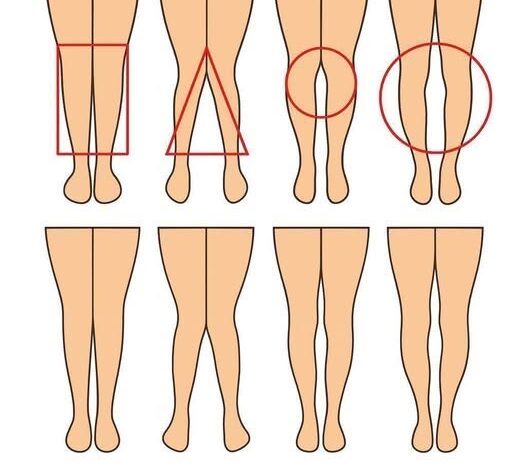
Some people naturally have legs that touch at certain points, while others have visible spacing between them. These variations are simply examples of biological diversity. Traits that are often discussed as beauty standards are usually the result of skeletal structure rather than effort, fitness, or lifestyle.
The famous “thigh gap,” for example, became the subject of years of cultural obsession despite being heavily influenced by anatomy rather than body weight alone. In reality, many features people spend years comparing are simply reflections of how individual bodies are built.
Rather than flaws, these differences are evidence of the incredible complexity of human design.
Our bodies are not manufactured from a single blueprint. They are unique structures engineered through a combination of genetics, environment, and experience.
Yet anatomy is only part of the story.
Life itself leaves its mark on us.
Over time, our daily activities shape the way our bodies function and move. A person who spends years practicing yoga often develops a different kind of balance and flexibility than someone who trains for long-distance running. A cyclist builds strength in one way, while a dancer develops it in another.
Even less obvious habits can influence how we carry ourselves.
The hours spent sitting at a desk.
The shoes we wear every day.
The way we stand while waiting in line.
The posture we unconsciously adopt when we feel confident—or uncertain.
Little by little, these habits become part of our physical identity.
In that sense, our bodies are constantly evolving records of our lives. Every muscle group tells a story about what we do, what we value, and how we spend our time.
This is one reason body language remains so fascinating.
Although personality cannot be determined by physical features alone, the way people move often reflects aspects of their emotional state. Confidence, stress, comfort, anxiety, enthusiasm, and determination frequently reveal themselves through posture long before they appear in conversation.
Think about the people you’ve met.
Some individuals enter a room with a calm, grounded presence. They stand comfortably, move with purpose, and seem completely at ease in their surroundings. Others carry a more energetic rhythm, constantly shifting, gesturing, and expressing themselves through movement.
Neither style is better than the other.
They are simply different forms of expression.
Psychologists have long studied how body language influences perception. Research consistently shows that posture affects not only how others see us, but also how we see ourselves.
A confident stance can encourage feelings of confidence.
Purposeful movement can reinforce a sense of control.
Likewise, stress and uncertainty often manifest physically through tension, guarded posture, or restless movements.
The relationship works both ways.
The mind influences the body, and the body influences the mind.
This deep connection may explain why people remain intrigued by personality interpretations linked to physical characteristics. Even when the specific claims lack scientific support, they touch on something undeniably real: the powerful relationship between physical presence and personal identity.
Fashion provides another interesting layer to this conversation.
Clothing is often dismissed as something superficial, but it functions as a form of communication. The styles we choose influence how we feel and how others perceive us.
A flowing outfit may emphasize movement and comfort.
Structured clothing may project confidence and authority.
Athletic wear may communicate energy and activity.
Every choice contributes to the story we present to the world.
The most compelling style rarely comes from chasing trends. Instead, it emerges when people learn to work with their natural features rather than against them.
Confidence tends to appear strongest when authenticity takes center stage.
When people stop trying to force themselves into unrealistic ideals and begin appreciating their own individuality, they often carry themselves differently. Their movements become more natural. Their posture becomes more relaxed. Their confidence becomes less about appearance and more about self-acceptance.
Unfortunately, modern culture often encourages the opposite.
Social media, advertising, and shifting beauty standards constantly push the idea that certain body types are superior to others. Yet these standards change from decade to decade, proving how arbitrary they often are.
What remains constant is function.
Strength.
Mobility.
Health.
Resilience.
These qualities matter far more than temporary trends.
Our legs, after all, do much more than contribute to appearance. They carry us through every stage of life. They support us during our greatest achievements and help us endure our most difficult moments.
They allow us to explore new places.
To chase opportunities.
To dance, run, climb, work, and experience the world around us.
In many ways, they are among the most underappreciated parts of the human body.
Perhaps that is why the most meaningful perspective isn’t about judging physical traits at all.
It is about appreciating what those traits allow us to do.
Every person carries a unique combination of strengths, experiences, and characteristics. Every body reflects a different journey. Every movement tells a slightly different story.
The goal isn’t to fit a particular mold.
The goal is to understand and appreciate the body that carries you through life.
Because true confidence does not come from matching an ideal.
It comes from recognizing that your body is already a remarkable reflection of everything you’ve overcome, everything you’ve experienced, and everything you’re still becoming.
At the end of the day, your legs are not secret indicators of destiny, personality, or hidden powers.
They are something far more impressive.
They are living evidence of your journey.
A foundation built from resilience, adaptation, and individuality.
And every step they take continues to write the story of who you are.