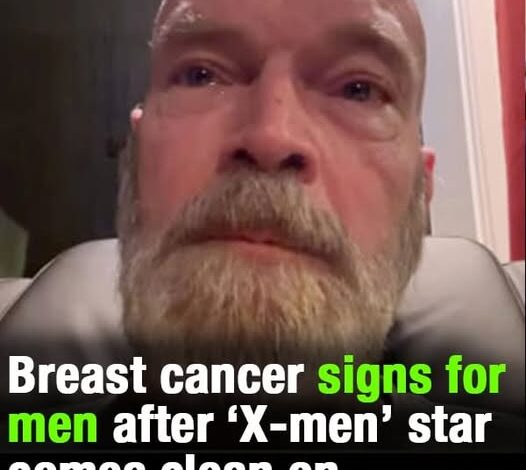
When Tyler Mane finally spoke the words, “I have breast cancer,” it marked far more than a medical diagnosis—it marked the end of a silence that countless men continue to live with every day. Like many others facing an illness commonly associated with women, his first reaction was not anger or even fear, but embarrassment. The diagnosis challenged assumptions he had carried his entire life, forcing him to confront a reality many men never consider possible. For a time, the instinct was to keep it private, to avoid conversations that felt uncomfortable, and to carry the burden alone.
That silence might have continued if not for the determination of his wife. When concerns about a lump were initially dismissed, she refused to accept easy answers. She pushed for further evaluation, insisted that the issue be taken seriously, and advocated for testing that ultimately revealed the truth. What could have been brushed aside as insignificant became a life-changing discovery. In many ways, her persistence became the difference between uncertainty and a diagnosis that allowed treatment to begin before it was too late.
Now Mane finds himself in a battle he never expected to fight. Chemotherapy sessions, medical appointments, and hormone-blocking treatments have become part of daily life. The physical toll is real, but so is the emotional weight of confronting a disease that remains misunderstood when it affects men. There are difficult days, moments of exhaustion, and the constant challenge of adapting to a future that suddenly looks very different from the one he imagined.
Yet rather than retreat from public view, Mane has chosen to speak openly about his experience. What began as a deeply personal struggle has become a mission to raise awareness and challenge dangerous misconceptions. He wants men to understand that breast cancer does not discriminate by gender. Though rare compared to cases in women, it is very real, and the consequences of ignoring symptoms can be devastating.
His message is driven by a simple but urgent concern: too many men never think to check for warning signs because they do not believe they are at risk. Others may notice changes in their bodies but delay seeking help out of embarrassment or fear of being dismissed. By the time some cases are diagnosed, the disease has already advanced. Mane hopes that sharing his story will encourage men to pay closer attention, ask questions, and seek medical advice when something feels wrong.
When he speaks about the support he has received from fans, friends, and family, emotion often rises to the surface. Gratitude mixes with vulnerability as he acknowledges the people standing beside him through the fight. But beneath that emotion is a fierce determination. He does not want sympathy nearly as much as he wants awareness. He wants people to remember that early detection can save lives and that persistence matters when answers are not coming.
His warning is direct and unapologetic: listen to your body. If something feels unusual, do not ignore it. If concerns are dismissed too quickly, seek another opinion. Ask questions, demand clarity, and advocate for your own health. No one knows your body better than you do, and no diagnosis should be delayed because of outdated assumptions or discomfort around difficult conversations.
For Mane, sharing his story is about more than his own battle. It is about making sure that other men do not suffer in silence, delay treatment, or feel ashamed of a disease they never expected to face. By speaking openly, he hopes to replace stigma with awareness and fear with action. His journey is a reminder that cancer does not care about stereotypes—and neither should the people fighting it.