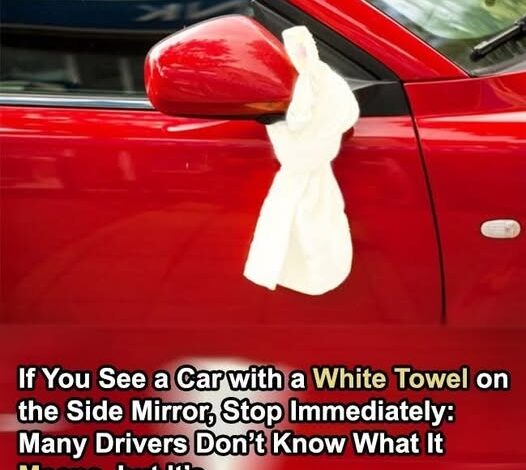
Have you ever driven past a vehicle parked on the shoulder of the road with a white towel hanging from the driver’s window or side mirror?
At first glance, it might seem like someone accidentally left laundry behind or tied on a random piece of fabric. In reality, that simple white cloth often carries a message.
It tells other drivers—and sometimes law enforcement—that the vehicle has broken down and the owner intends to return.
While this isn’t an official traffic sign recognized everywhere, it has become a widely used roadside signal in many parts of the United States. A white towel, cloth, or even a white plastic bag placed where it’s clearly visible can indicate that the driver has temporarily left the vehicle to seek help, fuel, or repairs rather than abandoning it.
The practice has practical benefits.
A stranded driver may leave the scene to find assistance, especially in areas with poor cellphone service or when roadside assistance is unavailable. By displaying a visible white marker, they can communicate that the vehicle isn’t simply forgotten or discarded.
In some places, the practice has even received official recognition.
For example, the North Carolina Driver Handbook advises motorists who leave a disabled vehicle on the roadside to display a white cloth or similar visible marker during daylight hours if they plan to return. The goal is to help law enforcement and highway personnel distinguish a temporarily disabled vehicle from one that may have been abandoned.
However, displaying a white towel doesn’t provide unlimited protection.
It isn’t a permit to leave a vehicle indefinitely, nor does it prevent parking enforcement, citations, or towing if the vehicle remains where it shouldn’t.
Every state—and often every city or county—has its own rules governing disabled and abandoned vehicles.
In many jurisdictions, authorities may begin treating a vehicle as abandoned after approximately 48 to 72 hours, although the exact timeframe varies depending on local laws, road conditions, safety concerns, and where the vehicle is parked.
If the vehicle creates a traffic hazard or blocks emergency access, it may be removed much sooner regardless of whether a white towel is displayed.
The marker simply communicates the driver’s intent.
It doesn’t override traffic laws or public safety regulations.
People are sometimes surprised to learn that abandoned vehicles aren’t automatically transferred to whoever finds them either.
If someone leaves a vehicle on private property, the landowner generally cannot simply claim ownership. Legal procedures usually require notifying law enforcement, attempting to identify and contact the registered owner, and following state-specific abandonment laws.
Depending on the circumstances, the process may involve towing companies, title investigations, waiting periods, or court approval before ownership can legally change.
These rules exist to protect both vehicle owners and property owners while preventing fraud and theft.
If you ever find yourself stranded, displaying a white cloth may be helpful where the practice is recognized, but it’s also wise to contact roadside assistance or local law enforcement if your vehicle will remain on the roadside for an extended period.
Doing so creates an official record of the situation and may reduce confusion if officers encounter the vehicle before you return.
If you’re the one passing a vehicle with a white towel attached, it’s worth remembering what it likely represents.
Someone may have experienced an unexpected breakdown.
They may be walking to the nearest service station, waiting for a tow truck, or trying to find a safe way home before returning with help.
It’s a small reminder that behind every disabled vehicle is usually a person dealing with an inconvenient—and sometimes stressful—situation.
Ultimately, that white towel isn’t a guarantee against tickets or towing, nor is it a universal legal requirement.
Instead, it’s a simple signal of temporary hardship and intended return.
Knowing what it means can help prevent misunderstandings and remind us that even the smallest roadside traditions often exist for one reason: helping strangers recognize that someone is doing their best to solve an unexpected problem and hopes to be back as soon as they can.