Tragic Thirteen Year Old Child Star Drew Barrymore Becomes Hollywood Pariah Until Shocking Multi Million Dollar Lifestyle Reinvention Completely Erases Dark Past

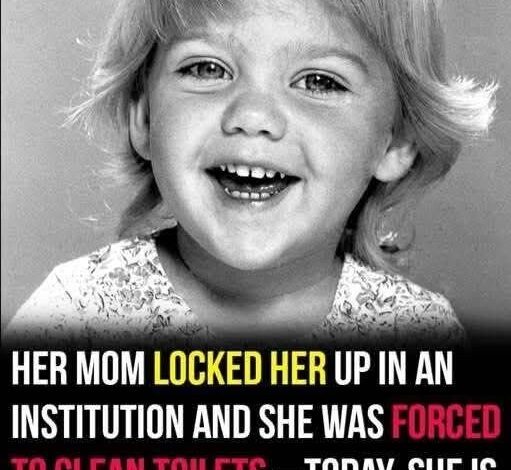
Drew Barrymore’s life began in front of a camera before she was even old enough to understand what fame meant.
At just eleven months old, she appeared in a commercial, stepping unknowingly into a world that would soon turn her into one of the most recognizable children on the planet. By the time she was seven, her role in E.T. the Extra-Terrestrial had made her a global star. Audiences adored her. Cameras followed her. Hollywood celebrated her as a rare child performer with natural charm, emotional depth, and unforgettable presence.
But behind the glowing image of a beloved young actress was a childhood marked by instability, loneliness, and pressure no child should have been forced to carry.
While the world saw red carpets, interviews, and magazine covers, Drew was growing up without the structure and protection she desperately needed. Fame arrived early, but safety did not. Her family legacy carried generations of Hollywood brilliance, but also chaos, addiction, and emotional turbulence.
By thirteen, when most children are still navigating school, friendships, and adolescence, Drew was fighting for survival. After a public struggle with substance abuse and a suicide attempt, she entered a psychiatric facility. For many, that chapter could have become the defining tragedy of her life.
But for Drew, it became something else.
The eighteen months she spent in treatment were painful, strict, and life-altering. The structure was intense. The discipline was overwhelming. Yet in that environment, she began to learn something she had never truly been given before: boundaries, accountability, and the possibility of rebuilding herself from the inside out.
When she emerged, Hollywood was no longer waiting with open arms.
By fifteen, Drew Barrymore was considered too risky to hire. The same industry that had once praised her innocence and talent now treated her as damaged goods. She was no longer the golden child. She was a cautionary tale.
Instead of film sets and premieres, she found herself working ordinary jobs. She cleaned bathrooms. She waited tables. She faced the quiet humiliation of starting over while the public continued to treat her like a fallen star.
But those years did not destroy her.
They stripped away illusion.
Without the approval of studios, managers, or headlines, Drew began discovering who she was without fame. She learned how to survive without applause. She learned how to keep going when nobody was clapping. She learned that being underestimated could become its own form of freedom.
Slowly, she began rebuilding.
Not as the child star people remembered.
Not as the troubled teenager tabloids had judged.
But as a woman determined to write her own story.
Her twenties and thirties became a remarkable era of reinvention. Drew returned to the screen with a new kind of energy—warm, funny, vulnerable, and deeply human. She no longer seemed like someone trying to escape her past. She seemed like someone brave enough to carry it openly while refusing to be defined by it.
Films like The Wedding Singer, Never Been Kissed, and 50 First Dates helped transform her public image. Audiences connected with her not because she appeared perfect, but because she felt real. Her humor had tenderness. Her charm had survival behind it. Her openness made people trust her.
Then she took an even bigger step.
She co-founded Flower Films, a production company that gave her creative control and financial independence. This move was more than a business decision. It was a declaration.
Drew Barrymore was no longer waiting for Hollywood to decide whether she belonged.
She was building her own place in it.
Through Flower Films, she helped create stories that reflected her signature blend of sincerity, humor, resilience, and emotional honesty. Her success proved that she was not merely a survivor of child stardom. She was a serious creative force, a producer, a businesswoman, and a storyteller with instincts shaped by both hardship and hope.
Over time, her journey expanded beyond acting.
She built lifestyle, beauty, and home brands that reflected her personal philosophy: joy should be accessible, beauty should feel warm rather than intimidating, and authenticity matters more than perfection. Her business ventures carried the same spirit that made audiences love her onscreen—unpolished, generous, colorful, and real.
Her transition into daytime television deepened that connection even further.
As host of The Drew Barrymore Show, she created a space where celebrities, everyday people, and viewers at home could feel seen without judgment. Her interviews often feel less like performances and more like conversations between people who understand pain, healing, and growth.
Drew’s willingness to speak openly about her past—her childhood struggles, institutionalization, addiction, public rejection, and long road back to stability—has helped challenge old Hollywood taboos around mental health and recovery. She does not present herself as someone who escaped pain untouched. She presents herself as someone who learned how to live honestly after it.
That honesty has become one of her greatest strengths.
Now, Drew Barrymore stands not only as an actress and media figure, but as a symbol of resilience. Her success is measured not just in films, companies, or wealth, but in the life she has intentionally built.
For Drew, the greatest victory has never been fame.
It has been peace.
It has been motherhood.
It has been creating a safe, loving home for her daughters, Olive and Frankie. After growing up in instability, she made the conscious decision to give her children something different: structure, protection, presence, and emotional safety.
Her move to Manhattan reflected that priority. She wanted a grounded life. A real life. A life where family came before spectacle and stability mattered more than status.
In doing so, she broke a painful generational cycle.
The chaos that once seemed inseparable from the Barrymore name did not get the final word. Addiction, abandonment, and instability did not define the next chapter. Drew chose something else.
She chose healing.
She chose responsibility.
She chose light.
Her story is not powerful because it is simple. It is powerful because it is complicated. She did not rise because life was easy. She rose because she refused to let the hardest parts of her life become the whole story.
Drew Barrymore’s journey is a reminder that a broken beginning does not have to create a broken ending.
A person can be publicly judged and still privately rebuild.
A person can lose everything and still create something lasting.
A person can carry trauma and still become a source of warmth for others.
Her life stands as proof that survival is not merely about escaping darkness. It is about learning how to walk through it, gather what remains, and build something softer, stronger, and more honest on the other side.
Drew Barrymore did not simply return to Hollywood.
She returned to herself.
And in doing so, she became far more than a former child star.
She became a woman who turned pain into purpose, vulnerability into strength, and a fractured childhood into a legacy of resilience, compassion, and earned peace.