I Spent Years Wondering About This Fruit—Finding Its Name Led Me to a Recipe I’ll Never Forget

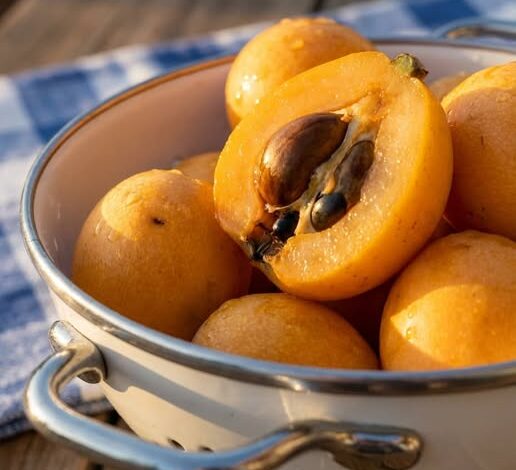
For years, I remembered the flavor long before I remembered its name.
It appeared at family gatherings, tucked into glass jars lined across kitchen shelves or spread generously across warm slices of bread fresh from the oven. The jam was unlike anything sold in supermarkets. It carried a sweetness that felt natural rather than overpowering, balanced by a delicate tartness that lingered pleasantly after every bite. Its golden-orange color seemed to capture sunlight itself, and its aroma filled the room before the lid was even removed.
As a child, I never questioned where it came from.
It was simply part of family life.
Someone always seemed to have a jar hidden away in a cupboard, and someone else always knew how to make another batch when supplies ran low. Yet despite how often I enjoyed it, I rarely heard anyone refer to the fruit by a name I recognized. The recipe was passed from one generation to the next, but the details surrounding it remained strangely mysterious.
Years later, curiosity finally led me to uncover the answer.
The fruit was Mishmish.
A traditional apricot variety cherished throughout many regions of the Middle East, North Africa, the Mediterranean, and beyond. In many households, Mishmish apricots have been transformed into homemade jams for generations, preserving not only the fruit itself but also family traditions, memories, and culinary heritage.
Learning its name felt surprisingly emotional.
It was as though a forgotten piece of childhood had suddenly returned, complete with its scent, flavor, and sense of comfort. The discovery reminded me how closely food and memory are connected. Sometimes a single ingredient can unlock years of forgotten experiences, bringing back moments we didn’t realize we had stored away.
What makes Mishmish apricot jam so special is not complexity.
In fact, its beauty lies in its simplicity.
Unlike many modern recipes that rely on shortcuts, commercial thickeners, or artificial flavor enhancers, traditional Mishmish jam depends on patience and quality ingredients. The fruit itself takes center stage, supported by only a few additions that allow its natural character to shine.
The process begins with ripe apricots.
Choosing good fruit is perhaps the most important step of all. Ideally, the apricots should be fragrant, slightly soft, and rich in color. Overripe fruit may become overly mushy during cooking, while underripe fruit may lack the sweetness and aroma that make the jam exceptional.
After washing the apricots thoroughly, each fruit is carefully pitted and chopped into small, even pieces. Some cooks prefer larger chunks for a rustic texture, while others chop the fruit more finely for a smoother spread. Both approaches work beautifully, depending on personal preference.
Once prepared, the apricots are placed into a large bowl and combined with sugar.
At first glance, this may seem like a simple step, but it plays a crucial role in the final result.
Rather than immediately cooking the mixture, traditional recipes often allow the fruit and sugar to rest together for approximately thirty minutes, sometimes even longer. During this resting period, something remarkable happens. The sugar gradually draws moisture from the fruit through a natural process called osmosis, creating a rich syrup without the need for additional liquids.
As the apricots release their juices, they begin developing the foundation of the jam’s future texture and flavor.
This waiting period requires patience, but it rewards the cook with a more concentrated fruit taste and a smoother cooking process later on.
A small amount of lemon juice is then added to the mixture.
Although it may seem like a minor ingredient, lemon juice serves several important purposes. It brightens the flavor, balances the sweetness, and contributes natural acidity that helps the jam achieve its desired consistency. The result is a preserve that tastes vibrant and fresh rather than overly sugary.
Once the fruit, sugar, and lemon juice have had time to combine, the mixture is transferred to a pot and placed over gentle heat.
This stage transforms the kitchen.
As the apricots slowly soften and break down, their fragrance fills the air. The aroma is sweet, tangy, and unmistakably comforting. It drifts through hallways and living spaces, drawing people toward the kitchen to ask the same question generations have asked before:
“Is the jam ready yet?”
The answer, of course, depends on patience.
Traditional jam-making cannot be rushed.
The mixture must simmer gently, allowing excess moisture to evaporate while flavors deepen and concentrate. Occasional stirring prevents sticking and ensures even cooking. Gradually, the fruit softens into a rich, golden mixture that thickens with time.
For many experienced home cooks, knowing when the jam is finished is part science and part intuition.
One of the most trusted methods involves a chilled plate.
A small spoonful of jam is placed on the cold surface and allowed to cool briefly. If the surface wrinkles slightly when pushed with a finger, the jam has reached the proper consistency. If it remains runny, additional cooking time is needed.
This simple test has guided generations of jam makers long before digital thermometers became common kitchen tools.
When the desired texture is achieved, the jam is carefully poured into clean, sterilized jars while still hot. The jars are sealed and allowed to cool, creating a preserve that can be enjoyed for weeks or even months.
The finished product is remarkably versatile.
Spread across fresh bread, it creates a simple breakfast rich with flavor and nostalgia. Swirled into yogurt, it adds natural sweetness and fruit character. Used as a pastry filling, it transforms ordinary baked goods into something memorable. Some even pair it with cheeses or incorporate it into desserts where its bright flavor provides balance and depth.
Yet perhaps the greatest appeal of Mishmish apricot jam extends beyond taste alone.
It represents continuity.
In a world increasingly focused on convenience, traditional recipes remind us that some things are worth slowing down for. They connect generations through shared techniques, familiar aromas, and stories exchanged around kitchen tables.
What began as a search for the name of a forgotten fruit ultimately became something larger.
It became a rediscovery of heritage.
A reminder that recipes are more than instructions—they are vessels for memory, culture, and connection.
Today, every spoonful of Mishmish apricot jam carries that realization. The flavor remains exactly as I remembered: sweet, lightly tart, fragrant, and comforting. But now it has a name, a history, and a story.
And sometimes, learning the name of something you loved long ago is enough to bring an entire chapter of life back into focus.
In the end, the jar holds more than fruit and sugar.
It holds memories.
It holds tradition.
And it holds the simple truth that the foods we cherish often stay with us far longer than we realize, waiting patiently for us to rediscover them.