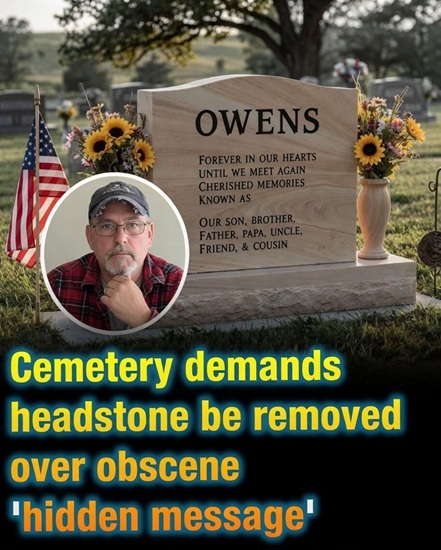
In a quiet Iowa cemetery, a single headstone became the center of an unexpected debate about memory, individuality, and the limits of personal expression. What appeared at first to be an ordinary memorial soon attracted national attention, raising questions about how people choose to be remembered and who has the authority to decide what is appropriate in a shared public space.
At the heart of the story was Steven Paul Owens, a man remembered by family and friends for his humor, creativity, and unconventional outlook on life. According to those who knew him best, he had a talent for finding laughter in unexpected places and rarely approached life in a completely traditional way.
When Owens passed away, his family wanted his memorial to reflect more than dates and formal inscriptions. They hoped the headstone would capture something of his personality—a final tribute that felt authentic to the man they loved.
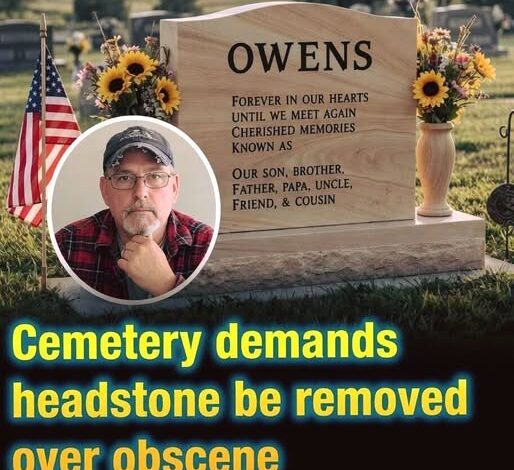
The monument itself appeared entirely conventional.
It displayed his name, dates, and a carefully written inscription. Visitors walking through the cemetery saw nothing unusual. The stone blended naturally into its surroundings and seemed no different from countless other memorials nearby.
Yet hidden within the inscription was something few people initially noticed.
The family had reportedly created an acrostic message, arranging the first letter of each line so that, when read vertically, they formed a separate phrase. Acrostics have existed for centuries in literature and memorials, often serving as hidden tributes, messages, or personal signatures visible only to those who know where to look.
For months, the hidden message attracted little attention.
Most visitors never noticed it. Those who passed by simply saw a traditional headstone honoring a deceased loved one. The secret remained concealed within the wording, visible only to readers who carefully examined the inscription.
Eventually, however, cemetery officials became aware of the acrostic.
After discovering the hidden phrase, administrators raised concerns about whether it complied with cemetery standards. According to reports, they believed the message could be interpreted as inappropriate and questioned whether it belonged in a public burial ground shared by grieving families and visitors of all ages.
From the cemetery’s perspective, the issue extended beyond a single headstone.
Administrators argued that cemeteries serve as places of reflection, remembrance, and peace. Because they are communal spaces, memorials are generally expected to follow established guidelines intended to maintain a respectful environment for everyone who visits.
Officials also worried about precedent.
If one hidden message that challenged community standards remained in place, they argued, other memorials could include increasingly controversial or offensive coded messages. Establishing clear boundaries, they believed, was necessary to preserve consistency throughout the cemetery.
The family saw the matter very differently.
To them, the acrostic was not intended to offend anyone. Instead, it represented a final expression of Steven Owens’ personality and sense of humor. They argued that the hidden message reflected the way he approached life and served as a deeply personal tribute from those who knew him best.
Family members pointed out that the message was not prominently displayed. Unlike a large inscription visible to every visitor, the acrostic required deliberate effort to uncover. Most people would never notice it at all unless someone specifically directed their attention toward it.
Because of that, they believed the controversy was disproportionate.
In their view, the headstone remained respectful in appearance and fulfilled its primary purpose of honoring a loved one. The hidden message simply added a personal layer of meaning for family and friends who understood its significance.
As news of the disagreement spread, the story expanded beyond the local community.
People across the country began discussing broader issues raised by the dispute. Some viewed the headstone as a matter of free expression, arguing that memorials should reflect the individuality of the people they commemorate. Others sided with cemetery officials, emphasizing the importance of maintaining standards in public spaces dedicated to remembrance.
The debate touched on larger cultural questions.
Should memorials be strictly traditional, or should families have greater freedom to personalize them? Where should the line be drawn between creative expression and public responsibility? Does a person’s personality deserve to be preserved exactly as it was, even if it challenges conventional expectations?
There were no easy answers.
Supporters of the family argued that memorials tell stories. A gravestone is not merely a marker indicating where someone is buried—it is often one of the final opportunities to communicate something meaningful about who that person was. If humor, individuality, or unconventional thinking defined someone’s life, they argued, those qualities should not disappear in death.
Others emphasized the communal nature of cemeteries.
Because burial grounds serve many families simultaneously, they argued that individual expression must sometimes be balanced against shared standards. What one family views as humorous or harmless may be viewed differently by others visiting the same space during moments of grief and reflection.
Over time, the headstone became more than a memorial.
It became a symbol of an ongoing conversation about memory, identity, and legacy. Visitors who learned about the controversy often found themselves thinking less about the specific message and more about the questions it raised.
What does it mean to truly honor someone?
Should remembrance focus on preserving personality exactly as it existed, or should it adapt to social expectations? Who ultimately controls the narrative of a person’s life after they are gone?
The story of Steven Paul Owens’ headstone does not offer simple answers.
Instead, it highlights the tension that sometimes exists between personal expression and public standards. It reminds us that even small details can carry powerful meaning and that memorials often reflect deeper values about identity, family, and remembrance.
Today, the headstone continues to attract attention from people interested not only in the hidden message but also in the larger discussion surrounding it.
What began as a private tribute has evolved into a public conversation about individuality, respect, and the ways people choose to leave their mark on the world.
In the end, the controversy serves as a reminder that memory itself is rarely simple. Every life contains complexity, humor, flaws, achievements, and unique characteristics that cannot always be captured within a few lines of stone.
Perhaps that is why the story continues to resonate.
It is not merely about a hidden message on a headstone. It is about the universal desire to be remembered as we truly were—and the ongoing challenge of balancing personal legacy with the expectations of the communities we leave behind.