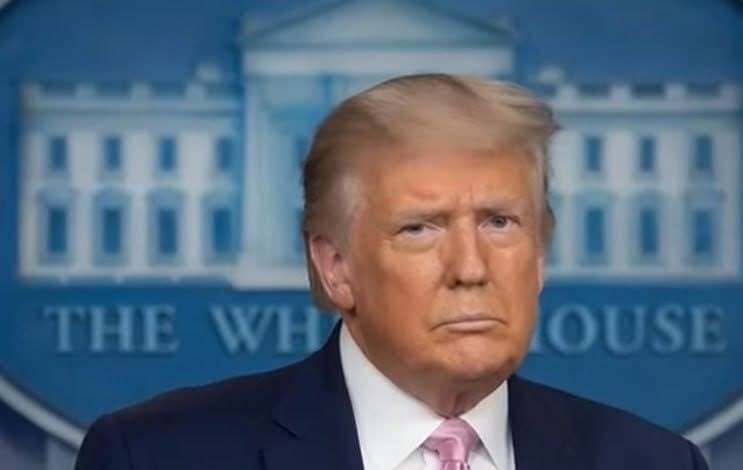
The interruption lasted only seconds.
Yet by the time ABC returned to its broadcast, millions of Americans already knew something was wrong.
The shift was immediate and unmistakable. One moment, viewers were settling into the comfortable rhythm of a routine program. Some were scrolling through their phones. Others were talking with family, preparing dinner, or only half-paying attention to the television humming in the background. It was an ordinary moment in an ordinary evening.
Then everything changed.
Without warning, the network broke away from its scheduled programming. The familiar cadence of television vanished, replaced by the unmistakable gravity of breaking news. Across living rooms, restaurants, airports, hotel lobbies, and waiting rooms, conversations faltered. Eyes drifted toward screens. The atmosphere changed before a single meaningful detail had even been delivered.
People sensed it instantly.
The interruption carried a particular weight that Americans have learned to recognize. It was the tone reserved for moments that feel larger than a normal news story—the kind of moments that seem capable of altering the course of a day, a political campaign, or even a chapter of history.
The anchors appeared composed, but their seriousness was impossible to miss.
Every word felt measured.
Every sentence sounded deliberate.
There was none of the confidence that accompanies a fully developed story. Instead, viewers heard a familiar sequence of cautious phrases.
“We are receiving reports…”
“We are working to confirm details…”
“This remains a developing situation…”
“What we know at this hour is limited…”
Normally, such caveats might create distance.
This time, they did the opposite.
The uncertainty made the moment feel even more significant.
If experienced journalists were speaking so carefully, it meant events were unfolding faster than the facts could be verified. Information was arriving in fragments. Producers were scrambling behind the scenes. Analysts were being summoned. Sources were being contacted. Entire newsrooms had shifted into crisis mode.
And the public could feel it.
The lack of answers did not calm people.
It amplified the tension.
At the center of the developing story stood one of the most recognizable and divisive figures in modern political history. That fact alone transformed the interruption into something larger than a routine news bulletin.
This was not a celebrity scandal.
It was not a policy announcement.
It was not another headline destined to disappear beneath tomorrow’s cycle of outrage and distraction.
This felt different.
The details remained incomplete, yet viewers immediately understood that whatever was unfolding would send shockwaves far beyond the television screen.
Almost instantly, the reaction spread.
In homes across the country, family discussions stopped in mid-sentence.
At restaurants and bars, patrons turned toward mounted televisions.
Passengers in airports looked up from laptops and charging stations.
Office workers refreshed news feeds.
Phones vibrated with alerts.
Social media exploded into motion.
Within minutes, clips, screenshots, rumors, and interpretations began circulating at a speed that rivaled the actual reporting itself.
Yet despite the flood of information, certainty remained elusive.
People were watching events emerge in real time.
Supporters searched desperately for reassurance.
Critics searched for clarity.
Journalists searched for confirmation.
And millions of politically exhausted Americans—people who had spent years trying to tune out the endless cycle of outrage, scandal, and crisis—found themselves pulled back into the drama whether they wanted to be or not.
That was perhaps the most striking part of the moment.
No one seemed able to ignore it.
The interruption had cut through the noise.
For years, Americans had grown accustomed to constant alerts, endless controversies, and breaking-news banners that often felt interchangeable. Many had learned to treat urgent headlines with skepticism, assuming that tomorrow’s crisis would soon replace today’s.
But this felt different.
The reaction revealed that some events still possess the power to stop the country in its tracks.
For a brief stretch of time, something unusual happened.
The nation’s divisions did not disappear.
They did not suddenly heal.
Yet they seemed temporarily suspended beneath a larger force: uncertainty.
People who agreed on almost nothing politically were suddenly engaged in the exact same activity.
They were watching.
Waiting.
Listening.
Wondering.
The same images appeared on screens across the country.
The same cautious updates echoed from televisions.
The same unanswered questions lingered in the air.
America’s attention, normally fragmented into ideological tribes and personalized media bubbles, had unexpectedly converged.
Not around agreement.
Around uncertainty.
And uncertainty can be a powerful thing.
It creates a vacuum that demands resolution.
It forces people to pause before they choose sides.
Before outrage hardens.
Before narratives form.
Before certainty replaces curiosity.
For a fleeting period, the country existed inside that vacuum together.
That collective pause was what made the moment feel so unsettling.
Viewers were not simply receiving information.
They were experiencing the beginning of something whose ending remained completely unknown.
History often feels obvious in hindsight.
People look back and identify the exact moment when everything changed.
But living through those moments feels very different.
At the beginning, there is only confusion.
Questions arrive faster than answers.
Speculation races ahead of facts.
Nobody knows whether they are witnessing a temporary disruption or the opening chapter of something much larger.
ABC’s interruption captured that feeling perfectly.
The broadcast had become more than a source of information.
It had become a vessel for uncertainty itself.
Every update seemed to generate new questions.
Every expert appeared careful not to overstate what was known.
Every minute stretched longer than the one before.
The nation entered a strange holding pattern.
Waiting.
Watching.
Bracing.
Some viewers feared what confirmation might bring.
Others feared misinformation.
Many simply feared the unknown.
Because the unknown allows every possibility to exist at once.
Anger.
Relief.
Shock.
Grief.
Vindication.
Chaos.
Hope.
None had arrived yet.
All remained possible.
And so the country held its breath.
Not as one unified people.
Not as political allies.
But as millions of individuals connected by the same unanswered question.
What happens next?
For a rare moment, the usual machinery of partisan conflict had not yet fully engaged. The talking points had not been finalized. The arguments had not hardened into predictable camps. The conclusions had not yet been written.
There was only the silence between facts.
A fragile, uneasy silence.
By the time the answers eventually emerged, that pause would disappear. Opinions would form. Narratives would compete. Allegiances would reassert themselves. The familiar rhythm of American political life would roar back to full volume.
But for those few remarkable minutes, something different existed.
A nation suspended between ignorance and understanding.
Between rumor and confirmation.
Between what had happened and what it would ultimately mean.
And in that uncertain space, millions of people found themselves sharing something increasingly rare in modern America:
The shock of not yet knowing.