Aneurysm: Doctors misdiagnosed my ruptured brain aneurysm at 37 — the key wa.rning sign they overlooked

At just 37 years old, Julie believed she was suffering from a severe headache.
What she didn’t know was that her life was about to change in a matter of minutes.
The pain came suddenly and intensely—far worse than anything she had experienced before. At first, it seemed like the kind of headache many people might dismiss as stress, exhaustion, or a migraine. But this was different. Hidden beneath the symptoms was a medical emergency unfolding inside her brain, one that could have claimed her life without immediate treatment.
Julie was experiencing a ruptured brain aneurysm.
Within moments, what had started as an ordinary day became a desperate fight for survival.
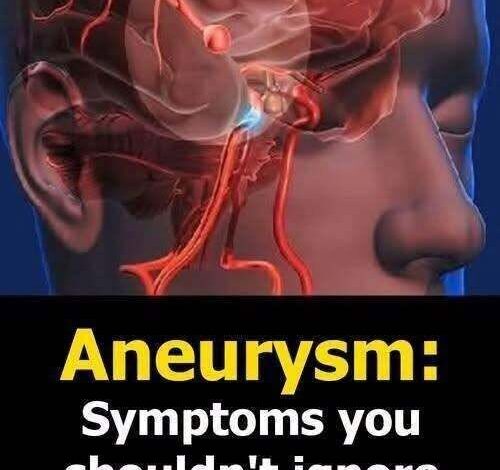
A brain aneurysm occurs when a weakened area in a blood vessel wall balloons outward. If that bulge ruptures, blood spills into the surrounding brain tissue, creating a life-threatening situation that requires urgent medical intervention. In Julie’s case, the rupture caused bleeding inside her brain, triggering a medical crisis that demanded immediate action.
Doctors moved quickly.
Emergency surgery became her only chance.
For her family, the hours that followed were filled with fear and uncertainty. No one knew exactly what the outcome would be. The procedure carried significant risks, but without it, the consequences could have been devastating.
Thankfully, the surgery was successful.
Julie survived.
But survival was only the beginning.
While many people imagine that a successful operation marks the end of a medical crisis, Julie soon learned that recovery can be a battle of its own. The aneurysm may have been repaired, but rebuilding her life would require months of determination, patience, and courage.
The woman who emerged from surgery was not the same person who had entered the hospital.
Simple tasks suddenly felt overwhelming.
Activities she had once completed without a second thought now demanded concentration and effort. Her body felt different. Her confidence had been shaken. The sense of security she once took for granted had vanished.
Every sensation became a source of anxiety.
A minor headache could trigger fear.
A moment of dizziness could spark panic.
A sudden ache or unusual feeling made her wonder if another medical emergency was waiting around the corner.
The emotional recovery proved just as difficult as the physical one.
Surviving a life-threatening event often leaves invisible scars. Many patients describe a lingering sense of vulnerability, a constant awareness of how quickly life can change. Julie experienced those feelings firsthand.
There were days when frustration threatened to overwhelm her.
Days when progress felt painfully slow.
Days when she questioned whether she would ever truly feel like herself again.
Yet she refused to give up.
Instead of focusing on everything she had lost, Julie began concentrating on the small victories.
One extra step.
One better day.
One new accomplishment.
Recovery was not marked by dramatic breakthroughs. It happened gradually, almost quietly. Each improvement became proof that healing was possible. Every milestone, no matter how small, represented another step forward.
Over time, those small victories began to add up.
Her strength slowly returned.
Her confidence started to rebuild.
The things that once seemed impossible gradually became achievable.
At one point, the idea of returning to work felt completely out of reach. The physical and emotional demands seemed overwhelming. Yet with persistence, rehabilitation, and support, she eventually found her way back.
The same was true of physical activity.
Before the aneurysm, exercise had been a normal part of life. Afterward, even basic movement felt intimidating. The fear of pushing too hard lingered in the background. But rather than allowing that fear to control her future, Julie continued challenging herself little by little.
Then came a moment that symbolized just how far she had traveled.
She completed a 5K race.
To many people, a 5K may seem like an ordinary athletic event. For Julie, it represented something much bigger.
It was proof.
Proof that she was stronger than she had believed.
Proof that recovery was possible.
Proof that one devastating medical event did not have to define the rest of her life.
Crossing that finish line wasn’t simply about running three miles.
It was about reclaiming control.
It was about refusing to be reduced to a diagnosis.
It was about choosing resilience over fear.
Today, Julie’s story resonates with people for two important reasons.
First, it serves as a powerful reminder to pay attention to unusual symptoms.
Brain aneurysms often develop silently, and when symptoms appear, they should never be ignored. Severe, sudden headaches—especially those described as the worst headache of someone’s life—can signal a medical emergency requiring immediate attention.
Listening to your body matters.
Seeking help matters.
Trusting your instincts when something feels wrong can make the difference between life and death.
Second, Julie’s experience offers hope.
Medical emergencies can leave people feeling broken, frightened, and uncertain about the future. Recovery is rarely quick. It is rarely easy. And it rarely follows a straight line.
But progress is possible.
Healing is possible.
Life after trauma is possible.
Her journey demonstrates the extraordinary resilience of the human spirit when faced with overwhelming challenges.
What began as a terrifying fight for survival became a story of perseverance, courage, and renewal.
Today, Julie no longer measures her life by the day her aneurysm ruptured.
Instead, she measures it by everything she achieved afterward.
The steps she took.
The fears she overcame.
The goals she reached.
The life she rebuilt.
Her story stands as a reminder that even after the darkest moments, there can be a path forward.
Sometimes survival is only the first chapter.
The real story begins with what happens next.
And Julie’s story proves that with determination, support, and hope, it is possible to reclaim a future that once seemed impossible to imagine.