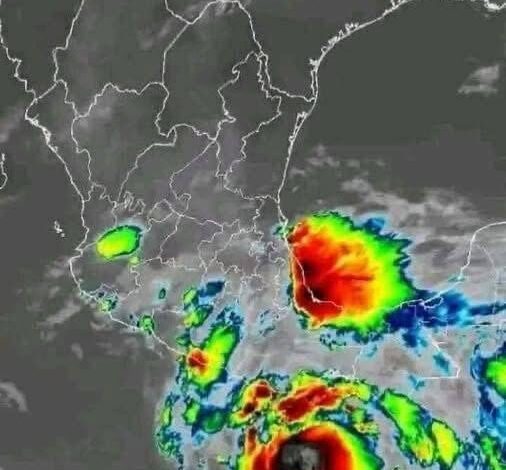
When most Americans think about hurricanes, they think about dramatic satellite images, boarded-up windows, and coastal evacuations.
They think about storms making landfall.
They think about oceanfront communities bracing for impact.
And they think about Florida.
For good reason.
No state in the nation has experienced more hurricanes than Florida. Since official records began in 1851, roughly 120 hurricanes have made landfall there, including dozens of powerful Category 3, 4, and 5 storms. Surrounded by warm waters and exposed to both Atlantic and Gulf weather systems, Florida sits directly in one of the most active hurricane corridors in the world.
For residents, hurricanes are not rare events.
They are part of life.
A seasonal threat that returns year after year.
But focusing only on Florida tells only part of the story.
The truth is that hurricane risk stretches far beyond a single state, affecting millions of people across vast portions of the country.
And as climate patterns evolve, that risk is expanding.
Florida: America’s Hurricane Capital
Florida’s geography makes it uniquely vulnerable.
Its long coastline reaches into both the Atlantic Ocean and the Gulf of Mexico, placing communities in the path of storms approaching from multiple directions.
Unlike states with limited coastal exposure, Florida can be struck on either side—or sometimes both during the same season.
From Miami to Jacksonville, Tampa to the Florida Panhandle, no region is completely immune.
History offers countless reminders.
Andrew.
Charley.
Irma.
Ian.
Michael.
Each storm left behind a different kind of devastation, but together they reinforce the same reality: Florida remains America’s most hurricane-prone state.
For many residents, preparedness is not optional.
It’s routine.
Hurricane shutters.
Emergency supplies.
Evacuation plans.
Backup generators.
These are not extraordinary precautions.
They are normal parts of life.
Other States Facing Serious Risk
Yet Florida is far from alone.
Texas ranks second in total hurricane landfalls.
Its vast Gulf Coast has endured dozens of hurricanes, including some of the most destructive storms in American history.
Communities from Brownsville to Houston understand how quickly a tropical system can transform daily life.
Hurricane Harvey demonstrated this dramatically when historic rainfall submerged neighborhoods, displaced families, and caused widespread destruction far beyond the immediate coastline.
Louisiana faces a similar challenge.
Its low-lying terrain and extensive coastline make it especially vulnerable to both hurricane winds and storm surge. Storms such as Katrina, Ida, and Laura revealed how devastating these impacts can be when powerful systems collide with densely populated regions.
North Carolina presents a different kind of risk.
The state’s coastline extends into the Atlantic, creating a natural target for storms moving northward along the Eastern Seaboard. The Outer Banks, in particular, have become synonymous with hurricane exposure.
These narrow barrier islands sit directly in the path of many Atlantic systems.
Residents understand that hurricanes are not occasional visitors.
They are recurring threats.
South Carolina, Alabama, Mississippi, Georgia, Virginia, and even parts of New York have all experienced significant hurricane impacts as well.
No coastal state can afford complacency.
The Most Vulnerable Coastal Regions
Certain areas face repeated exposure because of geography.
South Florida remains one of the nation’s most hurricane-prone regions, with major hurricanes affecting the area on a relatively regular basis.
The Outer Banks experience some of the highest exposure rates on the East Coast.
Along the Northern Gulf Coast, communities frequently prepare for the possibility of major storms during every hurricane season.
What makes these locations particularly vulnerable is not simply the frequency of storms.
It is the combination of exposure, population growth, and infrastructure challenges.
Many of the nation’s fastest-growing coastal regions lie directly within hurricane zones.
As more people move into these areas, the potential consequences of major storms continue to increase.
The Deadly Power of Storm Surge
When people imagine hurricane destruction, they often picture powerful winds.
Yet the most dangerous threat frequently arrives in another form.
Water.
Storm surge occurs when strong hurricane winds push seawater toward the shore, causing water levels to rise dramatically above normal conditions.
The results can be catastrophic.
Entire neighborhoods can flood within hours.
Roads disappear.
Buildings become submerged.
Emergency access becomes impossible.
Storm surge often strikes before the strongest winds arrive, catching some residents off guard.
The Gulf Coast is especially vulnerable because of its geography.
Large portions of the region are flat and low-lying, allowing water to travel significant distances inland.
Cities such as New Orleans, Tampa, Miami, Savannah, and even New York face substantial surge risks during major hurricanes.
In some cases, storm surge has proven more deadly than wind itself.
The Hidden Danger Far From the Coast
One of the biggest misconceptions about hurricanes is that danger ends at the shoreline.
It doesn’t.
In fact, some of the deadliest hurricane impacts occur hundreds of miles inland.
Flooding remains the leading cause of hurricane-related fatalities.
Heavy rainfall can overwhelm rivers, drainage systems, and infrastructure long after a storm weakens.
Communities far from the coast often underestimate this threat.
Yet history repeatedly shows how dangerous inland flooding can become.
Slow-moving storms are particularly dangerous.
Even after losing hurricane strength, they can continue dumping enormous amounts of rain over the same region for days.
Rivers overflow.
Roads disappear.
Entire neighborhoods become isolated.
What began as a coastal storm becomes an inland disaster.
This reality has transformed how emergency managers approach hurricane preparedness.
The danger zone is no longer limited to beachfront communities.
Climate Change and a Changing Risk Map
Perhaps the most important change occurring today is the evolving nature of hurricane risk itself.
Scientists have observed significant shifts in storm behavior over recent decades.
Warmer ocean temperatures provide additional energy for tropical systems.
As a result, hurricanes are increasingly capable of reaching greater intensity.
More storms are achieving major hurricane status.
More storms are producing extreme rainfall.
More storms are maintaining strength farther inland.
The consequences extend well beyond traditional hurricane zones.
Communities once considered relatively safe may face increasing exposure in the future.
States such as Tennessee, Arkansas, and other inland regions could experience more severe impacts as powerful storms push farther from the coast before weakening.
The geography of risk is expanding.
And many experts believe that trend will continue.
Preparing for the Future
The growing threat underscores the importance of preparedness.
Understanding local vulnerabilities can save lives.
Communities today have access to tools previous generations lacked.
Detailed flood maps.
Storm surge projections.
Risk assessments.
Emergency planning resources.
Organizations such as FEMA and NOAA provide valuable information that helps residents understand their exposure and make informed decisions before storms arrive.
Preparation begins long before forecasts appear on television.
It begins with awareness.
Knowing evacuation routes.
Understanding flood zones.
Building emergency kits.
Creating communication plans.
Reviewing insurance coverage.
Small actions taken in advance often become critical when disaster strikes.
The Bigger Lesson
Hurricanes are often viewed as coastal disasters.
In reality, they are national threats.
They affect cities and small towns.
Coastal neighborhoods and inland communities.
Families living near beaches and families living hundreds of miles from the ocean.
Florida may remain the most hurricane-prone state in America, but the lesson extends far beyond its borders.
The question is no longer whether hurricanes will continue shaping American life.
They will.
The question is how prepared communities will be when they arrive.
Because hurricanes do not care about state lines.
They do not care about assumptions.
And they do not always follow the paths people expect.
As storms grow stronger and risks expand, one truth becomes increasingly clear:
Preparation is no longer just a coastal responsibility.
It is becoming a national necessity.