What began as an ordinary drive ended in a tragedy that has left an entire university community grieving.
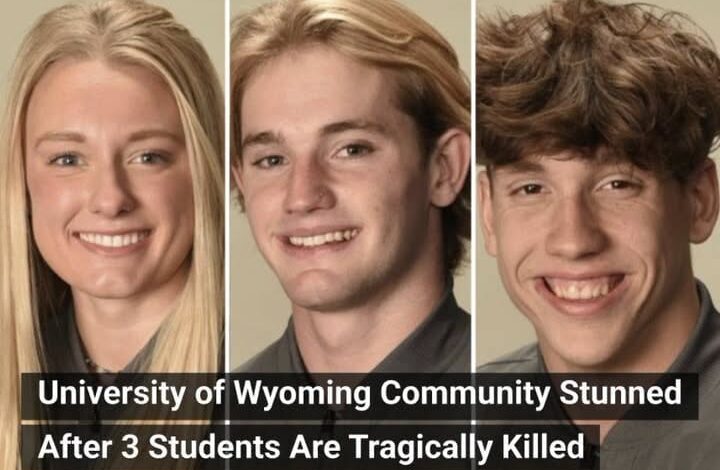
Charlie Clark was just 19 years old, known for his quiet determination in the pool and his dedication to his teammates. Luke Slabber, 21, had traveled thousands of miles from Cape Town, South Africa, to pursue both an education and a future in collegiate swimming. Carson Muir, only 18, was beginning her freshman year, embracing the excitement and uncertainty that comes with starting a new chapter of life.
Within moments, all three lives were cut short in a devastating crash involving a Toyota RAV4.
The accident has left teammates, coaches, classmates, and families struggling to understand how an ordinary day could end in such unimaginable loss.
Two other members of the University of Wyoming swimming and diving program survived the crash. While they escaped with their lives, they now face a future forever shaped by what happened that day.
For survivors of serious accidents, healing extends far beyond physical injuries.
There are memories that cannot be erased.
Questions that may never be fully answered.
And the weight of knowing that life changed in an instant.
Authorities continue investigating the circumstances surrounding the crash. As with any serious collision, investigators are examining evidence, roadway conditions, vehicle damage, and other factors to determine exactly what occurred.
At this stage, the investigation remains ongoing.
Until officials complete their work, many of the questions surrounding the accident cannot yet be answered with certainty.
What is already clear, however, is the depth of the loss.
Charlie, Luke, and Carson were more than athletes.
They were students building futures.
Friends creating memories.
Teammates who celebrated victories together, encouraged one another through setbacks, and shared the demanding routine that comes with collegiate athletics.
Swimming is a sport built on discipline.
Early morning practices.
Long hours in the pool.
Relentless commitment.
Those experiences create bonds that often feel more like family than friendship.
Now, those teammates return to a pool where three familiar faces will never appear again.
Three lockers will remain empty.
Three voices will no longer echo across the deck during practice.
Three dreams ended far sooner than anyone could have imagined.
Luke Slabber’s journey was especially remarkable.
Leaving home to study and compete in another country requires courage, determination, and hope. He traveled across the world believing in the opportunities that lay ahead, joining a university community that quickly became his second home.
Carson Muir was only beginning that journey.
Like so many first-year students, she had recently started building friendships, adapting to college life, and imagining the years ahead.
Charlie Clark had already earned the respect of those around him through his work ethic, quiet character, and commitment to his team.
Each life carried its own story.
Each future held possibilities that will now remain unrealized.
In the days following the tragedy, grief has spread well beyond the swimming program.
Across campus, students have gathered to comfort one another.
Coaches have spoken of heartbreak.
Classmates have remembered shared conversations, laughter, and ordinary moments that now carry extraordinary meaning.
When young lives are lost, entire communities mourn not only who those individuals were, but also everything they still had the chance to become.
The two survivors now begin a difficult journey of their own.
Recovery after a traumatic event is rarely measured only by hospital discharge or physical healing.
It often involves learning how to carry profound loss while moving forward one day at a time.
Friends, counselors, teammates, and loved ones will undoubtedly play an important role in helping them navigate the months and years ahead.
Their healing deserves patience, compassion, and privacy.
As investigators continue their work, it is important to allow facts—not speculation—to guide public understanding.
Serious accidents often involve complex circumstances that require careful examination before conclusions can be reached.
Until official findings are released, assumptions serve no one, especially the families and friends already carrying unimaginable grief.
For the University of Wyoming, this tragedy has become one of profound collective mourning.
Athletic programs are often built on shared goals, teamwork, and trust.
When tragedy strikes, those same bonds become sources of comfort.
Teammates stand together.
Coaches become mentors beyond the sport.
Entire campuses rally around those who need support most.
In moments like these, competition fades into the background.
What remains are the people.
The friendships.
The memories.
And the commitment to honor lives that mattered deeply.
Charlie Clark.
Luke Slabber.
Carson Muir.
Three names now forever connected not only by the sport they loved but also by the impact they made on those fortunate enough to know them.
Their races have ended.
Their influence has not.
They will continue to be remembered in every practice dedicated to their memory, every teammate who carries their example forward, and every life touched by their kindness, determination, and spirit.
Sometimes the greatest legacy an athlete leaves behind is not found on a scoreboard or in a record book.
It is found in the teammates who become lifelong friends.
The lives they inspired.
The example they set.
And the memories that remain long after the final race has been swum.
Though this tragedy has left an immeasurable void, the stories of Charlie, Luke, and Carson will continue to live on—in the hearts of their families, their teammates, and an entire university community that will never forget them.