First Child Under 12 Reportedly Dies Following Expansion of Assisted Dying Laws in the Netherlands

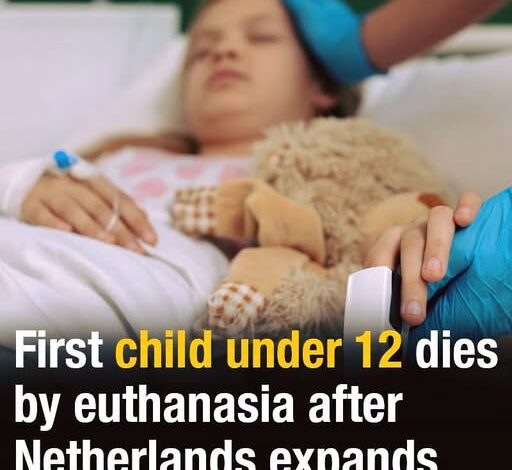
Reports from the Netherlands have drawn international attention after Dutch authorities confirmed that a child under the age of 12 died through euthanasia under the country’s recently expanded framework for children with severe, untreatable illnesses. According to officials, this is the first publicly reported case involving a child in this age group since the updated regulations took effect. The development has renewed debate about medical ethics, legal safeguards, and end-of-life care for seriously ill children.
The case was disclosed in the Dutch government’s annual report to parliament on late-term pregnancy terminations and euthanasia involving minors. To protect the family’s privacy, authorities did not release the child’s identity, exact age, diagnosis, or other personal details. Public statements have instead focused on how the legal process was applied and reviewed.
According to the report, the child was suffering from a severe, life-limiting condition that caused unbearable suffering with no realistic prospect of recovery. Beyond that general description, no additional medical information has been made public, reflecting the Netherlands’ strict confidentiality rules for sensitive medical cases involving children.
The case comes after the Netherlands expanded its policy in 2024 to allow euthanasia in exceptional circumstances for children between the ages of 1 and 12. Before this change, Dutch law already permitted euthanasia for competent patients aged 12 and older under specific legal conditions, while a separate neonatal protocol existed for certain infants with extremely severe conditions. The updated framework addressed the gap for children between those age groups.
Under the current policy, euthanasia for children aged 1 to 12 is permitted only in highly restricted circumstances. Physicians must determine that the child is experiencing unbearable suffering caused by a medically hopeless condition and that no reasonable treatment or palliative care options remain capable of relieving that suffering.
The process also requires extensive consultation.
Doctors must discuss the situation with the child’s parents or legal guardians, and when appropriate, consider the child’s own views based on age, maturity, and ability to understand the circumstances. Independent medical experts are consulted before any decision is made, and physicians must document in detail how each legal criterion has been satisfied.
Every case is reviewed after the fact through the Netherlands’ oversight system.
A specialized review committee—typically including a physician, a legal expert, and an ethicist—examines whether the doctor complied with all legal and medical requirements. If concerns arise, the case can be referred to prosecutors or medical disciplinary authorities for further evaluation.
Supporters of the Dutch framework argue that it provides a carefully regulated option for exceptionally rare situations in which a child is facing unavoidable death and experiencing suffering that medicine can no longer relieve. They emphasize that the policy applies only under strict legal safeguards and is intended for extraordinary circumstances rather than routine medical practice.
Critics, however, continue to express ethical concerns.
Some question whether children in this age group can meaningfully participate in such profound decisions, while others worry about the broader implications of extending euthanasia laws to younger patients. Ethical discussions also focus on parental involvement, the adequacy of safeguards, and society’s responsibilities in caring for its most vulnerable members.
The case has reignited international discussion about pediatric end-of-life care more broadly. While countries differ significantly in their laws regarding assisted dying, many share common goals: relieving suffering, supporting families, and ensuring that difficult medical decisions are made with compassion, transparency, and careful oversight.
Because Dutch authorities have released only limited information, many details of this individual case remain confidential. As a result, public debate has centered less on the child’s personal circumstances than on the legal and ethical framework under which the decision was made.
The reported case illustrates the profound challenges that can arise when medicine reaches the limits of what it can cure. It highlights difficult questions about suffering, dignity, parental responsibility, and the role of the law in end-of-life care—questions on which reasonable people continue to hold deeply different views.
Whatever those views may be, the case serves as a reminder that decisions involving seriously ill children are among the most complex and emotionally difficult in modern medicine. They require not only medical expertise, but also careful ethical reflection, rigorous legal oversight, and deep compassion for the children and families at the center of these extraordinary circumstances.