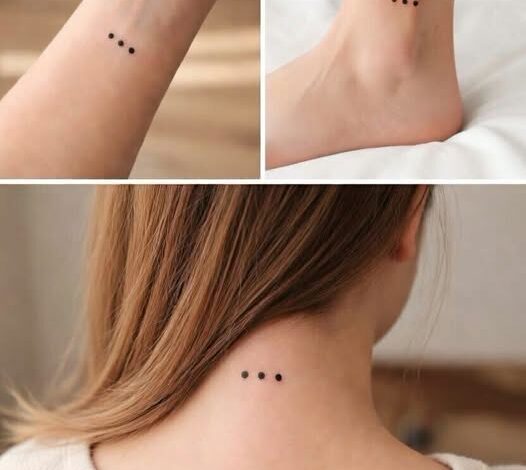
At first glance, three tiny dots tattooed on a hand may seem insignificant. They are small enough to go unnoticed by many people, yet in certain contexts they can carry a history far larger than their size suggests. Depending on where they appear, who wears them, and the culture surrounding them, these simple marks have been associated with loyalty, identity, survival, and, in some cases, criminal subcultures. But their meaning is far from universal, and assuming what they represent based on appearance alone can be deeply misleading.
One of the best-known interpretations links the three dots to the phrase “Mi Vida Loca,” Spanish for “My Crazy Life.”
This tattoo has appeared for decades among some street gangs and criminal groups, particularly in parts of Latin America and the United States. Rather than representing membership in one specific gang, it has often symbolized a lifestyle shaped by danger, hardship, rebellion, or life on the margins of society. For some, it reflects difficult circumstances they endured; for others, it represents choices they made or an identity they embraced during a particular period of their lives.
In some prison environments, three dots have also been connected to an unwritten code of silence.
The tattoo has sometimes been interpreted as a reminder not to cooperate with authorities or betray fellow inmates. Within certain correctional settings, such symbols can communicate loyalty, shared experience, or commitment to group rules without saying a single word. Because prisons develop their own cultures and symbols, however, meanings can vary significantly from one institution or country to another.
Additional dot tattoos may carry different personal significance.
In some cases, people have used extra dots to commemorate time spent incarcerated or major events in their lives. Others choose dot patterns simply for artistic reasons or because the design holds private meaning known only to them. A minimalist tattoo may represent faith, family, personal milestones, or entirely unrelated symbolism.
This diversity of meanings is important to remember.
Tattoo symbolism changes across cultures, communities, and generations. A design associated with criminal activity in one region may have no such connection somewhere else. Likewise, many people today receive small dot tattoos purely as modern body art, with no relationship whatsoever to gangs, prisons, or illegal activity.
Context matters far more than appearance alone.
Law enforcement professionals, historians, and researchers generally caution against drawing conclusions based solely on a tattoo. While certain symbols may sometimes contribute to a broader assessment during investigations, they are never reliable indicators of a person’s character, intentions, or background by themselves. Many individuals carry tattoos that no longer reflect who they are, while others choose similar designs for completely unrelated personal reasons.
For those who once lived within criminal environments, visible tattoos can present lasting challenges.
Even after leaving that lifestyle behind, highly recognizable symbols may continue attracting unwanted attention or assumptions from employers, strangers, or law enforcement. Some individuals eventually choose tattoo removal or cover-up artwork as part of building a new chapter in their lives, while others keep the tattoos as reminders of experiences they have survived rather than identities they still embrace.
Tattoo culture itself has evolved dramatically.
What was once largely associated with specific social groups has become mainstream, with millions of people choosing tattoos to honor loved ones, express creativity, celebrate milestones, or tell deeply personal stories. As tattoos have become more common, many traditional symbols have taken on new meanings that differ greatly from their historical origins.
Ultimately, three small dots demonstrate how powerful symbols can become.
To one person, they may represent a painful past. To another, they may symbolize resilience after difficult years. Someone else may simply appreciate the design’s simplicity without attaching any broader meaning at all.
That is why it’s wise to approach tattoo symbolism with curiosity rather than certainty. While history provides valuable context for understanding certain designs, no tattoo tells a complete story on its own. The person wearing it—and the life they have lived—always holds the meaning that matters most.