In eastern Democratic Republic of Congo, fear does not arrive all at once. It settles slowly into villages, markets, homes, and hospital corridors until entire communities begin living beneath its weight. In the provinces of Ituri and North Kivu, families wake each morning with the same quiet dread: wondering who will become sick next, whose fever will worsen by nightfall, whose house will suddenly fall silent behind closed doors.
The grief there feels constant, almost woven into daily life.
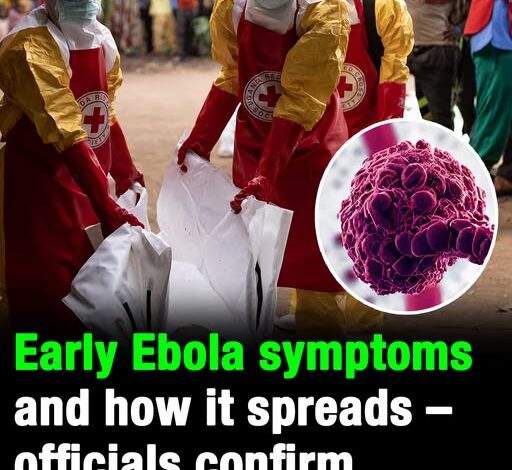
Funerals happen quickly now, often under strict supervision from health officials dressed head to toe in protective gear that makes them appear less human than ghostlike. Loved ones are no longer always allowed to wash or touch the bodies of those they lose — a tradition deeply tied to dignity, mourning, and respect in many Congolese communities. For countless families, that separation creates another layer of pain on top of the loss itself.
People speak in hushed voices about “great suffering.”
Entire neighborhoods grow tense whenever ambulances arrive. Children watch silently from doorways as suspected patients are taken toward isolation units many fear they may never leave. Rumors spread rapidly through villages and crowded towns — some claiming the virus is unstoppable, others insisting hospitals themselves are dangerous. In regions already shaped by conflict, displacement, and distrust of authority, fear often travels faster than verified information.
That fear has become one of the outbreak’s most dangerous companions.
Health workers move tirelessly from village to village trying to outrun both the virus and the misinformation surrounding it. Wrapped in heavy protective suits despite brutal heat and humidity, they knock on doors, interview frightened families, track possible exposures, and plead with communities to report symptoms early. Many know they are walking into places where suspicion runs deep. Some residents fear quarantine more than the illness itself. Others hide sick relatives to avoid separation or stigma.
Still, doctors, nurses, epidemiologists, and volunteers continue their work because they understand how quickly Ebola can spiral beyond control if even a small chain of transmission goes unnoticed.
The virus itself begins deceptively quietly.
At first, Ebola can resemble illnesses people in the region already know too well — malaria, typhoid, severe flu, or other tropical infections that begin with fever and weakness. Someone develops a headache. Their joints ache. Fatigue settles heavily into the body. A sore throat appears. Maybe chills. Maybe muscle pain.
At that stage, many dismiss it as something ordinary.
That is part of what makes Ebola so terrifying.
By the time its true nature becomes clear, the virus may already be spreading silently through families and caregivers.
For many patients, the illness then shifts suddenly into something far more brutal. Vomiting begins relentlessly. Severe diarrhea drains the body of fluids with terrifying speed. Stomach pain intensifies. Internal bleeding may develop. Some patients bleed from the gums, nose, or digestive tract, though not every case follows the same pattern. Organs begin failing under immense strain. Weakness becomes so severe that even lifting one’s head can feel impossible.
The suffering is often difficult to witness.
Doctors who have treated Ebola patients describe the emotional devastation inside treatment centers — not only because of the physical symptoms, but because patients are frequently isolated from loved ones during the most frightening moments of their lives. Protective barriers, masks, gloves, and strict infection protocols create emotional distance at the exact moment human closeness matters most.
Even survivors rarely emerge unchanged.
Many carry invisible wounds long after the virus leaves their bloodstream. Some develop chronic joint pain so severe it interferes with daily life for years afterward. Others suffer vision problems, inflammation, or neurological complications. Depression, anxiety, nightmares, and survivor’s guilt haunt many who watched family members die while they themselves lived.
Some survivors speak about feeling feared by their own communities afterward.
Others describe the strange loneliness of surviving something so traumatic that few around them can fully understand it.
And yet survival is possible.
That is one of the most important truths health workers continue trying to communicate in affected regions. Ebola is deadly, but it is not hopeless. Early treatment dramatically improves survival rates. Rapid identification of symptoms, supportive medical care, hydration, monitoring, and newer therapeutic approaches have saved many lives during recent outbreaks. Vaccination campaigns have also become one of the strongest tools available for containing spread when deployed quickly and effectively.
But containment depends on trust.
Without trust, people avoid clinics.
Without trust, families hide symptoms.
Without trust, contact tracing collapses.
And without trust, outbreaks can accelerate terrifyingly fast.
That challenge becomes even more complicated in eastern Congo, where years of armed conflict, political instability, displacement, and violence have already weakened public confidence in institutions. Some health teams travel under armed escort because treatment centers themselves have previously been attacked by militias or angry crowds fueled by conspiracy theories and fear.
In such conditions, fighting Ebola becomes more than a medical mission.
It becomes a battle against panic, exhaustion, misinformation, and trauma layered atop existing humanitarian crises.
Meanwhile, ordinary life continues under the shadow of uncertainty.
Markets still open.
Children still play in dusty roads.
Farmers still work fields.
But beneath those routines sits a constant awareness that a single unexplained fever can change everything overnight.
Parents monitor children anxiously for signs of illness. Communities become hyperaware of coughs, weakness, or sudden fatigue. Every funeral carries unease. Every rumor sparks new waves of fear.
International health organizations continue warning that vigilance remains critical. Outbreaks can appear contained for weeks before new chains of transmission suddenly emerge again. The virus exploits delay, secrecy, and fatigue. It spreads most effectively where healthcare systems are overwhelmed and where fear prevents transparency.
That is why awareness matters so profoundly.
Not panic.
Not sensationalism.
But honest information.
Understanding how Ebola spreads. Recognizing symptoms early. Seeking treatment quickly. Supporting survivors instead of stigmatizing them. Respecting safety measures even when they disrupt painful traditions.
These simple actions become the fragile barrier standing between containment and catastrophe.
And in eastern Congo today, that barrier is being tested every single day by exhausted doctors, grieving families, frightened communities, and survivors carrying memories they may never fully escape.
For the outside world, Ebola often appears only as a headline — another distant outbreak briefly appearing on television screens before attention shifts elsewhere.
But for those living through it, the virus is not abstract.
It is the empty chair at dinner.
The sealed hospital ward at the edge of town.
The silence after a phone call in the middle of the night.
And the unbearable uncertainty of waiting to see who will still be alive tomorrow.