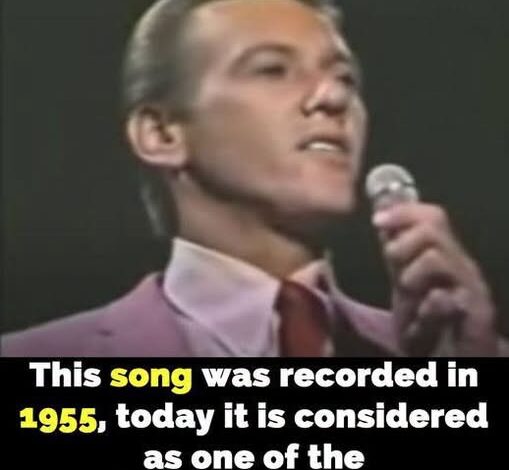
Some songs become popular. Others become unforgettable. But every so often, a melody escapes the era that created it and begins living a life of its own, carried from one generation to the next by voices, memories, and emotions that never seem to fade. “Unchained Melody” is one of those rare songs. For more than half a century, it has remained a companion to love, loss, hope, and longing, touching listeners in ways that few recordings ever manage.
Its story began in 1955, when composer Alex North and lyricist Hy Zaret wrote the song for the prison drama Unchained. Originally created to accompany a film about inmates longing for freedom and the lives they had left behind, the song expressed a yearning that reached far beyond prison walls. Although the movie itself has largely faded from public memory, its haunting theme refused to disappear. Instead, it broke free from its cinematic origins and embarked on an extraordinary journey that no one could have predicted.
The first artist to introduce the song to audiences was baritone Todd Duncan, whose dignified and expressive performance established its emotional foundation. His interpretation captured the quiet ache embedded within the lyrics, revealing a song built not on grand declarations but on patient, enduring longing. Even in those earliest years, it was clear that “Unchained Melody” possessed something timeless—a universal emotion that listeners could recognize regardless of their own circumstances.
Yet it was nearly a decade later that the song truly became a cultural phenomenon.
In 1965, The Righteous Brothers transformed “Unchained Melody” into one of the most beloved recordings in popular music history. Sung by Bobby Hatfield, the performance showcased breathtaking vocal control while remaining deeply personal and emotionally vulnerable. His soaring high notes never felt like displays of technical brilliance alone. Instead, they sounded like the release of feelings that had been held inside for far too long, giving voice to heartbreak, devotion, and hope all at once.
The arrangement itself was remarkably restrained. Rather than overwhelming the listener with elaborate orchestration, it allowed Hatfield’s voice to remain at the center of every moment. Each verse built gradually toward an unforgettable climax, creating the sensation of emotions swelling until they could no longer be contained. The result was a recording that felt less like a polished studio performance and more like an intimate confession spoken directly to anyone who had ever waited for someone they loved.
Listeners embraced it immediately.
The song became a favorite at weddings, farewells, anniversaries, and quiet evenings filled with memories. Decades later, it found renewed popularity through the 1990 film Ghost, where its unforgettable pottery-wheel scene introduced the classic to an entirely new generation. Once again, “Unchained Melody” proved that genuine emotion never grows outdated. Long after musical trends had changed, its message remained as powerful as ever.
Then another legendary voice gave the song new life.
During the final chapter of his career, Elvis Presley brought “Unchained Melody” into his live performances, creating interpretations that remain among the most emotional moments of his later years. By then, the King of Rock and Roll was visibly struggling with declining health. The effortless confidence of his youth had given way to visible fatigue, yet something remarkable happened each time he sat at the piano to perform the song.
His voice carried the weight of experience.
Every lyric seemed shaped by years of triumph, disappointment, love, loneliness, and perseverance. Rather than trying to imitate earlier versions, Elvis made the song entirely his own. His performances possessed an honesty that resonated deeply with audiences, many of whom sensed they were witnessing an artist pouring every remaining ounce of emotion into the music.
There were moments when his voice cracked slightly under the strain, but those imperfections only made the performances more moving. They reminded listeners that true artistry is not measured by flawless execution alone, but by the willingness to reveal genuine vulnerability. Elvis did not simply sing about longing—he seemed to embody it, turning each performance into something profoundly human.
Watching those final renditions today, many fans see more than a beloved entertainer performing a classic song. They see a man confronting his own mortality while still determined to connect with the people who had supported him throughout his remarkable career. That emotional honesty transformed his version into one of the most unforgettable interpretations ever recorded.
What makes “Unchained Melody” so extraordinary is that it has never belonged exclusively to a single performer. Todd Duncan introduced its quiet dignity. The Righteous Brothers gave it soaring romantic passion. Elvis Presley infused it with raw vulnerability and lived experience. Each artist uncovered a different emotional layer without diminishing those who came before.
That remarkable ability to evolve has allowed the song to endure while countless others have faded away. Every generation discovers something different within its familiar melody. Some hear romance. Others hear heartbreak. Still others hear hope, remembrance, or the bittersweet passage of time. The meaning changes because the listeners change, yet the emotional truth at its heart remains untouched.
Nearly seventy years after it was first written, “Unchained Melody” continues to remind us that music can express feelings words often cannot. It began as the theme to a little-known prison film, but it escaped those narrow confines to become one of the world’s most enduring love songs. Through unforgettable voices and deeply personal performances, it has become more than a recording. It is a timeless expression of longing, devotion, and the enduring power of human emotion—a song people return to whenever their own hearts struggle to find the right words.