The Small Workshop Tool That Defined Generations: Why the Vintage Nail Punch Still Matters Today

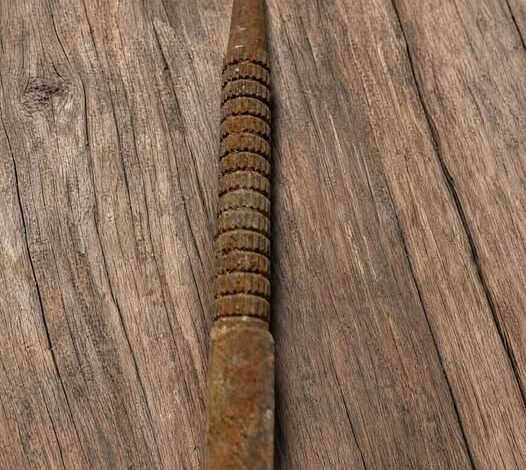
Buried beneath rusty screws, faded measuring tapes, and forgotten bolts, it rarely catches anyone’s attention. To most people, a nail punch looks like nothing more than a slender piece of hardened steel—plain, scratched, and easily overlooked. Yet for generations of carpenters, hobbyists, and homeowners, this modest tool represented something far greater than its simple appearance suggested. It was the finishing touch that transformed rough work into true craftsmanship.
Its job was never the loudest.
While hammers struck with confidence, saws filled workshops with the scent of fresh-cut lumber, and drills echoed through garages, the nail punch waited quietly for the final step. Only after the boards were secured and the project nearly complete would it be picked up. A careful tap from the hammer drove each nail just below the wood’s surface, leaving behind a clean finish ready for putty, stain, or paint.
The result was subtle.
No one admired the nail itself because, ideally, it disappeared entirely.
Run your hand across the finished wood, and instead of feeling sharp metal, you felt only a smooth surface that reflected the care invested in every detail. That invisible perfection became the signature of someone who believed the unseen parts of a project mattered just as much as the ones everyone noticed.
For many families, the nail punch became a constant companion in garages and workshops throughout the middle of the twentieth century.
It helped build backyard treehouses where childhood adventures began. It finished handmade bookshelves that carried decades of family photographs and treasured novels. It played a role in repairing kitchen cabinets, fixing porch railings, assembling toy chests, and restoring doors that still swung on their original hinges years later.
Each project added another tiny mark to the tool itself.
Its once-sharp tip gradually wore from thousands of precise strikes. The shaft gathered scratches from rolling across workbenches cluttered with wood shavings and hardware. If it had a textured grip, years of steady hands polished it smooth. Every dent became a silent record of work completed—not in factories or assembly lines, but in homes where people chose to repair, improve, and create with their own hands.
Unlike flashy power tools, the nail punch never demanded attention.
It wasn’t purchased because it looked impressive.
It was valued because it did one small task exceptionally well.
That quiet reliability reflected a broader philosophy shared by many craftsmen: excellence often lives in details that few people ever notice. A perfectly countersunk nail might remain hidden forever beneath wood filler or paint, yet the person who completed the work knew it was there. The quality existed whether anyone else recognized it or not.
Perhaps that is why discovering an old nail punch today can feel unexpectedly emotional.
It often appears tucked into the bottom of a battered toolbox inherited from a parent or grandparent. Surrounded by aging wrenches, well-used chisels, and yellowed instruction manuals, it carries more than signs of corrosion. It carries memories.
The sight of it can instantly transport someone back to a garage where afternoon sunlight streamed through dusty windows.
A father kneeling beside a half-finished cabinet.
A mother patiently measuring boards before making the first cut.
A grandfather placing the tiny steel tool into a child’s hand for the first time.
“Hold it straight.”
“Easy now.”
“Tap it… don’t smash it.”
Those lessons extended far beyond woodworking.
Patience.
Precision.
Respect for the materials.
The understanding that rushing usually meant doing the job twice.
Many people remember those moments more vividly than the projects themselves. They remember learning that mistakes weren’t failures but opportunities to slow down, think carefully, and try again. The nail punch became part of those quiet conversations, passed from one generation to the next without ceremony, carrying practical knowledge that couldn’t be found in instruction books alone.
Today, workshops often look very different.
Cordless nail guns can finish in seconds what once required careful hammer strikes and deliberate attention. New construction methods emphasize speed, efficiency, and convenience. There’s nothing inherently wrong with progress—modern tools have made many tasks safer and more accessible.
Yet something valuable remains in the slower approach.
Restoring an old nail punch instead of discarding it connects today’s craftspeople with those who came before. Cleaning away the rust, sharpening the worn tip, and putting it back to work transforms an ordinary object into a living piece of family history. Each new project adds another chapter to a story that may have begun decades earlier in someone else’s hands.
The tool itself changes very little.
Its purpose remains exactly the same.
To perform one careful, almost invisible task with precision and consistency.
And perhaps that is its greatest lesson.
Real craftsmanship has never been measured by how quickly something is built or how expensive the tools happen to be. It is measured by the willingness to care about details that no one else may ever notice. It lives in perfectly fitted joints hidden inside furniture, smooth edges that invite a gentle touch, and nails tucked neatly out of sight because someone believed even the unseen parts deserved attention.
The nail punch embodies that quiet philosophy.
It reminds us that the strongest work is often supported by countless small acts of care that remain invisible long after the project is finished. Visitors may admire the completed shelf, the restored door, or the handmade table without ever realizing the tiny steel tool that helped perfect it.
But the craftsperson knows.
They can feel the difference every time their hand glides across a flawless surface.
In the end, the nail punch is far more than a forgotten piece of steel resting in an old toolbox. It is a symbol of patience over haste, skill over shortcuts, and pride in work completed with integrity. Though its contribution is rarely seen, it is present in every smooth board, every carefully restored piece of furniture, and every project built to last.
Its finest work has always been invisible.
And that is precisely why it continues to matter.