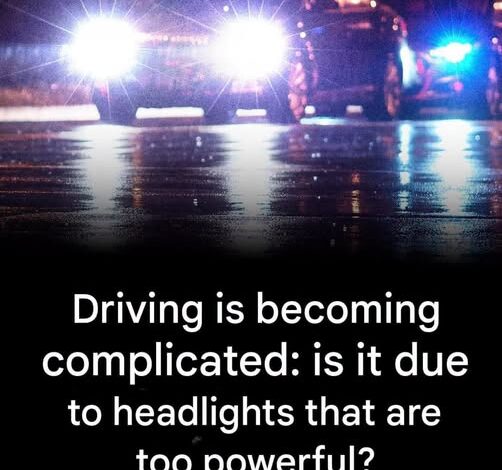
If you’ve ever found yourself squinting, slowing down, or briefly looking away as an oncoming vehicle approaches at night, you’re far from alone. Many drivers feel that nighttime roads have become noticeably more difficult to navigate, and one of the biggest reasons is the widespread adoption of modern LED headlights. While these lights offer impressive visibility for the driver using them, they can sometimes create an entirely different experience for everyone traveling in the opposite direction.
The issue isn’t simply that today’s headlights are brighter.
Modern LED systems produce a whiter, more concentrated beam than the older halogen lights many drivers grew up with. This crisp, daylight-like illumination helps drivers see farther down the road, identify obstacles sooner, and improve visibility in many situations. From a safety standpoint, those are significant advantages.
However, what benefits one driver can become challenging for another.
When that bright, focused beam shines directly into the eyes of an oncoming motorist, it can temporarily overwhelm the eye’s ability to adapt to darkness. Instead of smoothly transitioning between light and shadow, the eyes become saturated with intense illumination for a brief moment. The result is a familiar and unsettling sensation: glare.
For a few critical seconds, details on the road may become harder to distinguish.
Lane markings seem less defined.
Pedestrians and cyclists become more difficult to spot.
Objects beyond the approaching vehicle may briefly disappear into a haze of brightness.
Even after the vehicle has passed, the eyes often need several moments to readjust to the surrounding darkness.
Weather conditions can make the situation even more challenging.
Rain-covered roads reflect light in multiple directions, multiplying the amount of glare reaching the driver’s eyes. Wet windshields, puddles, and shiny pavement scatter the beams, making it feel as though the entire road is glowing. Fog and mist can produce a similar effect, diffusing the light into a bright curtain that reduces contrast and makes nighttime driving feel significantly more stressful.
Vehicle design also plays an important role.
The growing popularity of SUVs, pickup trucks, and other taller vehicles means many headlights now sit higher above the ground than they did in previous decades. For drivers of smaller cars, those beams are often positioned closer to eye level, increasing the likelihood of direct glare. Even properly functioning headlights can feel uncomfortably bright simply because of the difference in vehicle height.
Poor headlight alignment adds another layer to the problem.
Headlights are carefully designed to direct most of their illumination toward the road rather than directly into the eyes of other motorists. But over time, suspension wear, minor collisions, heavy cargo, or improper installation can cause the beams to point too high. Even a slight misalignment can significantly increase glare for oncoming traffic while reducing the driver’s own ability to illuminate the road effectively.
Fortunately, there are practical steps drivers can take to make nighttime travel more comfortable and safer.
One of the simplest is to have your headlights checked and properly aligned during routine vehicle maintenance. Correct alignment not only improves your own visibility but also helps reduce unnecessary glare for everyone else sharing the road.
If your vehicle includes a manual headlight leveling feature, it’s worth learning how to use it. Carrying heavy luggage, towing a trailer, or loading the trunk with cargo can cause the front of the vehicle to lift slightly, unintentionally raising the headlight beams. Adjusting them downward restores their intended angle and helps prevent dazzling oncoming drivers.
Keeping your windshield clean is equally important.
Many people focus only on the outside glass, but the inside surface can gradually collect dust, fingerprints, smoke residue, and a thin film that becomes nearly invisible during the day. At night, however, those small particles scatter incoming light, making glare appear even more intense. Cleaning both sides of the windshield regularly allows light to pass through more clearly and reduces unnecessary visual distortion.
Your own driving habits can also make a noticeable difference.
When another vehicle approaches with bright headlights, avoid looking directly into the light source. Instead, shift your gaze slightly toward the right edge of your lane or use the painted lane markings as a visual guide while maintaining awareness of the road ahead. This simple technique helps protect your eyes from the brightest part of the beam while allowing you to keep your vehicle safely positioned.
Reducing speed when visibility is temporarily compromised is another sensible precaution. There is no shame in easing off the accelerator for a few moments if glare makes it harder to see. Giving yourself additional reaction time can significantly improve safety until your vision fully recovers.
The good news is that automotive lighting technology continues to evolve.
Many newer vehicles are now equipped with adaptive or automatically adjusting headlight systems that can detect surrounding traffic and modify the beam accordingly. Some systems selectively dim only portions of the light pattern, allowing drivers to maintain excellent visibility without shining full intensity into the eyes of others. As these technologies become more common, nighttime driving may become both safer and less stressful for everyone on the road.
Until then, understanding why glare occurs—and knowing how to reduce its effects—can make a meaningful difference.
Modern LED headlights are not inherently the enemy. They represent a significant advancement in vehicle safety and visibility. The challenge lies in balancing those benefits with the comfort and safety of other drivers. Proper headlight alignment, thoughtful vehicle maintenance, clean glass, and smart driving techniques all help create that balance.
Night driving will always demand greater attention than traveling during daylight hours, but it doesn’t have to feel intimidating. With a few practical habits and continued improvements in automotive technology, drivers can navigate dark roads with greater confidence, clearer vision, and the reassurance that every journey is becoming a little safer—for themselves and for everyone traveling beside them.