The Man Who Lost Billions And Faced Total Financial Ruin Only To Rise From The Ashes And Become The Most Powerful Leader On Earth

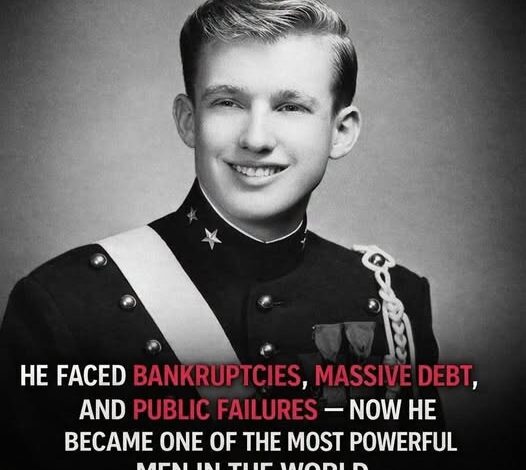
Few public figures have blurred the line between collapse and comeback as dramatically as Donald Trump. His story is not one of uninterrupted triumph, nor is it a simple cautionary tale about ambition gone too far. Instead, it is the story of a man who repeatedly transformed setbacks into new beginnings, using publicity as both a shield and a weapon. Across decades of business ventures, media attention, and political upheaval, he demonstrated an unusual ability to survive moments that appeared, to many observers, to be career-ending. Whether admired or criticized, he consistently refused to disappear from the spotlight.
Raised in Queens before expanding his ambitions into Manhattan, Trump pursued a larger-than-life image from the beginning. Luxury skyscrapers, lavish branding, and relentless self-promotion became central to his public identity. Yet success rarely came without turbulence. Financial difficulties, failed ventures, legal disputes, and relentless tabloid scrutiny repeatedly threatened to undermine the empire he had built. Each controversy seemed poised to define his legacy, yet none permanently removed him from public life.
What distinguished Trump’s approach was his instinct for controlling the narrative. Rather than allowing failures to become final chapters, he reframed them as temporary obstacles or evidence that critics had underestimated him. Public embarrassment became another opportunity to command attention. Moments that might have ended another public career were instead folded into a larger story of persistence, allowing supporters to view adversity as proof of determination rather than defeat.
His transition into entertainment further strengthened that strategy. Reality television expanded his reach beyond the business world, introducing millions of viewers to a carefully cultivated image of confidence, authority, and decisive leadership. The television persona reinforced a brand built not only on wealth but on certainty—the impression of someone who always projected strength, even during periods of intense criticism. By the time he entered politics, he already possessed something many traditional candidates struggled to achieve: a deeply recognizable public identity that extended far beyond policy or ideology.
When Trump launched his presidential campaign, he carried those lessons directly into the political arena. Years spent mastering headlines, controversy, and public attention became powerful political tools. His speeches, rallies, and messaging broke with many conventional campaign strategies, relying instead on direct language, constant media engagement, and an ability to dominate the national conversation. Supporters viewed his willingness to challenge political norms as evidence that he represented genuine change. Critics interpreted those same qualities as signs of growing polarization and institutional strain.
That divide only widened as his influence grew. For millions of Americans, he became a champion for voters who believed they had been overlooked by political and economic elites. They saw someone willing to confront established institutions, question longstanding assumptions, and speak in ways traditional politicians rarely did. For others, however, his rise represented a profound challenge to democratic traditions, civic discourse, and the norms that had shaped American politics for generations. Few modern leaders have inspired such deeply opposing interpretations while commanding such sustained public attention.
The intensity of those competing narratives reveals something larger than one individual. Trump’s career illustrates how modern politics increasingly rewards visibility, emotional connection, and storytelling alongside policy debates. In an era dominated by twenty-four-hour news cycles, social media platforms, and constant public engagement, perception often spreads faster than careful analysis. Leaders are judged not only by events themselves but also by how effectively they shape the public understanding of those events.
Trump repeatedly demonstrated an awareness of that reality. He understood that remaining at the center of public conversation could be a source of influence in itself. Even moments of fierce criticism often kept him firmly within the national spotlight, ensuring that opponents and supporters alike continued responding to his message. By refusing to retreat during periods of intense pressure, he maintained a level of visibility that few political figures have matched.
Whether history ultimately celebrates or condemns his legacy remains a subject of ongoing debate. Scholars, voters, and future generations will continue examining the consequences of his presidency, his campaigns, and his broader impact on American political culture. Opinions about his leadership differ dramatically, shaped by personal experience, political philosophy, and competing interpretations of recent history.
What is difficult to dispute, however, is the scale of his influence. Trump’s journey demonstrates how resilience, branding, media strategy, and relentless persistence can reshape both personal fortunes and national politics. His career underscores an uncomfortable reality of the modern age: public narratives can become as influential as the events themselves. In a world where attention is often one of the most valuable forms of power, the individual who refuses to leave the stage may ultimately gain the opportunity to redefine not only his own story, but also the political conversation of an entire nation.