I was cooking ground beef and when I took it out of the pan, I noticed a strange object that didn’t look like beef.

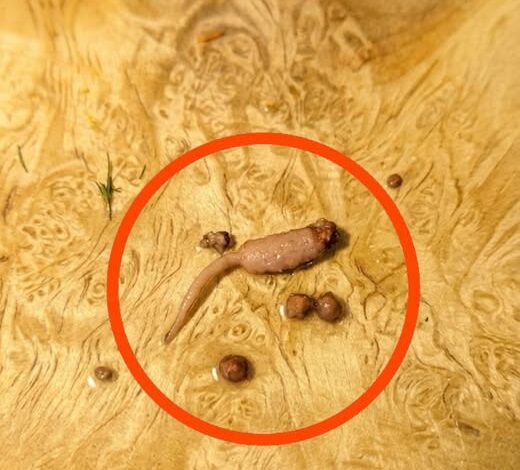
For a split second, my appetite disappeared. Staring back from the cooked ground beef was a long, pale, string-like object that looked so unusual my mind immediately jumped to the worst possible conclusion. It didn’t seem to belong there, and the more I looked at it, the more unsettling it became. Like many people would, I reached for my phone instead of my fork, took a close-up photo, and began searching for answers.
The uncertainty was almost worse than the discovery itself.
Every image I compared seemed to suggest something different. Was it contamination? A parasite? Some kind of foreign material that had somehow ended up in the meat? The longer I searched, the more my imagination filled in the gaps. It was easy to convince myself that something was seriously wrong, especially because the object had an oddly twisted, stringy appearance that looked nothing like ordinary ground beef.
But as I dug deeper, a much less alarming explanation began to emerge.
The mysterious strand wasn’t a parasite at all. It was most likely a piece of connective tissue—such as tendon, gristle, or dense fat—that had reacted to the heat of cooking in a way that made it stand out dramatically from the surrounding meat. While it looked unusual, it was actually a normal part of beef that had simply become far more noticeable after cooking.
Ground beef is often thought of as being made entirely of muscle, but that’s not how it naturally exists. Beef contains a mixture of muscle tissue, fat, and small amounts of connective tissue that help hold muscles together while the animal is alive. During processing, tiny portions of these tissues can become part of the finished product. In most cases, they blend in so completely that they’re never noticed.
Occasionally, however, one of those pieces behaves differently.
Connective tissue responds to heat in unique ways. As the meat cooks, collagen-rich tissues shrink, tighten, and sometimes curl into long, rope-like shapes. Fat can also contract and change appearance as it renders. Instead of breaking apart like the surrounding meat, these tougher fibers may remain intact, becoming pale, firm, and surprisingly noticeable against the browned beef.
That transformation is what often catches people off guard.
Our brains are naturally wired to recognize unfamiliar shapes, especially those that resemble things we instinctively avoid. A twisted strip of connective tissue can easily resemble a worm or another unwanted object at first glance. Once that possibility enters the mind, it’s difficult not to keep seeing it that way until a more reasonable explanation becomes clear.
Fortunately, appearances can be misleading.
When properly sourced, handled, and cooked, beef occasionally containing visible connective tissue is generally considered a normal characteristic of the product rather than a sign that it is unsafe. Although these pieces may be unpleasant to look at or chewy to eat, they are simply parts of the animal’s natural anatomy that responded differently to heat than the surrounding muscle.
Of course, food safety should never be ignored.
If ground beef has an unusual odor, abnormal color before cooking, signs of spoilage, damaged packaging, or if you discover material that clearly does not appear to be part of the meat, it is wise to stop using it and contact the retailer or manufacturer. Likewise, ground beef should always be cooked to a safe internal temperature to reduce the risk of foodborne illness.
In this case, however, the strange-looking strand turned out to be far less dramatic than it first appeared.
What initially looked like something alarming was simply connective tissue revealing itself in an unexpected way. Once I understood how heat can tighten, shrink, and twist these natural fibers, the mystery quickly lost much of its power. The object hadn’t changed—only my understanding of what I was seeing had.
It’s a good reminder that our first impressions, especially when something looks unusual, are not always the most accurate. Sometimes an unsettling discovery has a perfectly ordinary explanation hiding behind an unfamiliar appearance.
In the end, the experience became more educational than frightening. That odd, string-like piece wasn’t evidence of contamination or a hidden parasite. It was simply beef behaving exactly as connective tissue sometimes does during cooking. It may not win any beauty contests, and it can certainly make you pause before taking the next bite, but once you know the science behind it, the mystery becomes much less intimidating. What seemed alarming at first was, in reality, just one of the many natural quirks of how food changes when heat does its work.