What once passed as harmless late-night banter now feels strikingly different through modern eyes. Rewatching old television interviews can be like opening a time capsule, revealing not only the celebrities who appeared on screen but also the cultural attitudes that shaped those moments. Few examples have sparked as much renewed discussion as David Letterman’s interviews with Jennifer Aniston, where comments once dismissed as playful comedy are now widely viewed as uncomfortable reminders of how female celebrities were often treated in the spotlight.
David Letterman built a legendary career as one of late-night television’s defining personalities. Known for his quick wit, dry humor, and unpredictable interview style, he entertained audiences for decades and welcomed nearly every major star to his stage. Yet as clips from his show continue to circulate online, some encounters are being reassessed, prompting viewers to question whether certain moments crossed lines that once went largely unchallenged.
One interview in particular has become the center of that conversation.
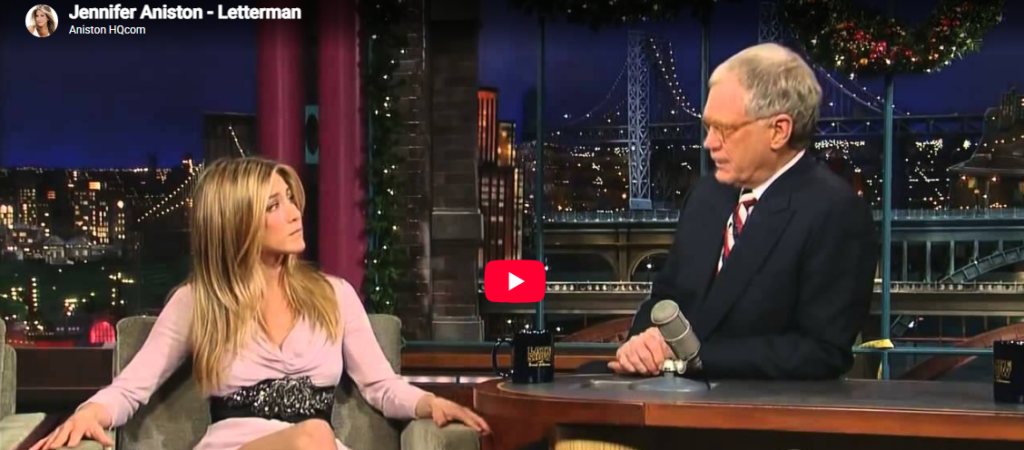
In 2006, Jennifer Aniston appeared on The Late Show with David Letterman to promote The Break-Up, the romantic comedy she starred in alongside Vince Vaughn, who also co-wrote and produced the film. What should have been a routine promotional appearance quickly shifted away from the movie itself.
Almost immediately, Letterman began complimenting Aniston’s appearance—specifically her legs.
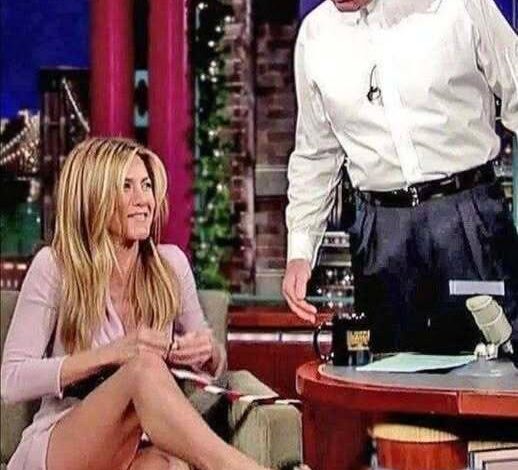
Dressed in a black blouse and matching shorts, Aniston became the focus of repeated remarks about her outfit. Letterman enthusiastically praised her legs multiple times, calling them “fantastic” and continuing to elaborate on their appearance. As he spoke, the show’s cameras zoomed in on them, reinforcing the emphasis that had already begun to dominate the interview.
Aniston responded with her trademark composure, laughing politely and explaining that she had simply chosen to wear shorts because of the warm weather. It was an attempt to redirect the conversation without creating tension, but the subject refused to disappear.
As the interview continued, Letterman returned to the same topic again.
“You’ve got something there,” he remarked, once more referring to her legs. Rather than allowing the discussion to move naturally toward her work, the repeated observations left the exchange feeling increasingly awkward. Looking back today, many viewers have pointed to Aniston’s restrained smiles and careful responses as signs that she was doing her best to navigate an uncomfortable situation while remaining professional.
The conversation became even more personal when Letterman shifted toward Aniston’s rumored relationship with Vince Vaughn.
He questioned her about whether Vaughn had encouraged her to appear partially nude in The Break-Up, catching the actress off guard. Instead of engaging with the speculation, Aniston calmly suggested that Letterman should have directed that question to Vaughn himself when he appeared on the show. Once again, she deflected the conversation without allowing visible frustration to derail the interview.
By that time, Aniston and Vaughn had indeed begun dating during the filming of The Break-Up. She would later speak publicly about how supportive he had been during the difficult period following her highly publicized divorce. Even as that more personal subject entered the discussion, however, Letterman once again returned to commenting on her legs, reinforcing what had already become the defining feature of the interview.
For many viewers revisiting the footage years later, it is this repetition that stands out most. What may once have been brushed aside as flirtatious humor now strikes many as an example of how easily a successful actress’s professional achievements could be overshadowed by commentary about her appearance.
The 2006 interview was not the first time one of Letterman’s interactions with Aniston generated criticism.
Years earlier, during a 1998 appearance, an incident unfolded that has since become one of the most frequently replayed moments from the show’s archives. In an unexpected gesture, Letterman reached toward Aniston, took hold of a strand of her hair, and briefly put it in his mouth. The actress appeared visibly surprised before wiping her hair with a tissue that Letterman handed her moments later.
Although she maintained her composure and continued the interview, the clip has frequently resurfaced in discussions about personal boundaries and changing standards of acceptable behavior on television.
Despite those uncomfortable encounters, Aniston returned to The Late Show again.
In a later appearance promoting Marley & Me, she arrived wearing an elegant pink dress, but this visit would become memorable for an entirely different reason. Rather than focusing on awkward exchanges, Aniston surprised Letterman with a thoughtful gift.
She presented him with the Brooks Brothers necktie she had worn on the cover of GQ magazine, describing it as an early Christmas present. Letterman immediately removed his own tie and put on the new one with Aniston’s assistance, turning the exchange into a lighthearted moment. The pair joked about the unusually short length of the tie, creating one of the evening’s most relaxed interactions.
Even during that appearance, Letterman attempted to ask questions about Aniston’s personal life, including her relationship with musician John Mayer. As she had done throughout much of her career, Aniston answered selectively, steering the conversation back toward her work whenever possible.
Her ability to remain poised under intense public scrutiny became one of her defining qualities. Whether confronted with speculation about relationships, persistent questions about her private life, or uncomfortable moments during interviews, she consistently handled herself with professionalism that many admirers continue to praise.
Today, those older interviews are viewed through a very different cultural lens. Audiences have become more aware of issues surrounding personal boundaries, workplace dynamics, and the treatment of women in entertainment. As a result, moments that were once dismissed as ordinary late-night comedy now inspire broader conversations about respect, consent, and the ways celebrity interviews have evolved.
Looking back, the renewed attention is less about rewriting history than understanding it. The interviews remain snapshots of a different era in television—one that reflects both the immense popularity of late-night entertainment and the shifting expectations of how public figures, particularly women, deserve to be treated. Jennifer Aniston’s calm professionalism throughout those encounters continues to earn admiration, while the discussions surrounding them remind viewers just how dramatically cultural standards can change over time.