I Paid My Son’s Crush to Ask Him to Prom – When I Saw Pictures from the Evening, I Couldn’t Believe My Eyes

For years, I convinced myself that love meant protecting my son from every consequence that threatened to hurt him.
If he made a mistake, I softened the landing.
If he crossed a line, I found a justification.
If someone was hurt by his choices, I searched for explanations that made him seem less responsible and more misunderstood.
I told myself I was being a good mother.
I told myself I was helping.
What I didn’t realize was that every time I stepped between him and accountability, I wasn’t protecting him from the world.
I was protecting him from himself.
And that distinction would cost more than I ever imagined.
The truth arrived on a night that should have belonged to someone else.
A night of music, photographs, laughter, and memories.
A night a young girl had dreamed about for months.
Instead, it became a night of humiliation.
A night she would never forget.
I still remember the fluorescent lights in the school hallway.
The muffled music drifting from the gymnasium.
The sound of voices spreading rumors faster than anyone could stop them.
And somewhere behind a locked bathroom door, Ella was crying.
Not the quiet tears people shed when they’re disappointed.
These were the tears that come when something inside you has been broken in front of an audience.
The tears of someone whose trust has been turned into entertainment.
I can still hear them.
Every word.
Every sob.
Every desperate attempt to hold herself together while the rest of her world seemed to collapse.
Meanwhile, her mother stood outside the stall, demanding answers.
Demanding to know who had bought her daughter.
Who had convinced her she was special.
Who had manipulated her trust.
Who had turned her perfect night into a public disaster.
At first, I wanted to do what I had always done.
Protect Jeremiah.
Find an excuse.
Explain it away.
Convince everyone there had been a misunderstanding.
Because that had become my instinct.
My reflex.
My role.
Whenever trouble appeared, I stepped in.
Whenever consequences approached, I stood between them and my son.
For years, I believed that was love.
But standing in that hallway, listening to a devastated girl cry behind a bathroom door, something inside me finally broke.
Not because I discovered what Jeremiah had done.
Deep down, I think I already knew.
What shattered me was realizing how long I had helped him avoid becoming accountable for it.
I had spent years seeing him as fragile.
As wounded.
As someone who needed rescuing.
I carried guilt for every hardship he experienced.
Every disappointment.
Every struggle.
I worried constantly about hurting him.
About losing him.
About failing him.
And because of that guilt, I gave him something dangerous.
A shield.
A shield he learned how to use.
At some point, my protection stopped being an act of love and became a tool.
A tool he relied on.
A tool he expected.
A tool he weaponized.
Every time he made a reckless choice, he assumed I would clean it up.
Every time someone got hurt, he assumed I would smooth things over.
Every time consequences approached, he expected me to stand in front of them.
And for years, I did.
Until that night.
Until Ella.
Until I finally saw the damage with absolute clarity.
Not just the damage Jeremiah had caused.
The damage I had helped create.
Because enabling someone doesn’t always look like approval.
Sometimes it looks like endless forgiveness.
Sometimes it looks like excuses.
Sometimes it looks like protection.
And sometimes it looks exactly like love.
At least from the outside.
When I finally told the truth, there was no feeling of triumph.
No sense of courage.
No dramatic relief.
People often imagine honesty as something liberating.
For me, it felt like grief.
I felt hollow.
Drained.
As though years of denial had finally collapsed under their own weight.
I watched Jeremiah’s face change.
Watched the realization settle in.
For the first time, I wasn’t stepping in.
For the first time, I wasn’t rescuing him.
For the first time, he stood alone with the consequences of his choices.
Then he walked away.
Into the darkness.
Into the night.
And I let him go.
That was the hardest thing I have ever done.
Not because I stopped loving him.
Because I didn’t.
I still don’t.
I love him with every piece of my heart.
But I finally understood that love and protection are not always the same thing.
Sometimes love means allowing someone to face the truth.
Sometimes love means refusing to carry burdens that belong to them.
Sometimes love means stepping aside.
Even when it hurts.
Especially when it hurts.
The house is quiet now.
Far quieter than it used to be.
There are evenings when the silence feels almost unbearable.
I sit at the kitchen table long after sunset, surrounded by memories and regrets.
Sometimes I write letters.
Apologies, mostly.
Letters I never send.
Letters to Ella.
Letters to her mother.
Letters to the version of myself who believed shielding someone from accountability was kindness.
None of them can change what happened.
None of them can return what was taken.
Words are not magic.
They cannot repair trust once it has been shattered.
They cannot erase humiliation.
They cannot undo pain.
The best they can do is bear witness.
The best they can do is acknowledge the truth.
And the truth is simple.
A girl’s special night was stolen.
A family was hurt.
And I helped create the conditions that allowed it to happen.
Some nights, one image returns more vividly than all the others.
Not Jeremiah.
Not the hallway.
Not the confrontation.
Ella.
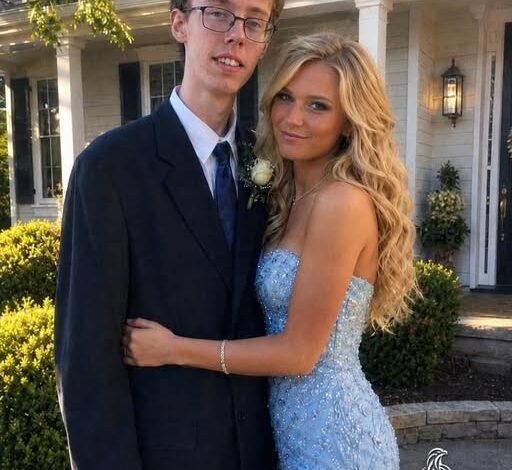
Standing there in her pale blue dress.
A dress chosen for a night that was supposed to be beautiful.
A dress meant for photographs, laughter, and memories worth keeping.
Instead, it became the uniform of a heartbreak she never deserved.
That image stays with me.
Because it reminds me exactly who paid the price while I spent years protecting the wrong person.
And it reminds me of a lesson I learned too late:
Love is not measured by how often you save someone from consequences.
It is measured by whether you help them become the kind of person who doesn’t create them in the first place.
I wish I had understood that sooner.
For Jeremiah.
For Ella.
For all of us.