“After 12 Years in a Coma, ‘Ghost Boy’ Martin Pistorius Wakes Up—He Says He Was Conscious the Whole Time”

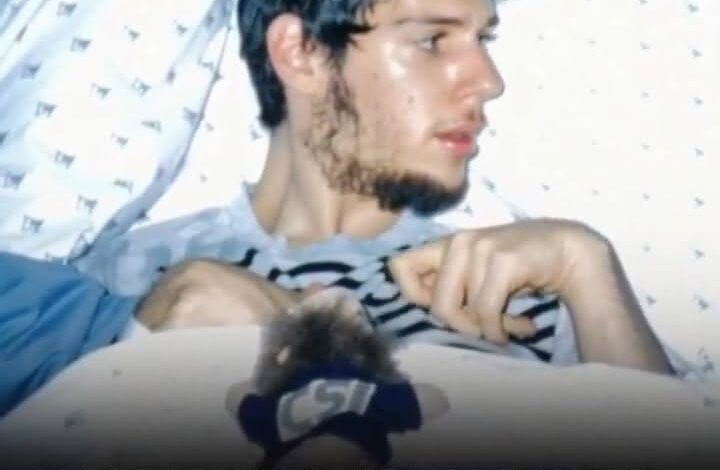
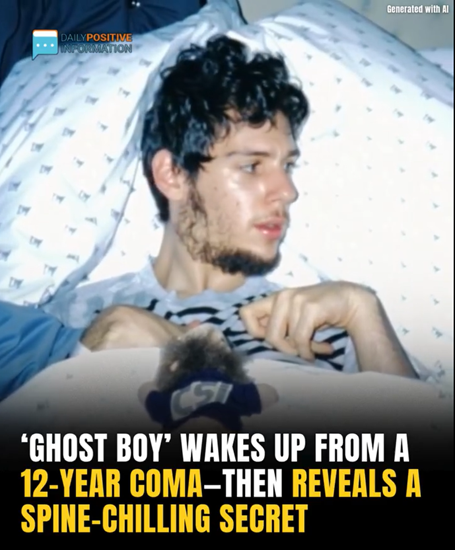
At twelve years old, Martin Pistorius thought he had the flu.
It started like so many childhood illnesses do—with fatigue, headaches, and a strange feeling that something wasn’t right.
His parents weren’t overly concerned at first.
Children get sick.
They recover.
Life moves on.
But Martin didn’t recover.
Instead, his condition worsened.
Day by day, the energetic South African boy seemed to disappear before his family’s eyes. He became weaker. More withdrawn. Less responsive. Tasks that had once been effortless suddenly became impossible.
Doctors searched for answers.
Tests were conducted.
Specialists were consulted.
Yet nobody could explain what was happening.
Within months, Martin had lost the ability to speak.
Then he lost the ability to control his movements.
Eventually, he became almost completely unresponsive.
His parents watched helplessly as their son slipped into what appeared to be a vegetative state.
Medical professionals offered devastating conclusions.
Some believed he would never recover.
Others suggested there was little reason to expect improvement.
As the years passed, Martin became trapped inside a body that no longer obeyed him.
But there was one detail nobody realized.
Martin was still there.
Completely aware.
Completely conscious.
Completely alone.
Years later, he would describe the experience as one of the most terrifying realities imaginable.
His awareness returned gradually.
Not all at once.
Not in a dramatic moment.
It happened slowly, like waking from an endless fog.
At first, there were fragments.
Voices.
Sounds.
Pieces of conversations.
Then came understanding.
And with understanding came horror.
Martin realized he could hear everything.
See everything.
Understand everything.
Yet he couldn’t move a finger.
Couldn’t speak a word.
Couldn’t signal to anyone that he was conscious.
Imagine waking up in a room where nobody knows you’re awake.
Now imagine living that reality for years.
That became Martin’s world.
Each day, caregivers lifted him from bed.
Teachers spoke around him.
Family members discussed their worries.
Doctors examined him.
People assumed he couldn’t understand.
Assumed he couldn’t hear.
Assumed he wasn’t really there.
But he heard every word.
Every conversation.
Every expression of grief.
Every prediction about his future.
Every moment of frustration.
Every tear.
Martin sat silently inside his own mind while life continued around him.
The isolation was unbearable.
He later described feeling invisible.
Not physically invisible.
Emotionally invisible.
A conscious human being trapped behind an unbreakable wall.
The psychological burden was immense.
There were no conversations.
No opportunities to express fear.
No way to ask for help.
No ability to tell his parents he loved them.
No method of explaining that he was still present.
Days blended into weeks.
Weeks became months.
Months became years.
His body remained motionless.
His mind remained active.
To survive, Martin developed mental routines.
He observed people.
Memorized details.
Created internal worlds.
Focused on thoughts rather than circumstances.
It wasn’t hope that carried him through those years.
It was endurance.
Pure endurance.
Meanwhile, his family faced struggles of their own.
His parents devoted themselves to caring for him.
The emotional and physical demands were overwhelming.
Every day revolved around his care.
Every decision was influenced by his condition.
They loved him deeply.
Yet they had no idea he was aware.
No idea he was listening.
No idea he understood.
Then something began to change.
A caregiver noticed subtle signs.
Tiny indications that Martin might not be as unresponsive as everyone believed.
Small reactions.
Moments of awareness.
Evidence that suggested consciousness might still exist beneath the surface.
The observations prompted further evaluation.
Specialists began taking a closer look.
And eventually, a remarkable truth emerged.
Martin was not unconscious.
He was trapped.
The realization changed everything.
For the first time in years, people stopped speaking around him and started speaking to him.
The difference was profound.
Recognition brought possibility.
Possibility brought hope.
Therapists introduced communication techniques.
Progress was painfully slow.
At first, Martin could respond only through minimal movements.
Tiny signals.
Almost imperceptible changes.
Yet each breakthrough represented something enormous.
A connection.
A voice.
A way back into the world.
Eventually, assistive technology entered his life.
Specialized computer systems allowed him to communicate using limited head and eye movements.
Words began appearing on screens.
Thoughts became sentences.
Silence gave way to communication.
For the first time in more than a decade, Martin could tell people what he had experienced.
The impact was staggering.
Family members wept.
Friends struggled to comprehend the reality he had endured.
Medical professionals reevaluated everything they thought they knew about his condition.
Martin’s journey wasn’t over.
Communication was only the beginning.
Through years of therapy and determination, he slowly regained portions of physical function.
He learned to stand.
Then to walk.
Every movement required extraordinary effort.
Every improvement came through persistence.
Progress that others might achieve naturally took Martin months or years.
But he continued.
Step by step.
Day by day.
Refusing to surrender.
Eventually, he began rebuilding a life that once seemed impossible.
He found employment.
Developed independence.
Created meaningful relationships.
Most remarkably, he discovered love.
Martin married and built a future many believed he would never have.
Today, he lives in Essex, England, where he operates his own business and continues inspiring people around the world.
His autobiography, Ghost Boy: My Escape from a Life Locked Inside My Own Body, introduced millions to his extraordinary experience.
Readers were captivated not simply by the medical aspects of his story but by the resilience behind it.
Because Martin’s story isn’t really about illness.
It’s about survival.
It’s about identity.
It’s about the extraordinary strength of the human mind.
Medical experts often classify his condition under the broader category of locked-in syndrome, a rare neurological state in which awareness remains intact despite severe paralysis.
Cases like Martin’s challenge assumptions.
They force difficult questions.
How many patients might be more aware than they appear?
How can medicine better detect consciousness when communication is impossible?
What responsibilities do caregivers have when certainty does not exist?
His experience has influenced research into neurological disorders, communication technology, and patient care.
Scientists continue exploring methods to identify awareness in non-responsive individuals.
Advances in brain imaging, eye-tracking technology, and assistive communication systems have transformed possibilities for many patients.
Martin’s story helped accelerate those conversations.
But perhaps the most important lesson extends beyond medicine.
It is a lesson about humanity.
Throughout his ordeal, Martin remained a person.
Not a diagnosis.
Not a medical case.
Not a body in a wheelchair.
A person.
Someone who thought.
Felt.
Remembered.
Dreamed.
And hoped.
His experience reminds us that consciousness is often invisible.
That assumptions can be dangerous.
And that dignity should never depend on someone’s ability to speak.
Today, when Martin shares his story in interviews and public appearances, audiences often focus on the years he spent trapped inside his body.
Yet Martin frequently emphasizes something different.
The people who helped him.
The technology that gave him a voice.
The patience that made recovery possible.
And the belief that even when circumstances seem hopeless, change remains possible.
His life stands as proof.
Proof that identity survives extraordinary adversity.
Proof that resilience can endure unimaginable isolation.
Proof that the human spirit can remain unbroken even when everything else seems lost.
For years, Martin Pistorius lived in silence.
Unable to move.
Unable to speak.
Unable to tell the world he was still there.
Today, millions know his name.
And through his voice, the world has learned one unforgettable truth:
Sometimes the strongest person in the room is the one nobody realizes is fighting the hardest battle.