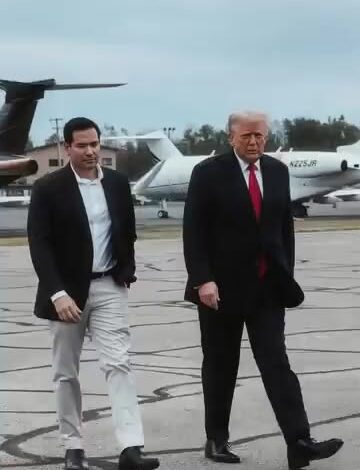
Behind the headlines and carefully crafted public statements, a far more delicate reality is unfolding. Secretary of State Marco Rubio has been signaling, both privately and publicly, that efforts to reduce tensions remain fragile, uncertain, and painfully slow. Diplomatic channels are active, but progress is measured in inches rather than miles, with each small advance vulnerable to reversal.
One of the most striking developments is Pakistan’s unexpected role in the process. Its emergence as a potential intermediary highlights just how unconventional the search for de-escalation has become. As Pakistan’s military leadership prepares for sensitive discussions in Tehran, the country finds itself balancing competing interests while attempting to preserve dialogue between deeply suspicious rivals. It is a diplomatic tightrope with little room for missteps.
Hovering over these negotiations is the Strait of Hormuz, one of the world’s most strategically important waterways. What appears on the surface to be a narrow stretch of sea has become a focal point of global anxiety. Nearly one-fifth of the world’s oil supply passes through its waters, giving any disruption consequences that extend far beyond the Middle East.
Iran’s suggestion of a potential “tolling system” for vessels transiting the strait has intensified those concerns. To supporters, it may be framed as a sovereign policy proposal. To critics, it represents something far more consequential: an attempt to reshape the rules governing one of the world’s most vital maritime corridors. The debate is no longer simply about economics. It is about power, legitimacy, leverage, and the ability to influence global energy markets through control of a strategic chokepoint.
Rubio’s firm rejection of the idea reflects broader concerns within Washington and among its allies. The fear is not merely the immediate financial impact of such a system, but the precedent it could establish. Even a limited concession, some policymakers argue, could normalize the use of economic pressure and maritime access as tools of geopolitical coercion. In a region already defined by mistrust and competing security interests, that possibility carries significant implications.
For now, diplomacy continues to function as a mechanism for managing risk rather than resolving it. Negotiators are working to prevent escalation, not necessarily to achieve lasting peace. Every conversation buys time. Every meeting creates another opportunity to avoid confrontation. Yet beneath the diplomatic activity lies a shared recognition that the margin for error is becoming increasingly narrow.
The challenge facing all parties is that crises rarely emerge from a single dramatic decision. More often, they develop through a series of incremental moves, miscalculations, and reactions that gradually narrow the available options. That is why the current moment feels so precarious. Each side is testing boundaries, measuring responses, and attempting to strengthen its position without triggering a wider conflict.
Whether these efforts ultimately produce stability remains uncertain. What is clear is that the stakes extend far beyond any one country or negotiation. The outcome will influence energy markets, regional security, global trade routes, and the balance of power across one of the world’s most volatile regions.
For the moment, diplomacy is keeping the door open.
But diplomacy alone cannot guarantee where that door ultimately leads.