Fans Notice Wynonna Judd, 60, ‘Lost Too Much Weight’ as She FIaunts ‘Skinny’ Look in Black PIunging Outfit

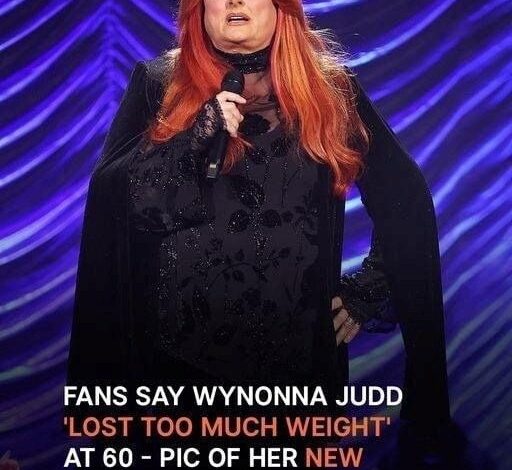
Wynonna Judd has spent most of her life singing in front of audiences, but in many ways, the public has spent just as much time watching her body.
That has always been part of the unspoken bargain imposed on women in the spotlight — especially women whose fame stretches across decades. Their music may open the door, but eventually the world begins studying everything else: their faces, their weight, their aging, their grief, their ability to remain recognizable versions of themselves for an audience deeply attached to memory.
So when Wynonna recently stepped back into public view wearing a fitted black outfit that revealed a visibly slimmer frame, the reaction was immediate.
Not quiet curiosity.
A storm.
Social media filled instantly with side-by-side comparisons, emotional reactions, speculation, admiration, concern, nostalgia, and unsolicited opinions from strangers who spoke about her body as though discussing someone they personally knew.
Some praised her appearance enthusiastically, calling her “stunning,” “reborn,” or “healthier than ever.”
Others reacted with visible alarm.
Comments flooded online posts urging her to “eat biscuits and gravy,” “slow down,” or “stop losing weight.” Some fans admitted they barely recognized her at first glance, while others insisted the transformation reminded them painfully of her late mother Naomi Judd during difficult periods later in Naomi’s life.
That comparison carried emotional weight far beyond appearance alone.
Because for many people, the Judd family story has never existed purely as entertainment.
It has unfolded publicly through music, heartbreak, mental health struggles, complicated family dynamics, addiction, grief, and survival. Fans did not simply grow up listening to Wynonna sing.
They grew up feeling emotionally connected to her life.
And that connection changes the way audiences react when someone visibly changes before their eyes.
Especially someone who has spent years speaking honestly about pain.
Long before the recent headlines and photographs, Wynonna publicly discussed her struggles with body image and weight in ways that resonated deeply with many women who rarely saw celebrities speak so candidly about shame.
One of the most remembered moments came during her emotional conversation on Oprah years ago.
Sitting under soft studio lights, Wynonna admitted how long she had silently carried the burden of food, emotional eating, insecurity, and self-perception.
Not casually.
Painfully.
She described hiding food.
Eating in secret.
Feeling trapped inside cycles of shame that even the people closest to her did not fully understand.
At one point, she confessed that she had become so skilled at concealing her struggles that even members of her own family failed to recognize how deeply she was hurting.
That vulnerability mattered to people.
Because celebrity culture often rewards perfection while punishing honesty.
Wynonna did the opposite.
She made imperfection visible.
And for many fans, that honesty became inseparable from the woman herself.
Which is partly why the recent reaction has felt so emotionally charged.
Her slimmer appearance has not simply sparked conversation about weight loss.
It has reopened years of public memory.
People are projecting fears, hopes, grief, admiration, and unresolved emotion onto her body all at once.
Some viewers see empowerment.
Others see fragility.
Some celebrate transformation.
Others worry they are watching another woman disappear beneath impossible beauty standards.
And underneath all those reactions sits an uncomfortable cultural truth:
women’s bodies are rarely allowed to simply exist without becoming public discussion.
Especially women who age in public.
Especially women whose appearance changes dramatically after years of familiarity.
Especially women audiences feel they “grew up with.”
For many fans, seeing Wynonna now creates emotional dissonance because memory freezes celebrities in certain eras.
The fiery red hair.
The powerful voice.
The fuller figure audiences associated with strength, authenticity, and emotional openness.
When someone changes physically, audiences often react not only to the body itself, but to the unsettling realization that time has passed for everyone.
Including themselves.
That is why so many comments online sound strangely personal.
People are not merely reacting to photographs.
They are reacting to memory.
To aging.
To mortality.
To Naomi’s absence.
To decades of feeling like the Judds somehow belonged to them emotionally.
And through all of it, Wynonna herself has remained largely silent.
No dramatic interviews.
No lengthy explanations.
No public defense of her appearance.
She keeps stepping onto stages.
Keeps singing.
Keeps performing beneath lights while strangers debate what her body means.
That silence has only intensified speculation.
Some assume health concerns.
Others suspect intentional lifestyle changes.
Still others insist no explanation should be required at all.
But silence from public figures often becomes an empty space audiences rush to fill with their own narratives.
And in Wynonna’s case, those narratives reveal far more about cultural anxieties than they do about the woman herself.
Because beneath the compliments and concern lies a deeper issue:
society still struggles profoundly with allowing women — particularly older women — autonomy over their appearance without demanding emotional access to every reason behind it.
Fans frame their reactions as love.
Often they genuinely mean it.
But affection can become possessive surprisingly quickly.
Especially when audiences feel emotionally invested in someone’s history.
Wynonna’s transformation has reminded people how deeply they associate her with endurance.
Not just musical success.
Endurance.
She survived public scrutiny.
Family turmoil.
Industry pressure.
The devastating loss of her mother.
Decades of living beneath expectations few people could withstand privately, let alone publicly.
So when people look at her now, they are not merely asking:
“Did she lose weight?”
They are asking:
“Is she okay?”
“Is she hurting?”
“Is she healing?”
“Who is she becoming now?”
That is why the conversation refuses to fade quietly.
It touches something larger than celebrity gossip.
It touches the complicated way audiences attach identity to appearance, especially for women whose public image once symbolized resilience, familiarity, or emotional honesty.
And perhaps the strangest part of all this is how little Wynonna herself appears interested in participating in the noise.
While fans argue online, compare old photographs, and speculate endlessly, she continues doing the thing that made people love her in the first place.
She walks onto stages.
The lights rise.
The music begins.
And she sings.
Not as a symbol.
Not as a debate.
Not as a body for strangers to interpret.
Just as Wynonna.
A woman who has lived enormous portions of her life publicly, carried pain visibly, and somehow continues moving forward while the world keeps trying to decide what her transformation means.
Maybe eventually she will speak about it directly.
Maybe she won’t.
Until then, the questions will continue circling around her like they always have.
But somewhere beneath all the commentary, one truth remains impossible to ignore:
people are reacting so strongly because Wynonna Judd has never felt distant to them.
For decades, she allowed audiences to witness her humanity openly — the grief, the struggle, the imperfections, the strength.
And once the public sees a woman that honestly, they rarely stop looking.