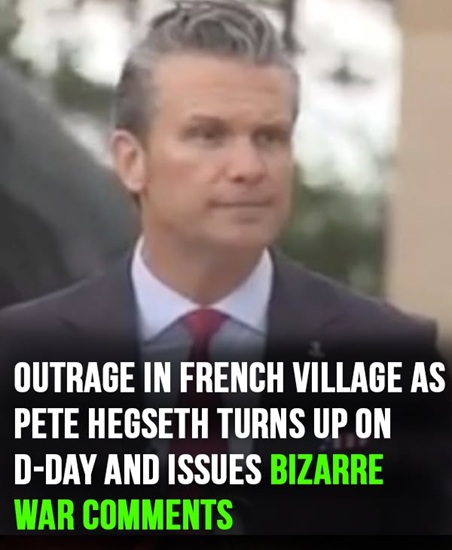
The 82nd anniversary of D-Day was meant to be a solemn day of remembrance along the beaches of Normandy—a moment to honor the extraordinary sacrifice of Allied troops who stormed Nazi-occupied France on June 6, 1944. Instead, the visit of U.S. Defense Secretary Pete Hegseth sparked an unexpected debate that extended far beyond the commemorative ceremonies themselves.
Hegseth traveled to Normandy, France, to participate in events marking one of the most pivotal military operations of World War II. The Allied invasion of Normandy is widely regarded as a turning point in the war, paving the way for the liberation of Western Europe and the eventual defeat of Nazi Germany. Every year, veterans, families, government officials, and local residents gather to remember the thousands of soldiers who lost their lives during the operation.
This year, however, attention shifted from history to politics.
While attending a remembrance ceremony in the coastal village of Langrune-sur-Mer, Hegseth found himself at the center of a growing controversy. Although the event proceeded without disruption, criticism from some local residents and civic groups generated headlines and ignited discussions about the role of modern political figures at historically significant commemorations.
A Ceremony Meant for Reflection
Normandy’s D-Day commemorations are traditionally marked by unity, gratitude, and respect. The ceremonies honor soldiers from the United States, the United Kingdom, Canada, and other Allied nations who fought and died during the landings.
For many attendees, the purpose of the anniversary remains simple: remembering the courage and sacrifice of those who helped secure freedom during one of history’s darkest periods.
Yet before Hegseth even arrived in Normandy, concerns were already being voiced by some members of the local community.
A civic organization known as Langrune en Commun publicly opposed his participation in the ceremonies. The group argued that events dedicated to honoring fallen soldiers should remain free from political controversy and focused entirely on historical remembrance.
Their statement emphasized the significance of D-Day as a shared moment of memory for France and its Allied partners. According to the group, commemorative ceremonies should unite people around the sacrifices of the past rather than become associated with contemporary political disputes.
Local Residents Voice Concerns
The debate became more visible as French media outlets, including BFM TV, interviewed residents of Langrune-sur-Mer about Hegseth’s presence.
Opinions varied.
Some residents viewed his attendance as a natural part of the longstanding relationship between the United States and France. Others, however, expressed discomfort, pointing to political positions and public statements they associated with him.
Among those interviewed was Sylvie Lamy Thepaut, who questioned whether certain rhetoric connected to Hegseth reflected the democratic values she believed the ceremonies should represent.
Another resident, Chantal Richard, broadened the discussion by referencing tensions involving the current U.S. administration and various international institutions.
While the criticism came from a relatively limited group of local voices, it highlighted a larger question: Can modern political leaders separate themselves from contemporary controversies when participating in events tied to profound historical memory?
The Speech That Drew Attention
During the ceremony, Hegseth delivered remarks focused on the extraordinary cooperation among Allied nations during World War II.
He praised the unity, courage, and military coordination that made the Normandy invasion possible. His speech highlighted the partnership between nations that came together to confront a common threat and ultimately helped liberate Europe from Nazi occupation.
For much of his address, the message aligned closely with the themes traditionally associated with D-Day commemorations: sacrifice, remembrance, and gratitude.
But the speech did not remain entirely focused on the past.
As his remarks continued, Hegseth connected the lessons of World War II to contemporary geopolitical challenges. He discussed the importance of maintaining strong defense partnerships and referred to current security concerns facing Europe and the broader Western alliance.
Those comments quickly became the most discussed part of his appearance.
History Meets Modern Politics
Supporters viewed Hegseth’s remarks as a logical extension of the historical lessons represented by D-Day. In their view, remembering the sacrifices of Allied forces also means remaining vigilant about present-day security challenges and preserving international cooperation.
Critics saw things differently.
Some observers argued that introducing modern political issues into a remembrance ceremony risked shifting attention away from the veterans and fallen soldiers being honored. For them, the significance of D-Day lies in collective remembrance rather than contemporary political debate.
Particularly controversial were comments touching on migration and broader security concerns in Europe. Hegseth drew parallels between historical threats and what he described as modern ideological and security challenges.
Those comparisons generated significant discussion across media platforms and social networks, with supporters and critics offering sharply different interpretations of his intentions.
The disagreement reflected a recurring challenge faced by public officials attending historic commemorations: balancing remembrance of the past with discussions about the future.
Heightened Security and International Attention
The controversy surrounding the visit also contributed to increased public scrutiny of the trip.
According to reports from international media, including The Washington Post, additional security measures were put in place during Hegseth’s stay in Normandy. Enhanced protection was reportedly provided for both the defense secretary and his family throughout the visit.
Such precautions are not unusual for high-ranking government officials attending major international events. Nevertheless, the extra attention underscored the level of interest surrounding his participation.
Despite concerns and criticism, the ceremonies themselves proceeded peacefully. International delegations, local officials, veterans, and community members continued the commemorations without any reported disruptions.
A Debate Bigger Than One Visit
In the days following the anniversary events, discussion surrounding Hegseth’s appearance continued in both French and American media.
Supporters argued that his attendance reflected the enduring bond between Allied nations and honored the sacrifices that helped secure freedom in Europe. They emphasized the importance of preserving transatlantic ties and ensuring that the memory of D-Day remains relevant to future generations.
Critics maintained that commemorative events should remain focused exclusively on historical remembrance. In their view, introducing contemporary political themes—even indirectly—risks diminishing the solemn purpose of such gatherings.
The debate ultimately became about more than one speech or one official.
It touched on a broader question that continues to surface whenever political leaders participate in historical commemorations: How should the past be remembered in an age when nearly every public appearance can become part of a larger political conversation?
For many who gathered on Normandy’s shores, the answer remained clear. Regardless of political disagreements, the true focus of D-Day will always be the extraordinary courage of the Allied soldiers who risked—and often gave—their lives in the fight against tyranny.
More than eight decades later, their sacrifice remains the enduring legacy of Normandy, even as modern debates continue to unfold around it.