I Discovered Something Alarming Moving Inside My Toilet — and the Explanation Behind It Was Hard to Believe

There is a particular kind of fear that belongs only to bathrooms at night.
Not the dramatic fear of horror movies or intruders or storms.
A quieter fear.
The kind born from vulnerability and routine — the unsettling feeling that the one room in a house designed entirely around cleanliness and control has suddenly become unfamiliar. Bathrooms are supposed to be predictable. Sterile. Safe. Every object inside them exists for order:
running water,
white porcelain,
clean towels,
mirrors reflecting ordinary mornings back at us.
So when something alive appears where it absolutely should not be, the mind reacts before logic has a chance to catch up.
That was exactly what happened on one humid morning in a quiet suburban home when an ordinary trip to the bathroom turned suddenly strange.
At first, nothing looked unusual.
The room carried the usual stillness of early morning. Dim light filtered weakly through frosted glass windows while the soft hum of an exhaust fan blended into the sleepy silence of the house. It was the kind of moment so routine most people barely remember it afterward.
Then movement disturbed the water.
Small.
Dark.
Quick.
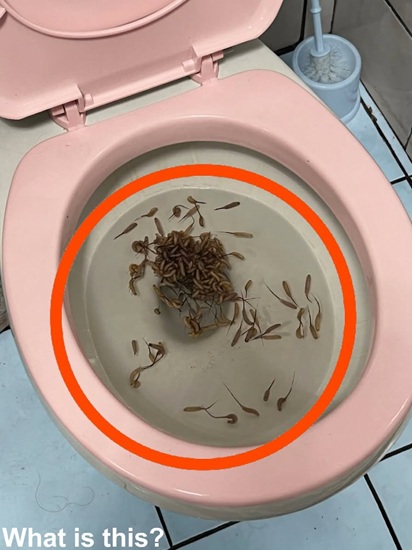
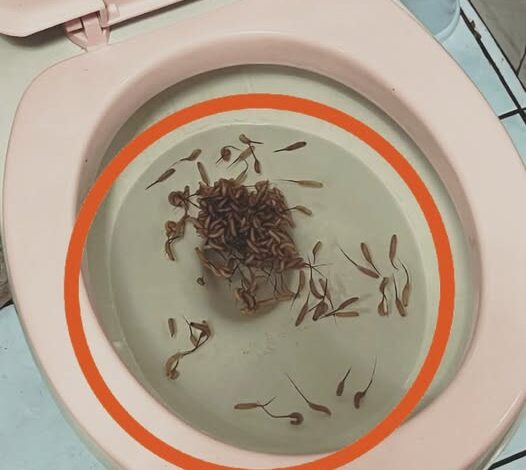
At first glance, the shapes inside the toilet bowl did not even fully register as living creatures. They moved unpredictably through the clear water, darting in short bursts before vanishing against the pale porcelain beneath them. For several long seconds, the brain struggled to categorize what it was seeing.
Worms?
Insects?
Something from the plumbing?
The uncertainty itself became the worst part.
Human imagination escalates quickly in enclosed spaces. Within moments, perfectly ordinary fears expand into elaborate scenarios:
contaminated pipes,
broken sewage lines,
infestations hidden behind walls,
dangerous organisms somehow entering the home unnoticed.
The bathroom instantly stopped feeling safe.
That reaction may sound exaggerated afterward, but psychologists understand it well. Human beings experience strong discomfort when familiar environments behave unexpectedly. Bathrooms especially occupy a strange psychological space because they combine intimacy with sanitation. We expect them to remain under control. Anything living inside a toilet violates that expectation so sharply that even harmless creatures can trigger immediate revulsion.
For several moments, the observer simply stood frozen watching the water.
The tiny shapes continued moving.
Not aggressively.
Not chaotically.
Almost peacefully.
And slowly, as panic loosened its grip slightly, the movements became easier to study carefully instead of emotionally. The shapes did not resemble parasites or insects after all. They moved with tiny tails flicking rhythmically behind rounded bodies.
Recognition arrived gradually.
Tadpoles.
Not sewage creatures.
Not contamination.
Not danger.
Just tadpoles.
The emotional shift was immediate and almost embarrassing in its intensity. Fear drained away so quickly it left behind confusion mixed with fascination. The toilet bowl transformed from something threatening into something biologically improbable:
a miniature accidental pond containing tiny amphibian larvae quietly swimming through still water.
That realization opened an entirely different kind of curiosity.
Because finding tadpoles inside a toilet is extraordinarily unusual.
Tadpoles represent one stage in the complex life cycle of frogs, creatures deeply tied to freshwater ecosystems. Typically they exist in ponds, marshes, puddles, slow-moving streams, or seasonal pools created after heavy rain. Their appearance inside a residential bathroom therefore feels almost surreal, as though nature itself had wandered accidentally into modern plumbing systems.
Yet biologically, the explanation made sense.
Amphibians survive through instinct more than intelligence. Frogs respond strongly to environmental signals involving moisture, standing water, darkness, and shelter. During periods of heavy rain or flooding, they often travel unexpectedly far from natural habitats while searching for safe places to reproduce.
Suburban neighborhoods unintentionally create strange artificial ecosystems during wet weather:
gutters holding water,
drains,
crawl spaces,
garden pools,
ditches,
pipes,
storm runoff channels.
To a frog operating entirely through instinct, these environments may resemble viable habitats closely enough to trigger breeding behavior.
Somewhere outside the house, likely during recent storms, adult frogs probably moved closer to residential structures searching for water. An open vent, drain connection, cracked screen, or partially open window may have provided accidental entry into the home environment.
Once inside, the toilet bowl itself created the final illusion.
Still water.
Enclosed space.
Moisture.
Relative protection.
To humans, it looked absurd.
To amphibian instinct, it may have resembled a tiny isolated pond.
And so eggs were laid.
That realization changed the emotional meaning of the moment entirely.
The bathroom no longer felt contaminated. Instead, it felt strangely connected to the larger ecosystem outside the house. The experience became less about invasion and more about overlap — one of those rare moments where the invisible boundary between human environments and wildlife briefly dissolves.
Modern life often creates the illusion that indoor spaces exist separately from nature.
They do not.
Homes are not sealed worlds. They breathe constantly with the environments surrounding them. Tiny insects enter through gaps we never notice. Birds build nests beneath gutters. Rodents move through crawl spaces. Lizards cling silently to garage walls. Frogs follow moisture through drainage systems.
Nature adapts continuously around human structures.
Usually we simply fail to notice.
The tadpoles made that relationship impossible to ignore.
Faced with living creatures swimming helplessly inside the bowl, the decision quickly became ethical as much as practical.
Flushing them would have been easiest.
One motion.
One sound.
Problem solved instantly.
But once fear disappeared, the creatures themselves looked impossibly fragile. Tiny lives moving blindly through an environment they had never evolved to survive inside. The situation no longer resembled contamination. It resembled displacement.
So the response changed.
Instead of reacting with disgust, carefulness took over.
A small container was gathered. Water was scooped gently from the bowl. One by one, the tadpoles were transferred carefully, their tiny bodies flicking nervously through the temporary container while morning sunlight slowly brightened the bathroom around them.
The process took patience.
Oddly, it also created calm.
There is something psychologically grounding about helping vulnerable living things. Fear narrows human attention inward toward danger. Care expands it outward again. By the time the final tadpole was lifted from the water, the emotional atmosphere had transformed completely from panic into responsibility.
Later that morning, the tadpoles were released into a nearby freshwater pond surrounded by reeds and shallow algae-rich water.
The pond itself looked unremarkable:
muddy edges,
dragonflies hovering low,
the soft sound of insects hidden in summer grass.
Yet to the tadpoles, it represented survival.
Freshwater environments provide the delicate balance amphibian larvae need:
oxygen,
microorganisms,
plant matter,
space,
temperature stability.
Within moments of release, the tiny creatures vanished into murky green water, disappearing back into the ecosystem that had accidentally intersected with human life hours earlier.
Returning home afterward felt strangely different.
The bathroom no longer carried the same unsettling energy. Instead, it had become symbolic somehow — a reminder that even carefully controlled modern homes remain connected invisibly to the natural world surrounding them.
That realization lingered.
Especially because the incident exposed how instinctively humans treat unexpected wildlife encounters as threats before understanding them fully. Fear arrived instantly. Curiosity required patience. Understanding changed everything afterward.
And perhaps that pattern extends far beyond tadpoles in toilets.
People fear unfamiliar things reflexively:
movements,
interruptions,
creatures,
situations,
people,
changes.
Observation often softens fear into comprehension once panic quiets enough to allow attention instead of reaction.
The experience also inspired practical changes around the house afterward.
Windows stayed screened more carefully.
Exterior drains were checked.
Standing water near the home was reduced.
Bathroom ventilation openings were inspected after storms.
Simple preventative measures matter, especially in homes near wetlands or heavily wooded areas where amphibian activity increases seasonally.
Yet none of those precautions carried hostility toward the animals themselves.
That distinction mattered emotionally.
The goal was not punishment.
Just separation.
Because the frogs had not behaved maliciously. They had simply followed ancient biological instincts millions of years older than plumbing systems, bathrooms, or suburban property lines.
That perspective transforms inconvenience into coexistence.
And perhaps that became the quiet lesson hidden inside the entire strange experience:
human beings often imagine nature as distant — something existing only in forests, rivers, documentaries, or protected parks far removed from ordinary domestic life.
But nature is never truly far away.
It waits beneath porches.
Inside drainage systems.
Beyond window screens.
Along flooded curbs after storms.
Inside the damp nighttime silence surrounding every neighborhood.
Sometimes it slips briefly across the boundary into human spaces, startling us enough to remember that our homes are not isolated from the living world.
They are simply small shelters built inside it.
Long afterward, the memory of those tiny moving shapes inside clear toilet water remained strangely vivid.
Not because the event itself was dangerous.
Because it transformed ordinary space unexpectedly.
A bathroom became an ecosystem for one strange morning.
Fear became curiosity.
Disgust became care.
And a handful of accidental tadpoles quietly reminded one household that life continues moving through the world in forms far smaller, stranger, and more interconnected than most people notice during the routines of everyday living.