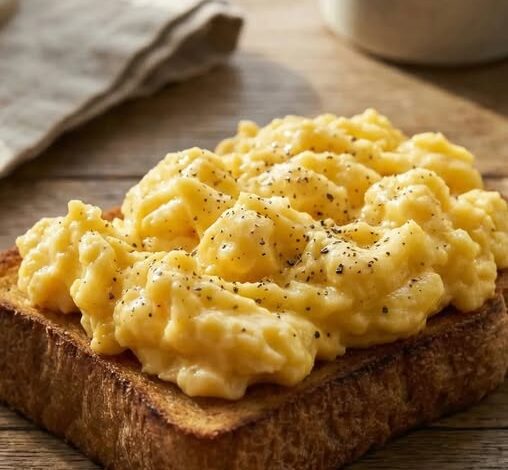
Scrambled eggs look simple.
That is exactly why so many people underestimate them.
They are often one of the first dishes people learn to cook, a breakfast basic that seems almost impossible to ruin. Crack a few eggs, whisk them together, pour them into a pan, stir for a minute, and breakfast is ready.
At least, that is the idea.
But anyone who has ever sat down to a plate of dry, rubbery, overcooked eggs knows the truth: scrambled eggs may be simple, but they are not careless.
The difference between ordinary scrambled eggs and truly excellent ones is not expensive ingredients or complicated equipment. It is technique. A little patience. A little attention. A willingness to slow down just enough to let the eggs become what they are supposed to be: soft, creamy, tender, and comforting.
Perfect scrambled eggs begin before the pan ever touches the stove.
The first step is the whisking.
It may seem like a small detail, but it matters. Whisking the eggs thoroughly blends the yolks and whites into a smooth mixture while incorporating a bit of air. That air helps create a lighter texture as the eggs cook. A quick, lazy stir may leave streaks of white and yellow, but a proper whisk gives the eggs a more even, delicate finish.
The pan matters too.
A good nonstick pan makes the process easier and more forgiving. Eggs are delicate, and once they begin sticking, it becomes much harder to keep them smooth and creamy. A soft silicone spatula is equally useful because it allows you to gently move the eggs around the pan without tearing them into dry little pieces.
Then comes the most important rule of all.
Keep the heat low.
This is where many people go wrong.
High heat feels tempting because it works quickly. The eggs set faster, breakfast reaches the plate sooner, and everything seems efficient. But eggs are sensitive. Too much heat forces the proteins to tighten quickly, squeezing out moisture and creating that tough, dry texture no one really wants.
Low heat gives you control.
It allows the eggs to cook slowly and gently.
Instead of seizing up, they gradually form soft, silky curds.
Once the eggs are poured into the pan, resist the urge to stir frantically. Scrambled eggs do not need to be attacked. They need to be guided.
Use slow, sweeping motions with the spatula, moving the eggs from the edges of the pan toward the center as they begin to set. This creates larger, softer curds instead of tiny dry bits. The goal is not constant motion, but thoughtful movement.
Let the eggs cook.
Then gently fold.
Pause.
Sweep again.
This rhythm is what creates that creamy, luxurious texture.
Another key trick is knowing when to stop.
Scrambled eggs should come off the heat before they look completely finished. This may feel strange at first, but it makes all the difference. The pan and the eggs themselves retain heat, which means they continue cooking even after you remove them from the stove.
If you wait until they look fully cooked in the pan, they will often be overcooked by the time they reach the plate.
Instead, pull them off while they still look slightly soft and glossy.
The remaining warmth will finish the job.
That one small decision can turn a good scramble into a great one.
The beauty of scrambled eggs is that once you understand the technique, they can become whatever you want them to be.
For a fresh, balanced breakfast, serve them with avocado toast, sliced tomatoes, or a handful of greens. For something heartier, pair them with bacon, sausage, roasted potatoes, or hash browns. At brunch, they become elegant with smoked salmon, fresh herbs, or a little goat cheese. For a quick meal on the go, they can be folded into a warm tortilla with cheese, salsa, beans, or vegetables.
They are simple enough for a weekday morning and satisfying enough for a slow weekend breakfast.
Even leftovers can be saved, though scrambled eggs are always best fresh. If you do need to store them, place them in an airtight container and refrigerate them for up to two days. When reheating, keep the heat gentle. Low heat on the stove works better than blasting them in the microwave, because it helps preserve their softness instead of drying them out.
In the end, great scrambled eggs are not about doing more.
They are about doing less, more carefully.
Less heat.
Less rushing.
Less aggressive stirring.
More patience.
More attention.
More respect for the ingredients.
With the right approach, scrambled eggs become more than a quick breakfast. They become rich, creamy, and deeply satisfying—the kind of simple food that reminds you how much difference technique can make.
And once you learn how to cook them properly, you may never settle for dry scrambled eggs again.