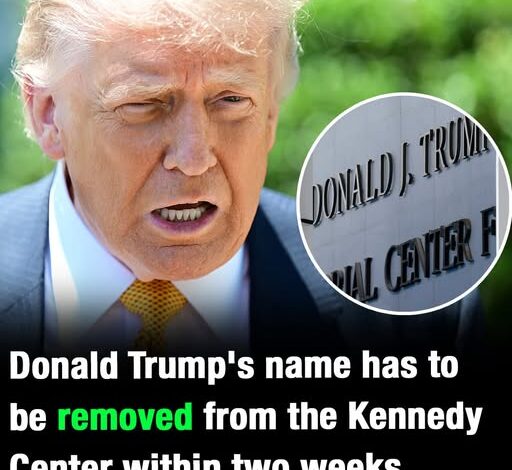
The ruling was never only about letters on a building.
It was about power.
Memory.
Legacy.
And who has the right to reshape the symbols a nation inherits.
The Kennedy Center has never been just a performance venue. It is more than a place for concerts, plays, galas, ceremonies, and public gatherings. For decades, it has stood as a monument to a particular vision of American life—one that connects culture with public service, art with democracy, and national memory with civic responsibility.
That is why changing its name was never a small administrative matter.
It was an attempt to alter the meaning of a place already carrying enormous historical weight.
Judge Christopher Cooper’s ruling drew a firm line around that legacy. By declaring that only Congress has the authority to rename the Kennedy Center, he did more than reject a controversial rebranding effort. He reaffirmed a basic principle: public monuments do not belong to whoever holds power in a particular moment.
They belong to the public.
The decision made clear that national institutions cannot be reshaped through political pressure, private maneuvering, or carefully arranged votes meant to create the appearance of legitimacy. Even the most powerful figures must remain bound by law.
That point gave new weight to Representative Joyce Beatty’s challenge.
What some dismissed as partisan resistance became, in the court’s view, a serious legal objection. Her argument was not simply about keeping one name on one sign. It was about protecting the process that determines how national symbols are named, preserved, and remembered.
In that sense, the case became larger than one administration, one building, or one political fight.
It became a test of whether American memory can be rewritten by influence rather than authority.
For the Kennedy family, and for those who see the center as part of President John F. Kennedy’s enduring legacy, the ruling carries deep emotional force. The Kennedy name evokes more than a former president. It represents a broader belief in art, service, aspiration, and the idea that culture has a central role in democratic life.
Removing that name felt, to many, like more than disrespect.
It felt like an attempt to overwrite history.
Trump’s supporters may see the decision differently. To them, it may feel like another institutional rebuke, another court standing in the way of a political legacy they believe deserves recognition. But the ruling rests on a broader principle: holding power does not mean owning the nation’s public spaces.
A president can shape policy.
Appoint officials.
Influence debate.
Leave a mark on history.
But that does not automatically grant the right to place his name on monuments held in trust for the American people.
As Trump’s name is removed from signs, programs, documents, and official materials, the work will be more than routine maintenance. It will be a visible reversal of an attempted rebranding. Each removed letter will mark the difference between political ambition and lawful authority.
Each restored sign will say something simple and powerful:
History cannot be rewritten by will alone.
The controversy also reveals how fiercely Americans continue to fight over symbols. Names, buildings, monuments, and memorials are never neutral when they carry the weight of national memory. They tell future generations what a country chooses to honor, what it chooses to preserve, and who is allowed to claim a place in its story.
That is why the naming of public institutions matters.
It is not branding.
It is inheritance.
In the end, the ruling stands as both a restraint on personal power and a defense of public memory. It reminds the country that law still matters, process still matters, and history still matters.
The symbols that belong to the American people cannot be seized by influence, loyalty, or ambition.
They must be protected by authority.
And in this case, the court made clear where that authority begins and ends.