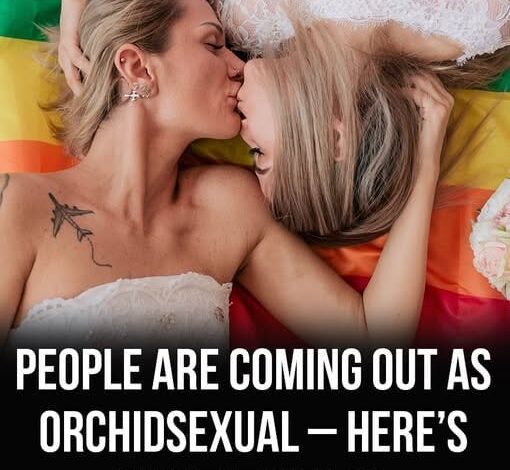
Orchidsexual describes an experience that many people say they struggled to explain long before they ever encountered a word for it. At its simplest, the term refers to individuals who can experience sexual attraction but have little or no desire to act on that attraction in real life. They may recognize someone as sexually appealing, feel a spark of attraction, or understand why others find a person desirable. Yet when it comes to pursuing sex themselves, the interest simply isn’t there.
For some people, this can be difficult to articulate because attraction and desire are often treated as the same thing. Popular culture tends to assume that if someone finds another person sexually attractive, they will naturally want a sexual relationship with them. But human experience is often more complicated than that.
An orchidsexual person might compare attraction to appreciating a beautiful painting. They can admire it, recognize its appeal, and even feel drawn to it without feeling any need to possess it or interact with it in a deeper way. Others use the metaphor of a scented candle: the fragrance is pleasant and noticeable, but that doesn’t create any desire to consume it.
The distinction may seem subtle to some observers, yet for those who identify with the label, it can feel significant. Many describe years of confusion, wondering why they experienced attraction differently from friends or partners. They understood what attraction felt like, yet they could not relate to the expectation that attraction should automatically lead to sexual desire or behavior.
This is one reason orchidsexuality is often discussed within the broader asexual spectrum. While traditional definitions of asexuality generally focus on experiencing little or no sexual attraction, orchidsexuality highlights a different experience: attraction exists, but the desire to pursue sexual activity does not.
Supporters of the label emphasize that it is not the same as celibacy. Celibacy is typically understood as a choice to abstain from sexual activity, often for personal, cultural, or religious reasons. An orchidsexual person, by contrast, is describing how they naturally experience attraction and desire. The difference is not about what they choose to do but about what they genuinely want.
Likewise, proponents argue that orchidsexuality should not automatically be assumed to stem from trauma, fear, medical issues, or relationship difficulties. While those experiences can certainly affect sexuality, the label is intended for people who view this pattern as an intrinsic part of who they are rather than a problem that needs solving.
Not everyone embraces the growing number of identity labels that have emerged in discussions of sexuality and gender. Critics sometimes argue that increasingly specific terms create unnecessary complexity or divide experiences into categories that are too narrow to be useful. To them, orchidsexuality may seem like a distinction without a meaningful difference.
Yet supporters often respond that labels are not created to satisfy critics; they are created to help people describe themselves. A word does not invent an experience. It simply provides language for something that already exists.
For someone who has spent years feeling out of step with social expectations, discovering a label can be unexpectedly powerful. It can replace confusion with recognition. It can connect people with others who share similar experiences. Most importantly, it can challenge the assumption that there is only one “normal” way to experience attraction, intimacy, or desire.
That is why symbols such as pride flags, online communities, and shared terminology matter to many people. They are less about creating categories and more about creating visibility. They send a simple message: other people feel this way too.
Whether a person ultimately chooses to identify as orchidsexual is entirely personal. Many who fit the description may never use the term at all. Others may find it deeply meaningful. Human sexuality has always been diverse, even when language failed to capture that diversity.
In the end, the discussion surrounding orchidsexuality points to a broader reality. Attraction, desire, romance, intimacy, and relationships do not always align in predictable ways. People experience them differently, sometimes in ways that challenge familiar assumptions.
The existence of terms like orchidsexual does not necessarily mean humanity is becoming more complicated. It may simply mean we are developing better vocabulary for complexities that have always been there. And for those who finally find a word that reflects their experience, that vocabulary can offer something profoundly reassuring: the understanding that being different does not mean being broken, and that there is room within the human experience for far more variation than any single label could ever contain.