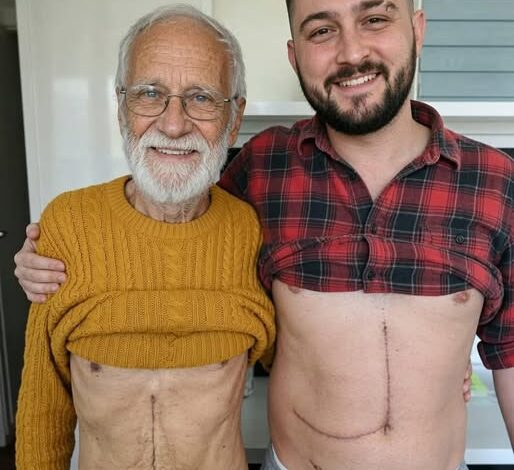
Few acts of love are as powerful as willingly undergoing major surgery to save someone you love.
Living liver donation is not simply a medical procedure. It is a profound expression of trust, sacrifice, and family devotion. When one family member offers a portion of their own healthy liver to help another survive a serious illness, the decision reflects something deeper than medicine alone. It speaks to the bonds that connect parents and children, siblings, spouses, and generations of loved ones.
For thousands of families, living donation has transformed fear into hope.
It has given patients a second chance at life.
And it has created extraordinary stories of courage that continue to inspire people around the world.
What makes living liver donation especially remarkable is the liver itself.
Unlike most organs, the liver has an extraordinary ability to regenerate. When a donor gives away a significant portion—often close to half—the remaining section inside the donor’s body begins growing almost immediately. At the same time, the transplanted portion inside the recipient expands as well. Within a matter of months, both livers can recover much of their original size and function.
This remarkable healing process has made living donation one of modern medicine’s most important options for patients facing severe liver disease.
For many families, it also provides something equally valuable.
Time.
Time that waiting lists sometimes cannot offer.
Across the country, patients often spend months or even years hoping for a deceased-donor transplant. For some, the wait becomes dangerously long. Living donation can dramatically shorten that timeline, offering hope when time is running out.
Behind every transplant, however, is a deeply personal story.
Often, those stories begin within families.
Imagine a father learning that his liver disease has progressed beyond what medication or treatment can manage. Doctors explain the seriousness of the situation. Family members sit through appointments trying to absorb difficult information.
The future suddenly feels uncertain.
Then comes an offer.
A son steps forward.
Without hesitation, he asks what he can do to help.
The first step is testing.
Potential donors undergo extensive evaluations designed to protect both donor and recipient. Medical teams carefully assess physical health, compatibility, liver function, and emotional readiness. The process is thorough because living donation is a major commitment requiring complete understanding of the risks and responsibilities involved.
Weeks of appointments follow.
Blood tests.
Imaging scans.
Medical consultations.
Psychological evaluations.
Every detail matters.
When doctors finally confirm that the son is a suitable match, relief spreads through the family.
For the first time in months, hope feels tangible.
The transplant surgery itself represents an extraordinary feat of coordination and medical expertise. Teams of surgeons work simultaneously in neighboring operating rooms. One team carefully removes a portion of the donor’s liver while another prepares the recipient to receive it.
Every step is meticulously planned.
Every movement matters.
The goal is simple but profound:
To give someone a second chance at life.
When the operation succeeds, families often experience overwhelming gratitude. Watching a loved one begin to recover after facing such uncertainty can feel almost miraculous.
A father who once struggled with everyday activities begins regaining strength.
Energy slowly returns.
Future plans that once seemed impossible begin to feel achievable again.
Family gatherings carry new meaning.
Ordinary moments become extraordinary.
And at the center of it all stands the donor whose decision made that future possible.
Friends and relatives frequently describe such acts as gifts of life.
Not because the phrase sounds inspiring.
Because it is true.
The donor willingly accepts pain, risk, and recovery to create hope for someone else.
Yet even the most successful transplant journeys are rarely simple.
Recovery demands patience.
Both donor and recipient face significant healing processes that unfold over weeks and months. Donors often spend several days in the hospital before returning home to continue their recovery. Activities that once felt routine may require time and adjustment.
Fatigue is common.
Discomfort is expected.
Healing takes time.
Medical experts emphasize that living donation, while generally safe in experienced transplant centers, remains major surgery. Complications can occur, just as they can with any significant medical procedure.
Some donors experience infections.
Others require additional monitoring for fluid accumulation or temporary changes in liver function.
Most recover successfully.
A small number face more complicated recoveries.
That reality is why transplant teams devote enormous effort to preparation, education, and follow-up care.
Families considering donation must weigh both the remarkable benefits and the genuine risks.
These conversations are not easy.
But they are essential.
And many donors, even those who encounter challenges during recovery, often reach the same conclusion afterward.
They would do it again.
Because the opportunity to help someone they love outweighs the hardships they endured.
Perhaps one of the most powerful aspects of living donation is the way it strengthens family connections.
Difficult circumstances often reveal the depth of relationships.
Families rally around one another.
Siblings coordinate schedules.
Spouses provide daily support.
Grandchildren offer encouragement.
Neighbors deliver meals.
Friends step forward to help.
A medical crisis that could isolate people instead becomes a reminder of how many lives are interconnected.
Communities frequently join that effort as well.
Support groups.
Fundraisers.
Messages of encouragement.
Acts of kindness from strangers.
All become part of the healing process.
These moments remind us that resilience rarely belongs to one person alone.
It grows through relationships.
Through shared burdens.
Through people choosing to carry one another when life becomes difficult.
Modern transplant medicine continues improving every year. Advances in surgical techniques, donor evaluation, post-operative care, and long-term monitoring have significantly improved outcomes for both donors and recipients.
For families considering living donation, specialists provide individualized guidance designed to help them make informed decisions based on their unique circumstances.
But beyond the science, beyond the procedures, beyond the medical terminology, living liver donation remains a deeply human story.
A story about love.
About sacrifice.
About choosing someone else’s future alongside your own.
A father regains the chance to watch grandchildren grow.
A mother sees more family celebrations.
A spouse receives more years together.
A child discovers the power of giving.
As people grow older, stories like these often inspire reflection. They remind us that legacy is not measured solely by accomplishments or possessions. Sometimes it is measured by what we are willing to give for those we love.
Living liver donation embodies that truth.
It demonstrates that family bonds can become acts of extraordinary courage.
It shows that hope can emerge even in the face of serious illness.
And it proves that the human capacity for compassion remains one of the most powerful forces in medicine—and in life itself.
Every transplant journey carries uncertainty.
Every recovery has challenges.
But the courage behind these decisions leaves an enduring message.
That love is often strongest when it asks something difficult of us.
And that sometimes, the greatest gift one person can offer another is simply more time.