My Sisters Accused Me of Marrying an 82-Year-Old for His Fortune — Their Expressions Changed the Moment the Attorney Read His Final Wishes

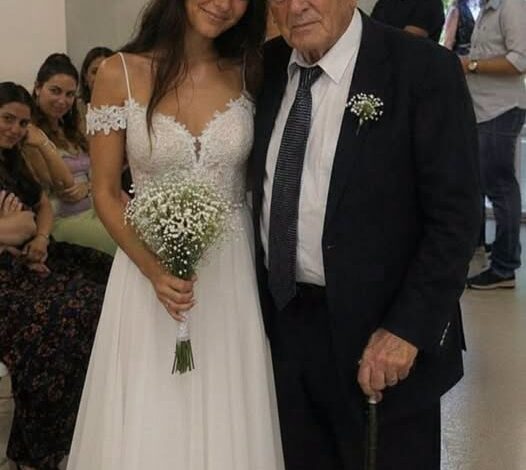
A week later, everyone gathered in a lawyer’s office for the reading of Arthur’s will.
The atmosphere felt strangely confident.
Victor sat with his arms crossed.
Lenora appeared calm.
Brenda and Chloe occupied seats near the back.
I could almost hear the assumptions moving through the room.
The young wife would receive everything.
The gold digger had won.
Then the attorney cleared his throat and began reading.
And within minutes, every smile in the room disappeared.
Arthur had been meticulous.
Every charitable donation was outlined.
Every property assignment was documented.
Every business interest had been carefully distributed.
Victor received a portion of the company.
Lenora inherited several investment properties.
Longtime employees received bonuses.
Favorite charities received substantial gifts.
The room relaxed.
This was exactly what everyone expected.
Then the attorney opened the final section.
Arthur’s personal letter.
The tone in the room shifted immediately.
“Arthur requested that this portion be read aloud in full.”
Victor frowned.
The attorney adjusted his glasses and began.
“To my family, friends, and anyone attending this reading—
By now, I suspect some of you have spent years trying to understand my marriage to Evelyn.”
Every eye in the room turned toward me.
“Many of you assumed she married me for money.
Some of you said so openly.
Others simply whispered it when she wasn’t present.”
Brenda shifted uncomfortably.
Chloe suddenly found the carpet fascinating.
The attorney continued.
“The truth is much simpler.
Evelyn never asked me for a single dollar.”
The room became very still.
“When my children first approached her, she refused them immediately.
The arrangement was their idea, not hers.”
Victor’s face lost color.
Lenora stared at the table.
“She only agreed after learning her mother’s life depended on medical care she could not afford.”
A murmur rippled through the room.
I lowered my eyes.
For four years, I had protected that secret.
Now Arthur was telling it himself.
“She never demanded gifts.
Never requested luxury.
Never attempted to influence my decisions.
In fact, throughout our marriage, she repeatedly encouraged me to spend more on my family and charities rather than on her.”
The attorney paused briefly.
“Many people will tell stories about motives.
Very few know the truth.”
Silence filled the office.
Then came the final paragraph.
“If anyone deserves gratitude from my family, it is Evelyn.
She gave an old man friendship during his loneliest years.
She treated me with dignity when others treated me as a portfolio.
She laughed at my terrible jokes.
She listened when I repeated stories I’d already told three times.
And she reminded me that companionship cannot be purchased—it can only be freely given.”
I felt tears forming.
Arthur had known exactly what people thought.
He had simply waited until he was gone to answer them.
The attorney folded the letter.
But he wasn’t finished.
“There is one final instruction.”
Victor looked confused.
The attorney opened another document.
“Mrs. Evelyn Carter is to receive ownership of the Hawthorne Foundation.”
The room froze.
Not millions of dollars.
Not mansions.
Not luxury cars.
The foundation.
Arthur’s most cherished project.
For nearly thirty years, the Hawthorne Foundation had funded scholarships, medical assistance programs, housing support, and educational grants.
Its value was substantial.
But its purpose mattered far more.
Victor immediately stood.
“That makes no sense.”
The attorney remained calm.
“It was Mr. Hawthorne’s explicit instruction.”
Lenora looked stunned.
“Why would he leave that to her?”
The attorney glanced down at Arthur’s handwritten note attached to the file.
Then he smiled faintly.
“Because, according to Mr. Hawthorne, she was the only person in the room who understood what help actually meant.”
Nobody spoke.
The words landed harder than any financial figure ever could.
Brenda looked as though she wanted to disappear.
Chloe stared at me with a completely different expression than before.
Not admiration.
Not affection.
Understanding.
For the first time, understanding.
The attorney gathered the documents.
The meeting ended shortly afterward.
People filed out quietly.
The confidence they had arrived with was gone.
Outside the building, I sat alone on a bench beneath a maple tree.
Autumn leaves drifted across the sidewalk.
For several minutes, I simply breathed.
Then someone sat beside me.
Victor.
I expected another argument.
Instead, he looked exhausted.
“My father really cared about you.”
It wasn’t a question.
“No,” I said softly.
“He loved me.”
Victor nodded slowly.
“I think we spent years believing he needed protecting.”
I looked at him.
“From me?”
“From everyone.”
For the first time, there was no hostility in his voice.
Only regret.
“He was lonely after my mother died,” Victor admitted.
“We visited. We called. But we were always busy.”
He swallowed hard.
“You were there.”
I thought about all those afternoons in Arthur’s library.
All those cups of coffee.
All those conversations about books, history, music, and life.
The things that never made headlines.
The things that actually mattered.
“He was there for me too,” I said.
Victor stared out at the falling leaves.
Then, quietly, he smiled.
“You know, he was impossible to beat at chess.”
I laughed.
“He cheated.”
Victor looked shocked.
“My father cheated?”
“Constantly.”
For the first time since the reading began, both of us laughed.
And somehow, it felt like exactly the reaction Arthur would have wanted.
Months later, the Hawthorne Foundation approved its largest medical assistance initiative in its history.
Hundreds of families received treatment they otherwise could not afford.
Every approval letter carried a small line at the bottom:
In honor of Arthur Hawthorne, who believed that kindness is the only investment that never loses value.
People still talk about my marriage sometimes.
Some always will.
That’s fine.
I stopped needing their approval long ago.
Because I know the truth.
Arthur didn’t save me.
He saved my mother.
And in return, I gave him something money could never buy.
The comfort of not being alone.
In the end, neither of us married for wealth.
We married because two people facing impossible circumstances chose compassion over pride.
And somehow, that became the richest inheritance of all.