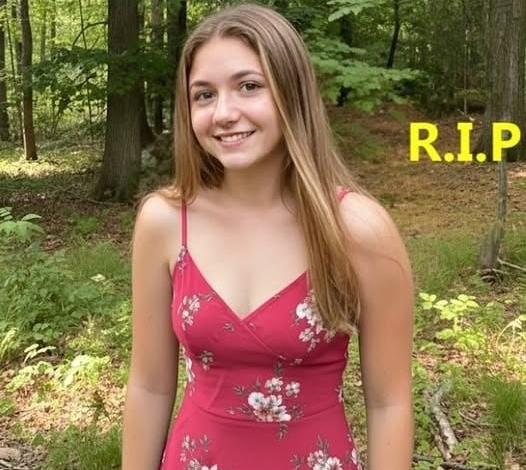
Her death transformed what had once seemed like a simple grocery-store purchase into a national conversation about food safety, trust, and the hidden risks that can exist inside even the healthiest-looking meals.
For her family, the tragedy began not with a dramatic warning or an obvious mistake, but with something deceptively ordinary.
A salad.
Fresh ingredients.
A meal chosen with the intention of nourishing the body rather than harming it.
Like millions of consumers every day, she believed she was making a healthy choice. The products she purchased carried all the familiar signals of wellness—freshness, cleanliness, nutrition, and convenience. They represented the kind of foods nutrition experts often encourage people to eat more frequently.
Nothing about the meal appeared dangerous.
Nothing looked contaminated.
Nothing hinted at the devastating chain of events that would soon follow.
Yet within days, a health crisis was unfolding.
What began as symptoms that seemed manageable gradually intensified into something far more serious. Family members watched as a healthy routine gave way to hospital visits, mounting concern, and a growing realization that something was terribly wrong.
As doctors worked to understand the source of the illness, questions multiplied.
What caused it?
Where had the contamination originated?
How could someone become critically ill after eating food widely marketed as healthy?
The answers would reveal a reality that many consumers had never considered.
Inside the sterile environment of hospital rooms, amid the constant rhythm of monitors and medical equipment, her family learned a truth that food safety experts have understood for years but many shoppers never hear.
Some of the foods most closely associated with health carry unique risks.
Among them are sprouts.
Tiny.
Crunchy.
Nutrient-rich.
And under certain conditions, surprisingly dangerous.
To most consumers, sprouts appear almost symbolic of healthy living. They are featured in salads, sandwiches, wraps, and wellness-focused recipes. Their reputation is overwhelmingly positive, often associated with fresh eating, plant-based nutrition, and natural foods.
Yet the process by which sprouts are grown creates an environment unlike almost any other food production system.
Seeds are placed in warm, moist conditions specifically designed to encourage rapid growth.
Unfortunately, those same conditions are also ideal for bacterial growth.
Warmth.
Moisture.
Time.
These are precisely the elements that many harmful bacteria need to multiply.
If contamination exists on or within a seed before sprouting begins, the growing process can amplify the problem dramatically.
The danger lies in something many consumers never realize.
Contamination often occurs before the sprout even exists.
It can begin at the seed level.
Long before packaging.
Long before transportation.
Long before the product reaches a grocery store.
By the time the sprouts appear fresh and green on a store shelf, harmful bacteria may already be present.
And unlike dirt or surface debris, contamination embedded within the sprouting process cannot necessarily be eliminated through simple washing.
This fact surprises many people.
Consumers are frequently taught that rinsing produce makes it safe.
While washing can reduce certain risks, it is not a guarantee against all forms of contamination.
When bacteria become incorporated throughout the growing process, home rinsing may have little effect.
The contamination can remain hidden.
Invisible.
Odorless.
Undetectable to the naked eye.
The realization shocked many who followed the case.
How could something marketed as fresh and healthy become so dangerous?
The answer lies in the difference between appearance and microbiology.
Food does not need to look spoiled to be unsafe.
Dangerous pathogens rarely announce their presence.
They do not alter color dramatically.
They do not necessarily produce unusual odors.
They do not warn consumers before causing harm.
This invisibility is what makes foodborne illness so challenging.
People often assume that dangerous food looks dangerous.
In reality, some of the riskiest products appear perfectly normal.
As investigators worked to identify the source of contamination, a broader public health response began unfolding.
Health officials mobilized quickly.
Laboratories analyzed samples.
Supply chains were examined.
Distribution records were reviewed.
Manufacturers were contacted.
Retailers were notified.
Every step focused on answering one critical question:
Where did the contamination begin?
The investigation expanded across multiple levels of the food system.
Officials traced shipments backward through distributors and suppliers.
Records were scrutinized.
Production practices were evaluated.
Facilities were inspected.
The goal was not only to determine what had happened but also to prevent additional illnesses.
As evidence accumulated, warnings began reaching the public.
Health alerts were issued.
Consumer advisories were released.
Products were quietly removed from shelves.
Stores adjusted inventories.
Restaurants reviewed sourcing practices.
Many consumers remained unaware of these behind-the-scenes efforts.
They simply noticed products disappearing.
Others encountered headlines that prompted a moment of concern before continuing with their day.
For the affected family, however, the issue was no longer theoretical.
It was deeply personal.
Every news report carried emotional weight.
Every update represented another reminder of a loss that could not be reversed.
The contrast between intention and outcome became impossible to ignore.
A decision made in pursuit of health had ended in tragedy.
That reality resonated with people far beyond one family.
Consumers began paying closer attention to foods they previously viewed as unquestionably safe.
Salad bars suddenly inspired hesitation.
Sprouts became the subject of conversations at dinner tables.
Questions emerged about food sourcing, inspection standards, and transparency.
Some people reacted with fear.
Others reacted with skepticism.
Many simply wanted information.
The situation highlighted an important challenge within modern food systems.
Consumers make choices based largely on trust.
Trust that products have been produced safely.
Trust that inspections are effective.
Trust that contamination risks are minimized.
Trust that labels accurately reflect reality.
Most of the time, that trust is justified.
The overwhelming majority of food reaches consumers without causing harm.
Yet incidents like this remind us that trust alone is not enough.
Trust must be supported by rigorous safety practices.
Transparency.
Accountability.
Continuous improvement.
Food safety experts frequently emphasize that no system is perfect.
Agriculture involves biological processes.
Nature is complex.
Microorganisms are persistent.
Even the most careful producers face challenges.
The goal is not perfection.
The goal is reducing risk as much as possible.
That effort requires cooperation at every stage.
Farmers.
Processors.
Regulators.
Distributors.
Retailers.
And informed consumers.
Each plays a role.
The tragedy also underscores an uncomfortable truth about health trends.
Products often become popular because they are associated with positive outcomes.
Yet popularity can sometimes create assumptions that are not entirely accurate.
Healthy foods are not automatically risk-free.
Natural products are not automatically safer.
Wellness marketing does not eliminate biological realities.
Understanding these distinctions is essential.
Not to create fear.
But to create awareness.
Fear rarely produces good decisions.
Knowledge does.
The lesson from this case is not that people should avoid all fresh foods.
It is not that healthy eating is dangerous.
It is not that consumers should become suspicious of every ingredient they encounter.
Rather, it is a reminder that informed choices require more than marketing claims.
They require understanding.
Questions.
Curiosity.
And a willingness to look beyond appearances.
Today, her story continues to resonate because it exists at the intersection of trust and vulnerability.
Like millions of others, she believed she was making a responsible choice.
She selected foods associated with health.
She trusted the system designed to protect consumers.
She expected nourishment.
Not danger.
That expectation was tragically betrayed.
In the years since, her story has become part of a broader conversation about food safety and public awareness.
Not because people wish to dwell on tragedy.
But because learning from tragedy is one of the few ways to honor those affected by it.
Every outbreak investigated.
Every recall issued.
Every safety protocol improved.
Every question asked.
These actions matter because they reduce the likelihood that another family will endure the same experience.
Ultimately, the most powerful lesson is neither panic nor paranoia.
It is vigilance.
It is understanding that food safety begins long before a meal reaches the table.
Long before products appear beneath grocery store lights.
Long before ingredients are combined into a salad.
The process starts in fields.
In seed supplies.
In production facilities.
In quality-control systems.
In decisions made far from consumers’ view.
By the time food reaches a plate, much of its safety has already been determined.
That reality carries an important message.
Consumers do not need to live in fear.
But they do deserve transparency.
They deserve accurate information.
They deserve strong safety standards.
And they deserve systems committed to protecting public health.
Her story remains a painful reminder of what can happen when those protections fail.
Yet it also serves as a call for greater awareness, stronger safeguards, and more informed conversations about the foods we trust every day.
Because true food safety is not created at the dinner table.
It begins long before the first bite.
And understanding that may be one of the most important lessons her legacy leaves behind.